Tag: Website Development

  • How to Write Content For a Website That Ranks On Google

    How to Write Content For a Website That Ranks On Google

    You may know how to write content for a website. But to create high-quality content that ranks high on Google’s SERPs is a different ballgame. It requires an SEO content strategy with target keywords (that aren’t just the highest volume and lowest keyword difficulty), optimization, and unique storytelling for each piece to connect with your audience.

    SEO content writing is a major facet of digital marketing today. If you aren’t writing for search engine optimization and your consumers effectively, your brand is essentially invisible online in a competitive digital market.

    Here’s how to write content for your website to improve its performance in the SERPs and better support your bottom line.

    How to Write Website Content That Ranks

    Brands often make mistakes when writing website content, like spammy sales language in informational blogs or keyword stuffing on service pages that doesn’t sound natural. It can do the opposite of what you’re trying to achieve with your SEO since Google doesn’t reward content that isn’t relevant or helpful.

    While you’re writing content for Google, you must have your audience’s questions, concerns, and pain points in mind to have high-ranking content. Remember, you’re still writing for humans—not just search engines!

    Below is a step-by-step guide on how to write content for a website to achieve higher rankings.

    Create a Content Outline to Structure the Web Page

    Before you begin writing SEO website content, create an outline first. It acts as a template for everything you need from start to finish to ensure you don’t make mistakes or miss any crucial steps along the way.

    Create Your Web Page’s Content Structure

    Whether it’s web copy or a blog post, most SEO content structures are similar in their processes.

    When creating your outline, include the following placeholders to fill in as you go:

    • Title
    • Target and secondary keywords with volume and keyword difficulty
    • Internal links
    • External links
    • Headings
    • Call to action (CTA)
    • Estimated word count

    Content outlines will differ in detail depending on the type you’re creating. For example, product page copy is short-form and will most likely use social proof as their external links. On the other hand, blogs will link to external reputable resources and can be short or long-form.

    Keep in mind that you’ll update this as you go, and an outline shouldn’t be set in stone as you may discover new information when writing.

    Understand Your Content Goals and Target Audience
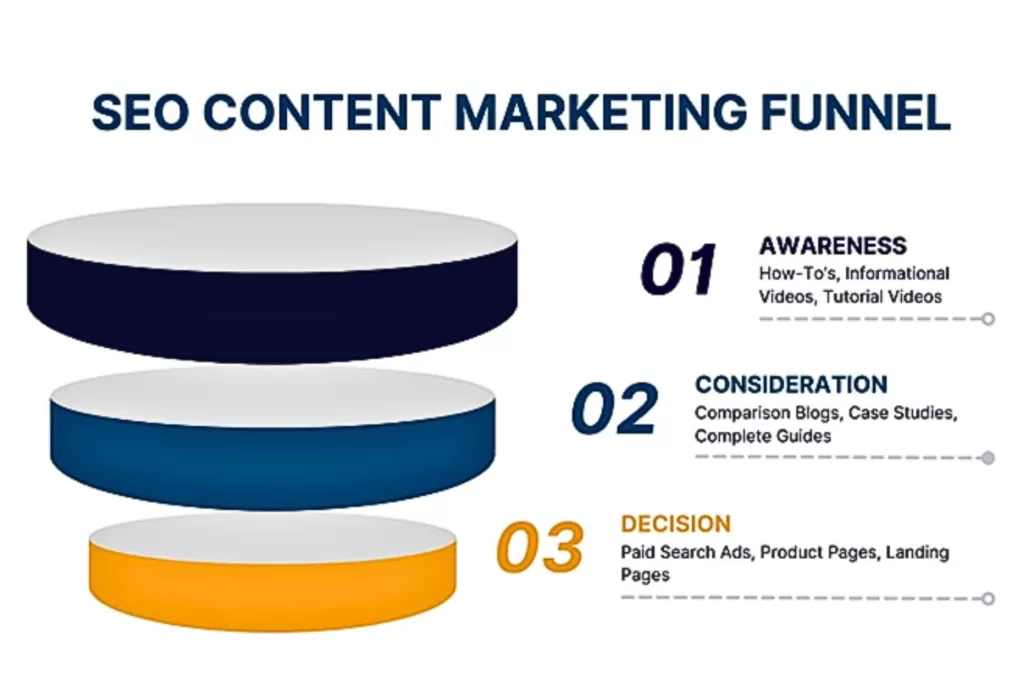
    Illustration of a SEO content marketing funnel

    Do you know the goals for the content you’re creating and who you’re trying to reach? If you don’t know the strategic importance of each piece of content you’re creating, it won’t be effective and can negatively impact its SEO performance.

    When you have a topic that you want to write about, ask yourself, “Who are the readers of this content?” If you don’t know the exact audience demographics, reference the content marketing funnel.

    By creating unique content for each funnel stage, you can meet your users where they are in their buyer’s journey. Some consumers may be ready to buy in the bottom funnel and want a straightforward answer before purchasing instead of reading an in-depth top-funnel blog.

    Others may be in the middle funnel stage and want an accurate comparison between two products that aren’t clearly biased to make a better purchase decision.

    Here’s where common SEO content categories fall in the marketing funnel:

    • Top-Funnel (Awareness): How-to’s, informational videos, etc.
    • Middle-Funnel (Consideration): Comparison blogs, complete guides, case studies, etc.
    • Bottom-Funnel (Decision): Paid search ads, product pages, landing pages, etc.

    When you understand your content goals and reader demographics for each piece, you can better solve their needs. It also sets you up for better success during keyword research, so you select the right search intent based on the funnel stage you’re writing in—which we’ll dive into more below.

    Choose Your Web Page’s Topic

    After determining your content goals, target audience, and funnel stage, brainstorm a general topic of what you want it to cover. This is the first step you’ll take when starting keyword research. You’ll end up finalizing the topic later once you have a target keyword.

    Conduct Keyword Research for Target and Secondary Keywords

    As mentioned above, your keyword research should do more than select the ones with the lowest keyword difficulty and highest search volume. While these attributes can find you great SEO opportunities, they shouldn’t be the only factors to consider if you want to target the best keywords in your content.

    Below is a step-by-step process for effective keyword research and avoiding common mistakes.

    Perform a Competitor SERP Analysis

    In the first step of your keyword research, search for your general topic on Google and review the top SERPs—those are your direct competitors for this content piece. Also known as a competitor SERP analysis, it provides insights that Google is showing you what qualifies as top-ranking content for that topic. It’s like finding out the secret SEO sauce.

    However, this doesn’t mean to copy what your competition is doing exactly. Google doesn’t reward duplicate content without added value, either.

    Analyze the attributes that contribute to their higher rankings and see what they all share in common, including:

    • Word count
    • Headings
    • Backlinks
    • Visuals

    Also, look for key details they might be missing where you can position your SEO content to outrank. Remember, Google prioritizes helpfulness and relevance. If you find that the competition is only providing surface-level details on the topic or lacks infographics to visually support the content, this can help your website rank higher in the SERPs.

    Run a Competitor Content Audit

    Image of a competitor SERP analysis between Nike and Adidas

    Next, take those top-ranking pages you found and do a content audit. Utilize SEO tools, like SEMRush and Ahrefs to analyze its performance. They have features like content gap and backlink analysis to see what’s contributing to its high SERP ranking with recommendations you can do to outrank.

    Check for the following during a competitor content audit:

    • Backlinks: Check which sites are linking to their page and their Domain Authority so you can try to earn a backlink from them, too.
    • Keywords: Look at the keywords they used and build a keyword list to optimize yours with it, too.
    • Performance: Analyze the content’s performance metrics, including traffic and engagement (clicks, comments, shares) to measure the topic’s success.

    With this approach, you’ll be able to streamline your keyword research process next.

    Conduct Keyword Research
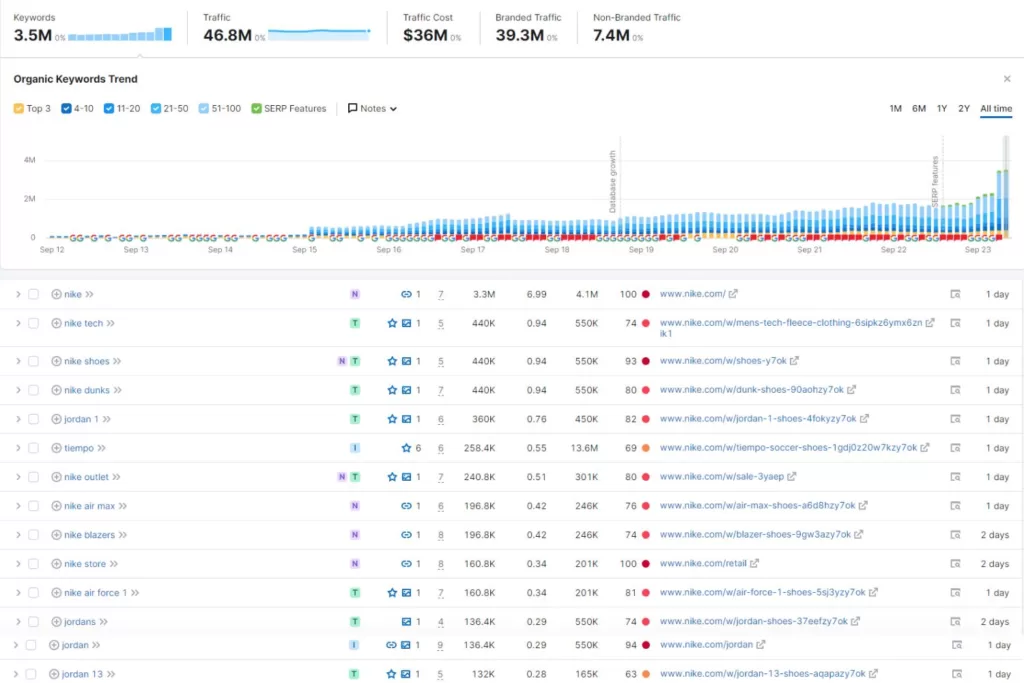
    Image of Keyword Research via SEMrush

    After a competitor SERP analysis and content audit, you now have a base list of target keywords. Don’t just copy the competition’s keyword lists. One of the most common mistakes brands make with keyword research is wrong search intent—the general reason behind a user’s search query.

    While some content has mixed search intent, it’s not always the best-case scenario. For example, if you optimize a top-funnel (informational) blog with bottom-funnel (transactional) keywords, it can turn users away because it’s not relevant to what they’re searching for. They’re looking for helpful information, not product pages or shopping ads.

    Remember, Google doesn’t reward irrelevancy if you use the wrong keyword search intent for your SEO content. Confirm the keywords are aligned with your content’s funnel stage by comparing the search intent.

    Search intent keyword examples include:

    • Informational (Top Funnel): how-to, what is, tips
    • Commercial (Middle Funnel): brand vs. brand, best recommendations
    • Navigational (Bottom Funnel): directions, branded keywords
    • Transactional (Bottom Funnel): for sale, buy, discount

    You can also automate this process with SEO platforms, which tell you a keyword’s search intent. This way you know which keywords to use based on the persona’s funnel stage you’re targeting.

    In addition to search intent and standard keyword metrics, like search volume and keyword difficulty, look for other types of keywords that can boost your content’s performance. Long-tail and question-based keywords are also effective keyword research strategies for SEO content writing.

    According to a study, 92% of search queries use long-tail keywords to find more specific results. Keywords with low search volume and keyword difficulty can also be great low-hanging fruit opportunities to boost organic traffic in your website’s content—so don’t rule those out!

    From there, you can build your finalized keyword list to select your focus and secondary keywords to optimize your content.

    Update Your Content Outline

    Now that you have your target and secondary keywords set, go back to your outline to update your content structure:

    • Create a title with your target keyword and search intent in mind
    • Write headings with focus and secondary keywords naturally
    • Add external and internal links you want to include

    This outline will be the foundation you’ll need to finally start writing website content.

    Write E-E-A-T Content With Your Audience in Mind

    With the preliminary steps complete, you can now begin your SEO content writing process. If you don’t know how to write content for a website, reference Google’s E-E-A-T framework. It’s their content model that can help you create helpful and relevant information that their algorithms prioritize.

    E-E-A-T stands for Expertise, Experience, Authoritativeness, and Trustworthiness. It’s designed to provide users with a higher standard of content and a better search experience when looking for information online.

    SEO Content Writing Mistakes to Avoid

    Many businesses always reference “high-quality content,” but do you know what that entails?

    Examples of low-quality E-E-A-T content include:

    • Copying competitor content without added value
    • Long paragraphs with more than 5+ rows
    • Using too many internal links
    • Disorganized heading structure
    • Bullet point lists with no transition text in between

    All the efforts you put into writing content for your website can harm its SEO performance if you’re making these mistakes when creating it.

    How to Write Content for Your Website Effectively
    With an understanding of SEO writing mistakes to avoid, here are the best practices you should follow.
    Examples of high-quality E-E-A-T content include:
    ● Easy Readability: Small paragraphs and bullet point lists to share information in a visually digestible way.
    ● Organized Headings: Users should be able to quickly scroll through your web page and know what it’s about.
    ● Supportive Visuals: Aim for helpful infographics or use stock images relevant to your topic.
    ● Compelling Storytelling: Grab users’ attention with a hook statement in the introduction, a persuasive CTA in the conclusion, and smooth flows in between.
    You want to keep your readers engaged, so don’t make it harder for them to understand your content when it’s the solution they’re searching for.

    Optimize Your SEO Website Content for Google
    Illustration of hands waving a wand to showcase the magic of ranking on Google

    Once your content is complete, you must optimize it with on-page, off-page, and technical SEO. Optimization ensures search engines discover your content and provide it to users when using related search queries to your topic.

    Optimize for On-Page SEO

    On-page SEO is straightforward. It means optimizing the content on the physical page itself and involves a few different steps.

    Keyword Optimization

    Optimize your content with your target and secondary keywords naturally throughout the text. The amount of keywords you use should balance with your word count. Also known as keyword density, this prevents you from over-optimizing your content. As a rule of thumb, add one to two keywords for every 100 words.

    Also, aim to have your target keyword as close to the introduction as possible naturally. It’ll help Google and your audience know what your content is about instantly.

    In addition to your content, optimize your keywords in your metadata. This is the language that Google uses to better understand your content.

    Best keyword optimization practices for metadata should include:

    • Title Tag: Keep within 60 characters to prevent it from being cut off in preview texts. Use your focus keyword.
    • Meta Description: Keep between 50 to 160 characters and use engaging language that persuades users to click through, like CTAs or a short summary of the solutions they’re seeking. Use your focus keyword.
    • Image Alt Tag: Keep it around 140 characters and use descriptive language so it’s accessible for all users online to understand. Look at the image and close your eyes to better describe it. Use your focus and secondary keywords when possible.
    • URL Slug: Keep between three and 250 characters, and don’t use special characters other than dashes. Use your focus keyword.

    Keep all metadata sounding as natural as possible so it doesn’t sound forced by keyword stuffing.

    Link Optimization

    Like keyword density, your link optimization should also consider your word count. As best practice, aim to have five to six internal links per page to prevent overoptimization. Internal links help keep users on your website by navigating them to other helpful information related to the topic.

    Add internal links to other blogs, case studies, and CTA in the conclusion—which is often a contact form, service page, or products. Use rich anchor text that’s relevant when hyperlinking to encourage users to click through so they know what the other page is about.

    For external links, one to three per page is a rule of thumb. Always use reputable resources with high Domain Authority (60 and above) so Google recognizes your content as an authoritative and trustworthy resource—aka, E-E-AT. You can also use external links that your competitors are using from your content audit when possible.

    Now you can finally publish your SEO content!

    Optimize for Off-Page SEO
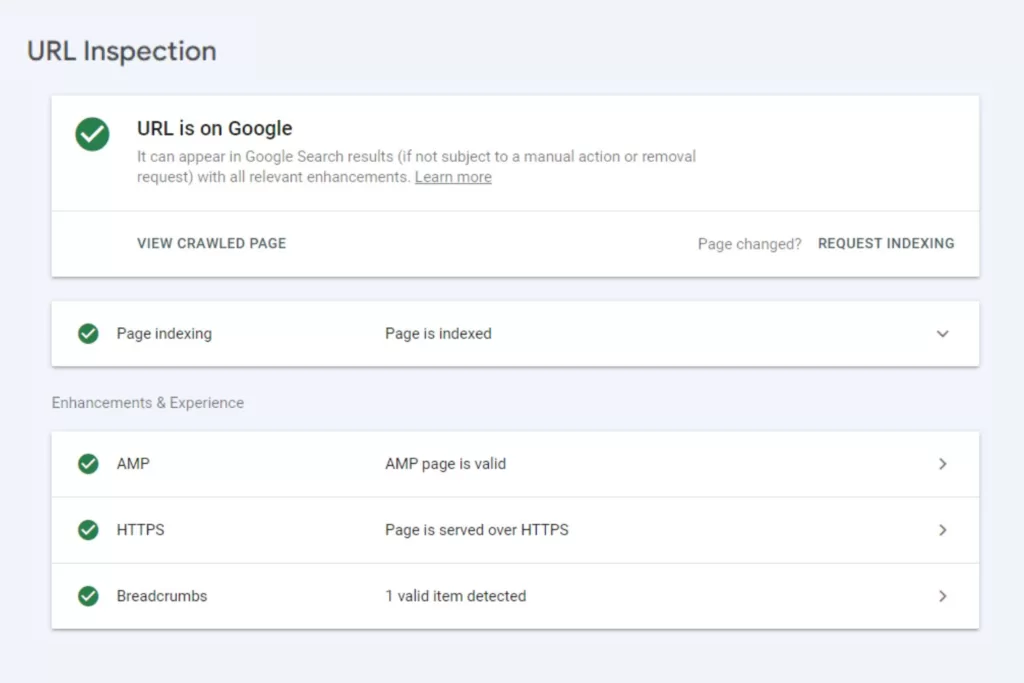
    Image of a URL inspection on Google Search Console

    Off-page SEO is the optimization that occurs off your website. Examples of off-page SEO include social media posts and link building. However, the first step after publishing your content is ensuring that Google and users can discover it.

    Request Indexing for Google

    Once your content is published, always request indexing on Google Search Console (GSC). If Google can’t crawl (find your content) and index it (store it in their database), neither will your audience. You can monitor the status in GSC to see if there are any issues that Google has with crawling or indexing it.

    Common indexing issues include broken links like 404 errors and duplicate content. GSC will provide reports so you know how to fix them, like replacing or removing broken links and editing duplicate content.

    Invest in Effective Link Building

    Link building is arguably one of the most important ranking factors on Google. When websites with high Domain Authority link to your site, it shows Google that you are an authoritative and trustworthy resource within your niche. In return, it generates referral traffic that has more qualified leads since a brand they trust is referring your company.

    Go above cold email outreach and utilize more effective link building strategies:

    • Social Media Posts: Offer cross-promotional social media shoutouts or include them in a campaign post.
    • Podcast Interviews: Find industry experts within your specific niche to form better relevancy for your target audience.
    • Broken Link Building: Contact websites you want to earn a backlink from by notifying them of broken links and offering to swap them with your site’s content.

    When you only cold email outreach, you’re essentially asking for a favor as a stranger. Provide something of value in exchange instead.

    Optimize for Technical SEO

    Technical SEO is what happens behind the scenes of your website. This type of optimization helps how your web pages are displayed and ensures they provide a strong user experience (UX). In addition to easy content readability, it should be simple to navigate too.

    Include the following in your technical SEO optimization:

    • Website Speed: Compress large image files or remove lengthy videos that aren’t adding value. Test the speed afterward on Google PageSpeed Insights for mobile and desktop.
    • Mobile Design: Test how your published content looks and performs on mobile to ensure it’s easy to read and navigate on all devices with breadcrumbs.
    • Website Analytics: Check if your site’s performance has a high bounce rate or low engagement. You can also review your top-performing pages and use those as a reference.

    Users nowadays will quickly leave for a competitor’s site if your site has poor UX, making technical SEO a crucial part of your content strategy.

    Reach Your Website Ranking Goals with Professional SEO Content Writing

    While anyone can technically write website content, that doesn’t always mean it’ll give you the results you’re looking for. At Reach Marketing Pro, our SEO services include professional SEO content writing and optimization. We also focus on your website’s functionality so your content provides a stronger user experience.

    Whether you need a persuasive product page or a compelling case study to showcase your successful track record, we can help you create high-quality SEO content your website needs to stand out.

    Our team will keep you informed throughout the content creation and optimization process with monthly performance reports to measure and track success.

    Ready to reach your SEO content writing goals?

    Contact us to get better website content that ranks today!
  • Search Generative Experience: How Google’s AI Search Engine Impacts SEO & Organic Traffic

    Search Generative Experience: How Google’s AI Search Engine Impacts SEO & Organic Traffic

    Search generative experience (SGE) is Google’s AI search engine. Chances are you may have interacted with it before. But do you know how this impacts your business’s SEO and organic traffic? Adapting your SEO marketing strategies to automated technologies is essential as they influence user online behavior and algorithms. 

    SGE Google has different features than its standard search engine. AI-generated results empower SERPs by using advanced systems to understand human language and legacy algorithms more clearly.

    However, it doesn’t replace traditional SEO. Google’s standard algorithms and SGE work together to deliver the best search results possible.

    Artificial intelligence is disrupting the digital market landscape and isn’t going away. That’s why your business must invest in SGE to meet your audience where they are when looking for information online. 

    Here’s a complete guide to search generative experience and how to optimize your SEO strategies with SGE to drive organic traffic.

    What is SGE?

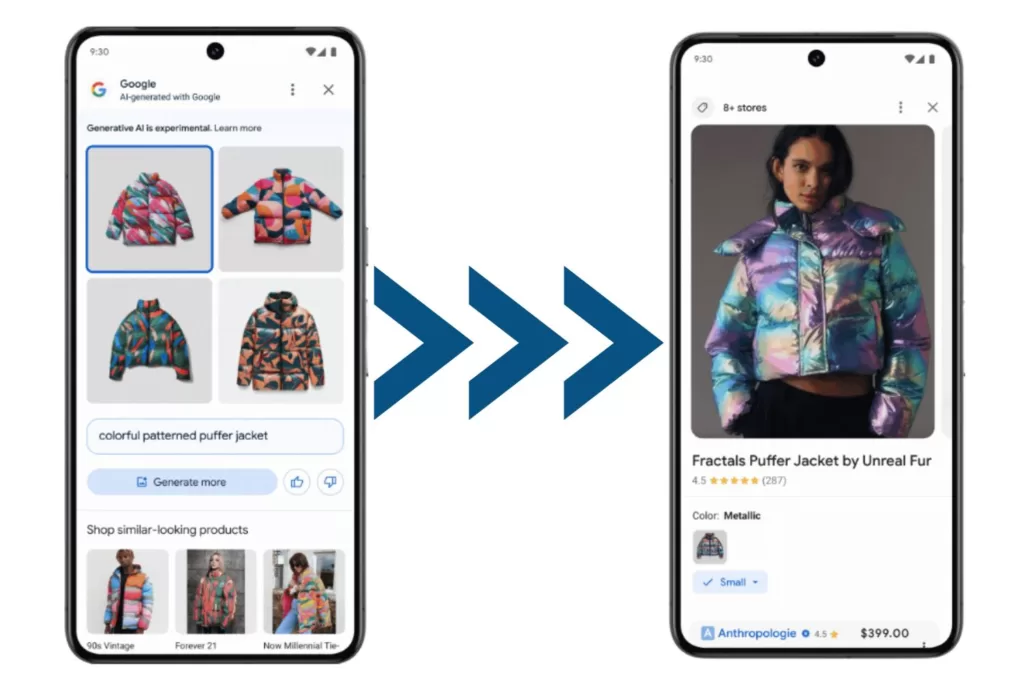
    Example image of a product search with SGE results

    People commonly ask, “What is Google SGE?” You may have heard of ChatGPT. SGE Google and ChatGPT are similar since they’re both AI learning tools that users can interact with conversationally for automated results. The difference is that ChatGPT is an AI-generated content-writing platform, and SGE is an AI-empowered search engine.

    SGE vs. SERP: What’s the Difference?

    Search generative experience and search engine results page (SERP) are both part of the search experience. SERPs are the pages Google displays in response to a user’s queries on a traditional search engine. SGE is Google’s AI search engine. It’s more experimental by using automated learning models and algorithms to deliver more relevant results.

    For example, SGE offers a more tailored experience for ad space. If you’re shopping online, SERPs often display rich results like product ad listings and reviews. SGE takes it further by showing you the same results, yet with more information. It includes follow-up questions, important product considerations, ad links, styling options, and more, all in one place.

    SGE allows users to dive deeper into their online shopping experience. It displays snapshots of everything they need to know about a product in one location—instead of entering multiple search queries and clicking on multiple sites to learn more.

    Google Search Generative Experience Features

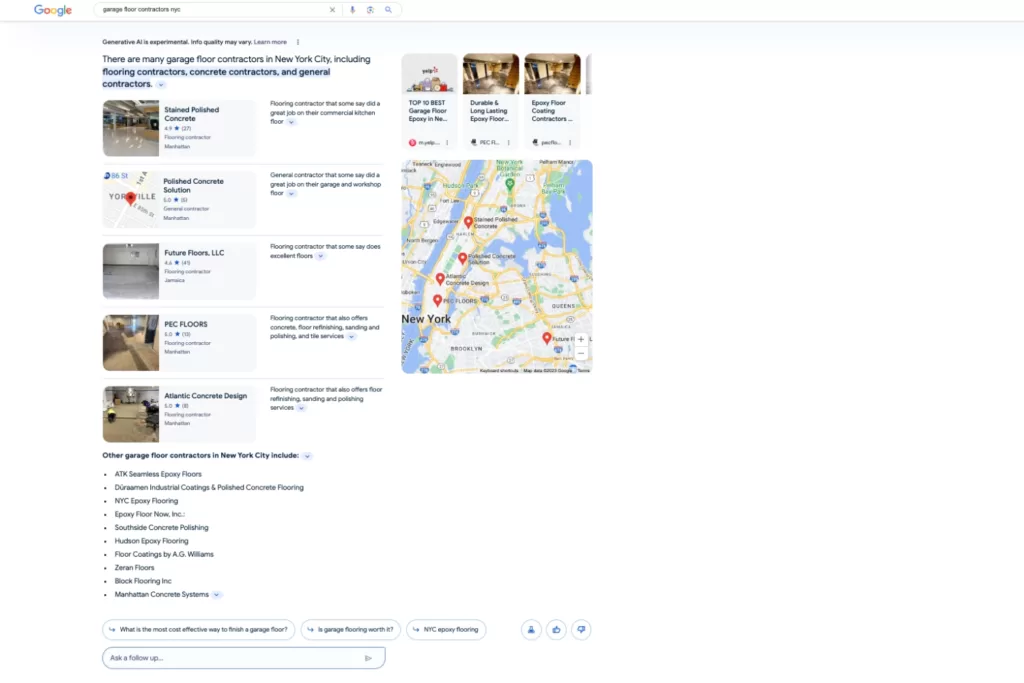
    Image of Generative AI search results

    Now that you have a general overview of SGE Google, next is understanding its unique features. With many advanced capabilities, it can improve your SEO performance and the bottom line. Here’s how:

    AI-Powered Snapshots

    AI-generated overviews of topics you’re searching to provide helpful information quickly. It gives you access to more diverse content like retailers, publishers, and businesses.

    Follow-Ups

    Users can ask follow-up questions in a conversational tone to gain context and refine their search results more easily. This feature allows you to explore deeper into the topics you’re interested in with related insights and web page descriptions to learn more.

    Product and Local SEO Experience

    Snapshot overviews of products and Google Business Profile listings. E-commerce and local businesses can benefit from this feature by leveraging AI to create demand. It displays reviews, customer ratings, related information, and product images to influence faster purchase decisions in one centralized location.

    Search Ads Experience

    These are dedicated ad slots to provide more helpful information while promoting your business online. Users can also use product images they find on social media, blogs, and more to locate where they can buy them online. It directs consumers to product pages and shopping ads based on the image screenshot they enter.

    This provides a seamless search ad experience when they don’t need to go on a hunt on where to buy items they’re interested in if they only have photos available.

    Image Generation

    AI-generated images help streamline visual marketing concept ideas and creative inspiration for your business. It’s like your automated graphic designer that creates any image you describe.

    E-commerce brands can benefit greatly from this feature since customers can generate images of the ideal products they want and be navigated to the real versions of them. SGE Google links to related shopping ads or product pages based on the generative image search information consumers enter.

    Image of ECommerce website on a mobile phone

    Common Concerns Businesses Have About Search Generative Experience

    If SGE Google delivers a more tailored and automated search experience, why would users continue using traditional search engines? Business owners often think that SGE SEO will replace standard SEO. Here’s why that’s not the case and why you should integrate search generative experience into your SEO strategies instead.

    SGE Concern: Taking Organic Traffic Away Your Website

    Businesses commonly think that AI will replace digital marketing, especially now with SGE SEO. It’s understandable to fear that SGE will take away your organic traffic since users no longer need to visit websites for information when everything they need is in one place—making traditional SEO obsolete.

    SGE Google cannot exist without humans. That’s why optimizing your site for SGE SEO is a necessary addition, not a replacement.

    SGE Solution: Writing Quality Content for Google AI Search

    Google search generative experience relies on human-written content to provide results. It takes your online information and displays it together while linking to the original content it generated from. SGE relies on people for it to exist. So, if your business stops creating content, it won’t have information to pull from.

    Writing content for SGE Google makes it a helpful feature for business growth because it supercharges SEO.

    Search generative experience only works because people enable it to!

    How SGE Google Impacts SEO and Organic Traffic

    While SGE doesn’t replace SEO, it does impact it. According to a study, 62.8% of SGE packs didn’t exactly match the content or keyword ranking of traditional local packs—including branded and nonbranded keywords.

    There’s no standardization across SGE and SERPs. For this reason, local businesses should reconsider their keyword research and local SEO strategies for SGE separately. SGE packs don’t always match local packs, even if the search intent is obvious.

    That’s why researching the SERPs and auditing SGE engines for target keywords is necessary for your SEO marketing strategy. If your business doesn’t adapt to AI generative search, you can miss ranking for local search queries that users are looking for.

    In addition to local SEO, here’s how search generative experience impacts SEO and organic traffic in general.

    Improves Organic Traffic Predictions

    SGE Google is also a helpful analytics tool to measure your website’s SEO performance. Its impact analysis model provides organic traffic predictions by comparing them to your current traffic data. This framework predicts which keywords are most likely to increase and decrease your site’s traffic, including how much.

    Strengthens SEO Performance

    When you can analyze which keywords may be responsible for decreasing your website’s organic traffic, you can better optimize it before it’s impacted. By mitigating SGE risks that predict which keywords may be attributed to your organic traffic, you can strengthen your site’s SEO performance from an unexpected drop.

    Identifies Strategic Keywords

    Identifying the keywords impacting Google SGE’s organic traffic predictions the most can help your business rank better in SGE. Target keywords valuable to your business may not rank in SGE snapshot carousels as they might do in the top traditional SERPs. Keyword performance for SGE and SERPs may have different ranks.

    With the SGE impact model, you can know which keywords you can’t afford to lose and which ones may be negatively impacting your SEO performance. By finding keywords contributing the most to organic traffic, you can strategically select better ones to optimize.

    Streamlines SEO Efforts

    When users can ask complex and descriptive questions more easily, they can understand topics or shop faster. Taking SGE’s suggested next steps or asking follow-up questions streamlines your SEO efforts because it’s less manual work for consumers to find relevant content. They’ll have all the information about your site in snapshot overviews to learn more.

    How to Optimize Your Website for SGE Google

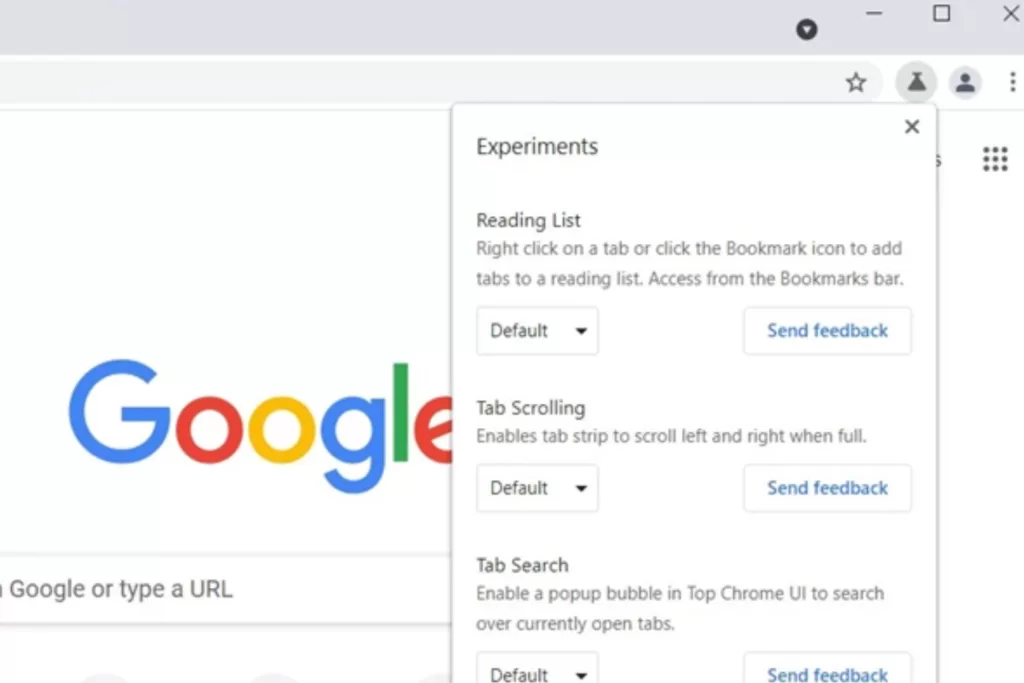
    Image of Google Settings for SGE

    The first step to optimizing your website for SGE SEO is knowing how to get Google AI search first. Below is a step-by-step guide on how to access, download, and enable Google search generative experience.

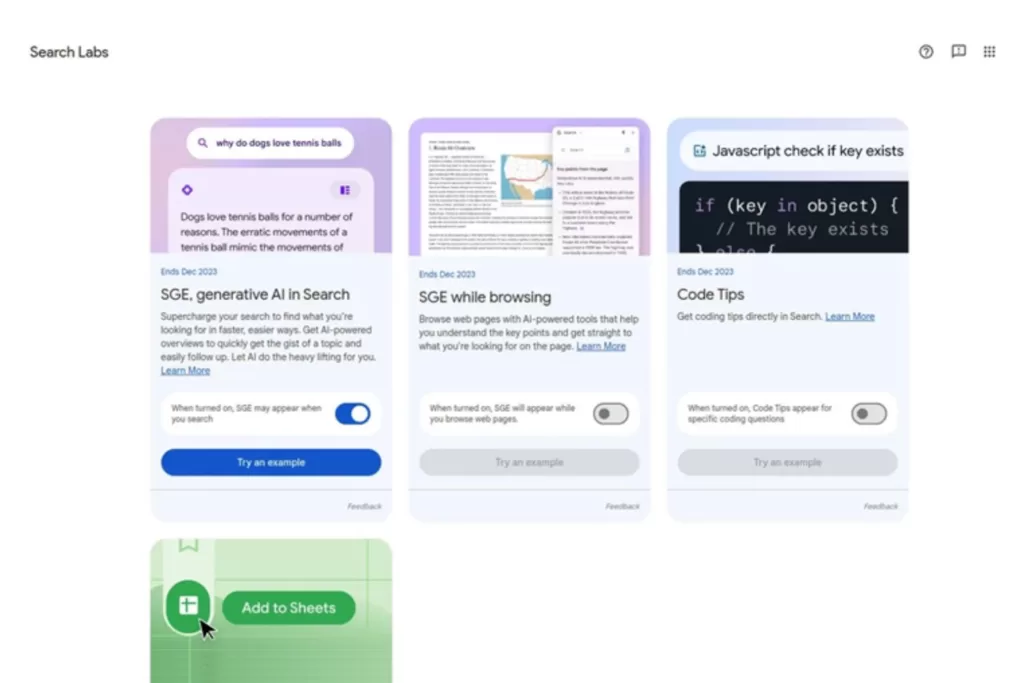
    1. Go to Google Seach Labs and join the waitlist to get access to limited-time experiments as an early tester. These features include “Add to Sheets,” where you can insert search results directly into spreadsheets, and Code Tips to automate programming language writing.
    2. Google will send you an email when you’re off the waitlist.
    3. Once you get Search Labs access, you can download Google AI search onto your Google Chrome browser with Incognito Mode turned off.
    4. Click the New Tab at the top of the browser.
    5. Click the Labs icon at the top right of the page.
    6. Turn the experiment on by clicking the slider on the top of the SGE card.

    You must sign up and in with a personal Google account as it’s currently not available to Google Workspace.

    Image of SGE Browsing Examples

    It may take time for SGE features to show up. Try doing some searches to see if it triggers AI-powered overviews—remember, these won’t always be available. Depending on your queries and the information available, SGE may or may not be triggered to deliver the best results possible.

    You can also check if your experiments are on by clicking “Ask a follow-up” under the “Overview” section. Google suggests asking questions about a topic with different angles to consider. They recommend finding a range of relevant information, options, or viewpoints.

    Once the experiments are available, you can begin optimizing your site for SGE Google. Here’s how:

    Create High-Quality E-E-A-T Content

    Did you know that Google recently added a second “E” to the now E-E-A-T framework? The second E stands for experience. This latest update shows that writing E-E-A-T content is essential since SGE is held to a higher standard for information quality.

    The original E-A-T standard was expertise, authoritativeness, and trustworthiness. It’s how Google evaluates if their search ranking systems are providing helpful and relevant information. With updated search rater guidelines, Google now prioritizes the importance of original and helpful content for users that can be explained in various formats and sources.

    Examples of low-quality E-E-A-T content include:

    • Web pages with misleading titles unrelated to the content
    • Pages that disguise ads as site navigation links
    • Copied or scraped content from other sites without adding original content or value
    • Keyword-stuffing content that doesn’t read naturally to people
    • Surface level details that force users to search more to find better information

    Here’s to write high-quality E-E-A-T content:

    • Create helpful content with your audience in mind. Provide insightful analysis with original information that’s relevant to the topic. 
    • Avoid copying and only rewriting content from external sources. Link to them, but add substantial value with a new perspective or educate further.
    • Write titles and headings as a descriptive summary of the page’s content. Users should be able to quickly scroll through your content structure and know what it’s about.
    • Make your content easily readable. Use small paragraphs of no more than four sentences with helpful visuals that support the content. Avoid fluff, irrelevant information, and unedited AI content writing.
    • Keep search intent in mind. Don’t spam users with sales promotions if you’re creating informational blog content on a specific subject.

    E-E-A-T content creation is about providing an overall great page experience. Google rewards websites that provide this because you’re creating people-first content while demonstrating that you’re a trustworthy authority and expert in your niche.

    Focus on the Most Important Keyword Rankings First

    Sitewide SGE audits and optimization can seem daunting. Start by identifying the most important keyword rankings you can’t afford to lose first. Then audit one page at a time for an organized process of SGE recovery.

    After conducting an SGE analysis, record your high-impact keywords, and optimize your existing pages with them. Then, rerun your SGE impact analysis to measure its new SGE SEO performance. Check if you’ve reduced the number of lost keyword predictions to ensure you’re on the right track.

    Invest in a Solid Link building Strategy

    Backlinks are arguably the most important ranking factor in SEO. Go above cold email link acquisition with solid linkbuilding strategies. Try offering social media shoutouts, podcast interviews, email newsletter blasts, and free link exchanges to offer a higher value in return.

    This helps show Google search generative experience that you’re creating high-quality E-E-A-T content.

    Review Your User Experience (UX)

    If users have difficulty navigating your website, SGE optimization won’t be impactful if they can’t find what they need. Signs of poor user experience (UX) include high bounce rates, slow page load speed, and complex mobile design. When performing SGE audits, review your UX to prevent pushing traffic away when users click through SGE into your site.

    Optimize Your Site’s Metadata

    SGE and SERP rely on metadata to better understand your site’s content because it’s written in search engine language. If Google can’t properly crawl your site through metadata, it won’t generate in SGE to consumers using relevant queries.

    Here’s how to optimize your site’s metadata:

    • Write valuable and enticing meta descriptions for each web page to engage users to click through, like hook statements and calls to action.
    • Include target keywords in your title tags, page content, and headings naturally, without over-optimizing. Don’t force keywords into your copy if it doesn’t sound right out loud.
    • Create image alt tag descriptions with target and secondary keywords for audience accessibility.

    Remember, if Google can’t find your site, your audience and SGE won’t either.

    Elevate Your Business’s Google Search Generative Experience

    Transforming your business’s online presence for SGE Google is a must with evolving AI technologies. At Reach Marketing Pro, we have extensive experience with SEO optimization, including on-page, off-page, technical, local, SEM, and SGE.

    We also focus on website functionality for a stronger user experience because SEO isn’t only about climbing Google’s ranks. Our team takes your site’s information and products to optimize it with your business’s SEO goals and branding in mind.

    While we do all the work, we keep you informed throughout the optimization process and provide monthly performance reports to measure and track success.

    Ready for your business to be an early adapter of AI search?

    Contact us to take the first step into your Google search generative experience today!

  • The Best E-Commerce Platforms to Build a Website

    The Best E-Commerce Platforms to Build a Website

    Have you ever been online shopping, and the payment process required you to create an account before purchasing? Or, have you ever compared two similar products, and the descriptions weren’t clear enough on the differences?

    Whether it’s a lack of guests and one-click checkouts to confusing product offerings, these are signs of poor user experience on an e-commerce website. This is one of many site design issues that can turn potential customers away and buy a similar product from your competitor.

    So, how do you know which e-commerce platform is best? Here’s how to pick the right one including, features, recommended website builders, and tips to consider before buying.

    What Makes a Good E-Commerce Platform?

    Illustration of multiple workers helping to build an efficient website mobile-UX

    Website development can be complex, especially if you don’t know how to build a website and what the process looks like. Even if you’re not tech-savvy, website builders are designed to be user-friendly for anyone to make one on their own.

    However, this is just a starting point. It’s up to you to customize your online store’s brand and ensure it pushes products at the forefront of what your target audience wants.

    Here are a few features to look for in an e-commerce platform and why they come in handy during the development process:

    Budget

    While budget may seem obvious, e-commerce platforms have varying prices and add-on costs depending on the package you purchase. Create a list of must-have and nice-to-have features for launch, and compare which builder can give you the best options based on your financial needs.

    Ongoing Website Support

    An e-commerce platform should have helpful support forums and an easy way to contact customer service for questions and challenges you may have during and after development.

    UX/UI Design

    As mentioned above, an e-commerce website with a strong user experience is foundational to the bottom line and can increase conversions by up to 400%. Can customers easily shop online through their smartphones? Or does it load products slowly and display them in a scattered design? If it’s difficult for you, pick another e-commerce platform that won’t push potential customers away.

    Analytics

    An e-commerce website’s performance analytics is fundamental to measuring success. Review the reporting and features the platform provides to ensure you can track key metrics and KPIs that are important to your online store.

    E-Commerce Website Features

    After preparing for development, understanding a site builder’s features must also be considered. From checkout customizations to drop shipping, these are some functionalities to look for as an e-commerce business.

    SEO

    If your online store isn’t optimized for search engines, it’s virtually invisible. That’s why it’s imperative to buy the best e-commerce platform with SEO features and functionalities. From metadata to custom URLs, investing in SEO is required for any website and business to succeed.

    Previous Experience with Website Builders

    If you have prior website development experience, check how easily an e-commerce platform can migrate from one site to another. Depending on your website size and complexity, some builders may charge a fee or not offer migration services at all.

    Keep E-Commerce Platform and Software Fees in Mind

    Illustration of two men trying to build an ecommerce website from scratch

    When searching for the best e-commerce platform, understand that software fees and different charging systems are involved. While it may seem tempting to pick the cheapest or free ones, these most likely won’t have the necessary features and integrations your online store needs.

    Remember, you get what you pay for. And as an e-commerce business, investing in your website is an extension of your brand’s success. Below are some common payment/fee structures for e-commerce website builders and how they work.

    Monthly Fees

    Depending on the website package you purchase, monthly fees will vary as each has specific offerings. The more inclusive the package service offerings are, the higher the monthly rates will be.

    Transaction Fees

    E-commerce platforms that process payments for you charge through a per-transaction fee, typically a percentage of each transaction. There are also payment processing plug-ins that may be more cost-effective than purchasing through a website builder.

    Payment Gateway Fees

    A fee system that charges for every online transaction the platform authorizes. Payment gateway fees are charged for every debit/credit card they authorize, while transaction fees charge for every completed purchase.

    5 E-Commerce Website Builders We Recommend

    Now that you know what to look for in a website builder, here are five of the best e-commerce platforms we recommend:

    1. Shopify

    Shopify is one of the most widely used e-commerce platforms available. If you have a large product inventory or an enterprise-size online store, Shopify allows you to manage up to 1,000 locations and has over 6,000 ready-to-install plug-ins. Even small businesses can benefit from this platform with streamlined fulfillment, shipping, and inventory management in one centralized place.  

    2. Squarespace

    Squarespace is one of the easiest platforms to work with. They offer plenty of user-friendly template design customizations and a large inventory management system. However, if scalability is a priority for your online store, other website builders may be more beneficial.

    3. BigCommerce

    BigCommerce is a high-performing e-commerce platform that’s built for retailers. Although it’s higher in cost, the returns you can receive are highly valuable. They don’t require additional platform fees like Shopify and offer built-in features to prevent pricing increases or add-ons.

    From seamless social media integration for multi-channel cross-selling to strong technical SEO features like automated redirects, this web builder is ideal for larger online stores and those with prior development experience. So if you’re selling small-scale, have a lower budget, and looking for a simple web build, this may not be the best option. 

    4. WooCommerce

    WooCommerce should be your go-to choice if your online store is built on WordPress. It’s a plug-in that integrates with WordPress easily for online shopping carts, abandon cart emails, customer rewards, and more. But, development is more complex compared to other platforms due to its highly customizable features.

    5. Wix

    Wix is the cheapest e-commerce platform option with monthly plans starting as low as $27 per month. With over 250 free applications and social media channel integration, this is the ideal beginner website builder if you want basic features.

    We Can Build Your E-Commerce Website for You!

    As a business owner, a new website is an exciting time. But, we understand you may not have the time to build one. You have to focus on your trade and managing the company.

    At Reach Marketing Pro, we have extensive experience with building e-commerce and non-e-commerce websites. Our web design and development services can create your online store while showcasing your unique brand. We ensure not only the best marketing strategies (SEO, SEM, Social Media) but also the website’s functionality to make a lasting impression on users.

    We’ll take all your company information and products to create a website with your business and audience in mind. While we do all of the work, we’ll keep you informed throughout the development process.

    Ready to kick off your new e-commerce website journey?

    Contact us to take the first step today!

  • Website Domain vs. Content Hosting Explained

    Website Domain vs. Content Hosting Explained

    Domain vs Hosting:  What’s the Difference?

    To make it simple, the key difference between domain and hosting is that a domain is the website’s address, which allows visitors to easily find your website online. Hosting is where the website files and designs are stored. For example, GoDaddy is a hosting site, while www.reachmarketingpro.com is a domain.

    There’s also a term called content hosting, which is a service where your website’s content is managed with a CMS, or content management system. These systems enable website owners or marketing teams to edit the website’s content, share its files, and hyperlink pages without marking up or adding programming languages.

    Both are Needed for a Successful Website

    Illustration of a website screen with different content displayed

    Unfortunately, to have a website you can’t have one or the other. While you have the domain, your website must be hosted on a server to function properly. The goal is to have visitors see your site and hopefully make a purchase. You can purchase a domain name and not have a website. However, a website can’t be hosted without a domain name. So if you’re starting the journey to getting a website, start with choosing and purchasing a domain name.

    How to Choose the Right Domain Name & Content Hosting Platform

    Illustration of people around a computer choosing a domain name

    Looking to choose the right domain name? Here are some tips on how to find the perfect domain name and content hosting platform.

    For finding and purchasing a domain:

    • Naming tips: find a “future-proof” name that is short but memorable.
    • Prevent trademark infringement by researching domain names before making the purchase.
    • Look into potential costs, as each domain comes with a different price tag.
    • Lead negotiations after conducting your own research and landing the best price for the domain.

    For finding a web content hosting platform:

    • Based on the type of website you are looking to host, there are specific platforms that are best suited.
    • Look into the best search engine optimization (SEO) tips that will enhance your website’s visibility and google search rankings. This will also play a role in the marketing.
    • Each hosting platform comes with its own set of security protocols. Look into each platform and how they oversee the maintenance and upkeep of the website so you know how your website will be managed.
    • Each hosting platform comes with different maintenance packages based on specific customizations. Although cost plays a factor, research plays a role to see which package and hosting platform fits your needs best.

    Things to Consider Before You Select Your Web Hosting

    Illustration of a man sitting at a desk creating a website

    Here are some things to consider before selecting the platform to host your website. First off, there are multiple types of web hosting platforms, including WordPress, Drupal, Squarespace, and PrestaShop. If you already have an established domain and web-hosted website, it can be successfully transferred to another company if needed.

    However, there’s something you should know. An already registered domain name can’t be modified or changed, so it’s important to know a new one has to be purchased and implemented to the existing website, or a new one will need to be created and linked to the old one, essentially, redirecting from the previously created domain name to the new name so you don’t lose website traffic.

    Resources for You Consider

    There are valuable resources to utilize when purchasing a domain and choosing a content hosting platform. Here are some of our recommended domain and content management resources:

    For purchasing a domain: Hostinger GoDaddy, and Squarespace.

    For content hosting: WordPress, Drupal, Squarespace, and PrestaShop.

    Let Our Team Do the Work for You!

    Finding and creating domain names can be a tricky process when you endure it alone. Rather than trying to figure it out, rely on an expert who can guide you through the domain purchasing process, website development, and content creation for your new (or redesigned) website!

    At Reach Marketing Pro, we help you every step of the way, no matter if your business is new or well-established. Allow us to create a branded, optimized, and functional website for your business! If you have a question, ask us here!