You may be familiar with Google advertising. But do you know the difference between Google Local Service Ads vs. Search Ads? With many types of Google ads available, navigating which ones are best for your business can be challenging.
Below is a comparison guide on LSAs and Search Ads and when to use each based on your advertising needs.
What Are Google Local Service Ads (LSAs)?
Google LSAs are ads specifically designed for local service-based companies or those with location-specific products. Previously known as Google Adwords, LSA ads promote your business to target audiences in your surrounding areas.
Local service-based industries, like landscaping, electricians, and HOA housing development fencing contractors, are examples of businesses that can use LSA ads.
What Are Google Search Ads?
On the other hand, Google Search Ads can be used for any business, not just local ones. Also known as paid search or pay-per-click (PPC), it’s a type of search engine marketing (SEM). They’re designed to advertise your website or specific web pages to your audiences with search queries they use that are relevant to your company.
Google Local Service Ads vs. Search Ads: What’s the Difference?
While LSAs and Search Ads share some similarities, there are differences to understand before you invest in ad budgets.
SERP Ad Placements
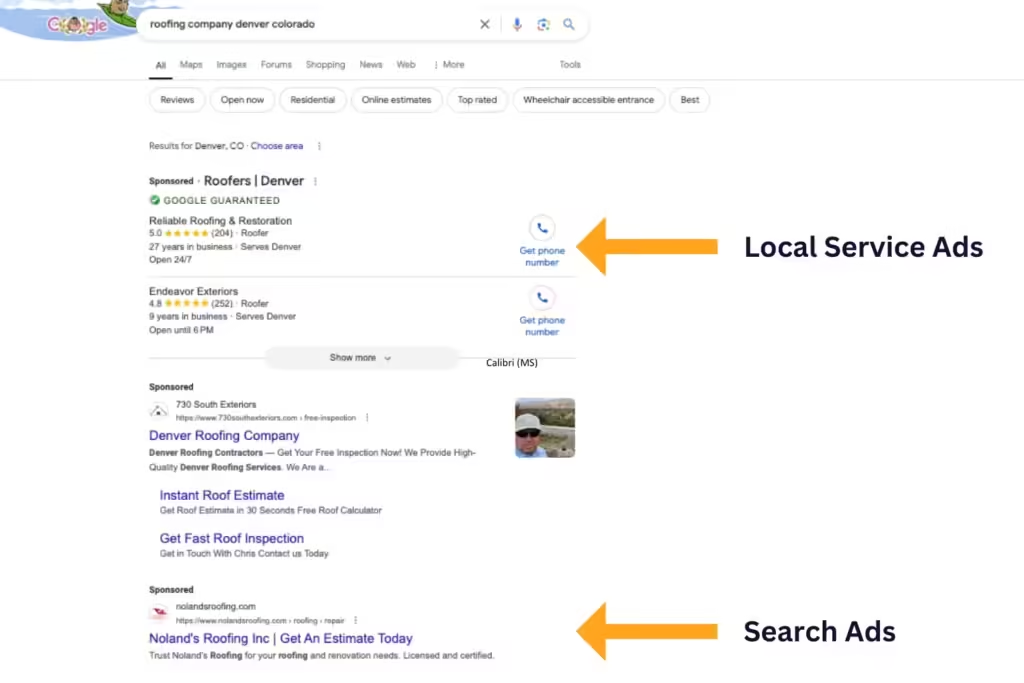
Another key difference between LSAs and Search Ads is their ad locations. LSA ads are placed above the SERPs and in Google Maps. They align your SEM and local SEO marketing strategies to advertise your business and generate leads from hyper-local audiences.
Search Ads require keyword bidding for your ad to be placed at the top of the SERPs as a “Sponsored” search result. While they also align SEM and SEO, it’s not hyper-localized compared to LSA ads and is placed first in SERPs (with keyword bidding), not above them.
Since Search Ads require higher budgets for keyword bidding to outrank competitors and be in the first spot within the SERPs, it may not be practical for businesses with lower ad budgets and local search needs. They’re best if your ad campaign goals are to increase online visibility for broader audiences and can afford competitive keyword bidding.
LSA ads are best if you want a guaranteed above-SERP placement for local audiences only without the larger budget requirements for keyword bidding.
Ad Payment Structures
A main differentiating factor between Local Service Ads vs. Search Ads is their payment structures.
As mentioned above, Search Ads use a pay-per-click (PPC) model, where you’re charged each time a user clicks on your ads.
LSAs ads use a pay-per-lead model, where you’re charged each time someone contacts your business through your ad. LSAs are typically more affordable and generate greater ROI because many users can click on Search Ads and not contact you, and you still must pay for them.
Based on their different payment methods, choosing between LSAs and Search Ads depends on your ad budget and campaign goals.
If you’re a locally based service provider and want to attract customers in your area, LSA ads are more cost-effective. You only pay for the leads you acquire, and you can even set a weekly budget to stop showing your ads after reaching your limit.
Search Ads are the better option if you want to increase brand awareness for wider audiences outside your area, bigger ad budgets, and easier campaign scalability.
Google Guarantee Badge Feature
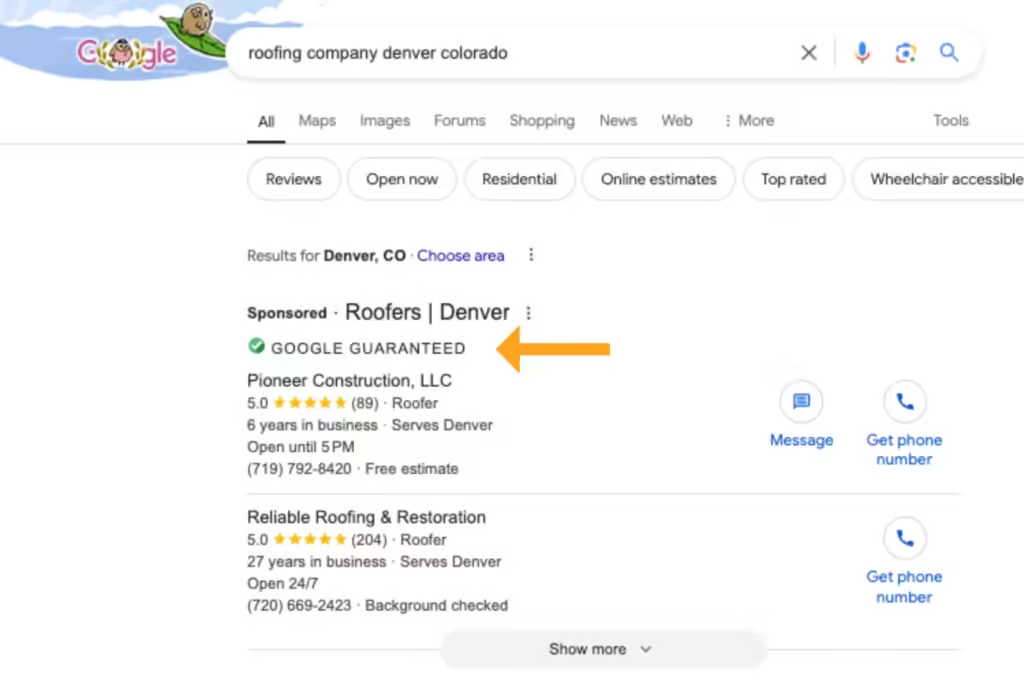
The Google Guarantee badge is an exclusive feature for LSA ads. When you display your LSAs, a green checkmark is displayed next to your business name. This feature is valuable for consumers because it shows that your company has passed Google’s screening and verification process.
If consumers aren’t satisfied with your localized services, they can submit a refund request, and Google will reimburse them based on potential factors. Service cancellations and delayed provider responsiveness are examples of when Google won’t reimburse consumers.
However, it gives your target audiences better peace of mind when your brand establishes its credibility and trust with Google.
Automated Keyword Research
When creating Local Service Ads vs. Search Ads, there are also exclusive automated keyword research features, depending on which one you choose. LSA ads do keyword research for you, while Search Ads require you to do it yourself.
For LSAs, Google will generate target keywords based on the information you enter upon setup. After you submit your business type and products/services from their list of options, they’ll prompt suggested keywords to use in your LSAs that you should rank for.
However, you must verify that the keywords Google provides for your LSA ads apply to your brand. If the search queries they automate have the wrong search intent or are irrelevant to your business, they may not generate the right ad results or qualified leads.
Because Search Ads require you to perform keyword research, you gain more control over which search queries you target in your campaigns. However, you must understand how to conduct keyword research the right way.
Again, if you use inapplicable search queries for your brand or keywords with the wrong search intent, you may not generate profitable ROI for your Search Ads.
Ad Copy Requirements
Did you know LSA ads don’t require you to write copy? These types of Google ads only display your Google Business Profile name, contact information, business hours, review ratings, and image.
In contrast, Search Ads require copywriting. You’ll decide on the ad’s title, body text, visual creative, and call-to-action button.
If you prefer customized ad campaigns, Search Ads are the best option because you can control the copy’s quality and what’s displayed to your broader audiences. If you prefer simpler ad campaigns to local audiences and have a strong reputation management on your Google Business Profile, LSAs can be the better choice.
Google Ad Industry Qualifications
LSA ads are only available for specific local businesses, industries, and job roles. Not every company can access them due to Google’s specific LSA ad qualifications.
Examples of eligible businesses for LSA ads include:
Auto body shops
Car wash and detailing services
Dentists
Plumbers
Tutors
Veterinarians
Search Ads don’t require industry eligibility, allowing any business to access this ad platform.
Navigate Google Ads with Confidence: Let Our Experts Select the Best Ad Platforms for Your Business
Still can’t decide if Local Service Ads vs. Search Ads are better for your business? Don’t take a leap of faith with your ad budget. Let us help you navigate Google’s comprehensive ad platforms for you.
At Reach Marketing Pro, we have extensive experience with Google advertising, including LSAs, PPC, and SEM, and aligning these campaigns with your SEO for optimal results.
We also have in-house copywriting and graphic design services to create effective ad campaigns for you. Our team will continuously monitor your ads with monthly in-depth reporting to measure success with complete transparency from start to finish.
Is your business not seeing optimal results in your PPC campaigns? Then, you may be choosing the wrong ad format. Whether it’s unprofitable bidding strategies or declining conversion rates, dynamic display ads can maximize your PPC campaign results more than static ads.
From continuous ad optimization to rich user data integration and maximized conversions, learn why dynamic ads are the best choice for PPC.
What Are Google Display Ads?
Google display ads are a type of PPC advertising within the Google Display Network. It allows you to reach global potential customers beyond Google Search on all Google-owned platforms, including YouTube and Gmail.
How Does Google Display Ads Grow Marketing Results for Advertisers?
The benefits of display advertising are streamlining and optimizing your PPC campaign creation process to maximize results. It generates ad formats, bidding strategies, and advanced audience targeting through various automated features based on first-party consumer data.
What Are the Differences Between Google Dynamic vs. Static Display Ads?
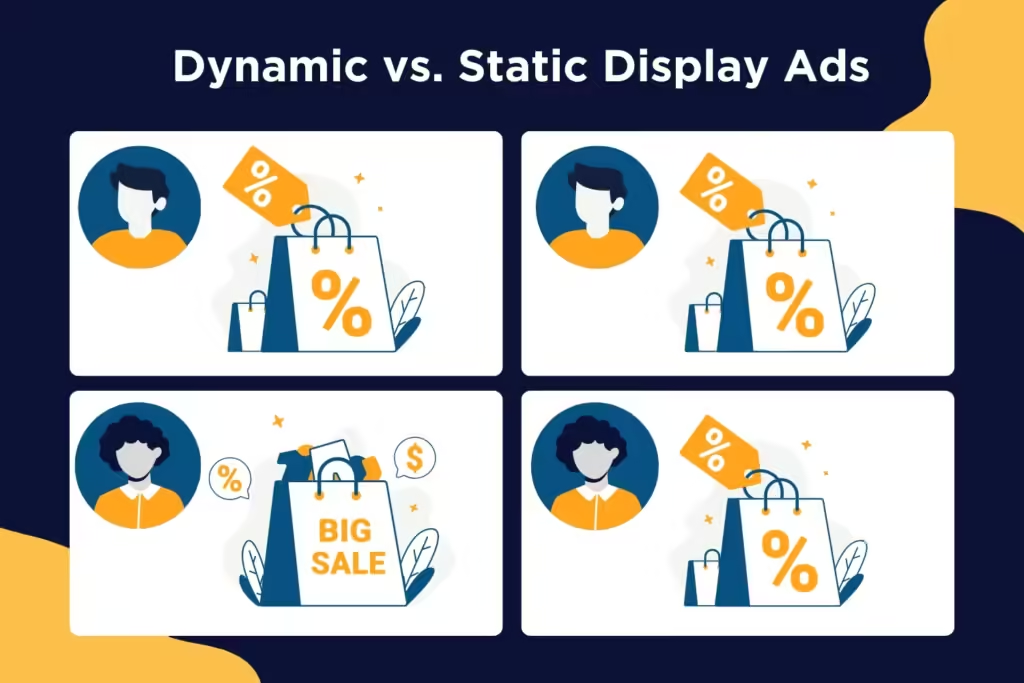
Google’s dynamic display ads update your PPC campaigns over time based on your target audience’s behavior. They’ll change the visuals, prices, or products/services shown if users browse similar content on your website or other platforms. They’re designed for specific audiences and ad campaigns.
Static display ads don’t update your PPC ads as they’re designed for general offers for brand awareness. It requires more manual campaign maintenance and strategy development without automation.
Benefits of Dynamic Display Ads in PPC: Why They’re the Better Choice Over Static Display Ads
Below are the top benefits of using dynamic ads on Google and how they can improve your PPC strategy over static ads.
Enhanced Personalization
Google dynamic ads offer more personalization based on your unique user data. Utilizing a data-driven approach, like using the exact products or services users were looking at on your website in your ads, brings more relevancy to your target audience. It strengthens your PPC strategy with high-quality first-party data as your foundation.
User interests based on ad text, image, and video assets with specific audience segments
User demographics, like income, age, and gender
Search queries
Used platforms and browsers
Website interactions and history
For example, you can tailor ads like discounted products for previous customers to improve customer lifetime value and first-time offers for new audiences to increase customer acquisition.
Dynamic display advertising optimizes your audience targeting and customizes your PPC campaigns by applying relevant user data feed to your ad group. It unlocks critical touchpoints in the buyer’s journey to drive more conversions through their accurate insights. That way, you can simplify your PPC campaign management and strengthen its performance easily.
Since static display ads require you to apply user data yourself to segment audiences, it doesn’t guarantee relevancy as display ads do. You may create an ad campaign that focuses on brand awareness, and it’s shown to users already familiar with your company.
According to Think with Google, 61% of people expect brands to personalize their experiences based on individual preferences and needs. In a competitive and oversaturated digital marketplace, reducing your wasted ad spend with customized PPC campaigns is crucial.
Automated Ad Formats
A key benefit of display campaigns in PPC dynamic ads is having automated ad formats. Google generates how your ads should look based on user behavior. It skips the manual process of figuring out which ad design is best, providing more accuracy and relevancy through data-driven predictive technology.
Google will design a media plan that maximizes your PPC budget with recommended visuals and messaging. They’ll even guide you through campaign launches with their first-party data for optimal results.
With AI-powered dynamic ad campaigns, you can strengthen your PPC performance for more conversions and budget value because the data comes directly from your customers—and it’s all done for you.
While static display ads give you full creative control, they require you to design the ad layout and have limited dimensions. You must analyze your consumer’s comprehensive data, which may result in choosing the wrong products or services to showcase. Because static display ads don’t have generated ad formats, you risk creative mistakes users aren’t interested in.
Optimized Bidding
Dynamic display ads optimize the best bid for each impression and how much you pay for each impression and conversion through automation. The Smart Bidding feature maximizes your PPC’s ROI since it automatically adjusts your bids over time based on your highest-performing audiences—achieving 18% more conversions at a similar cost per action!
Additionally, dynamic ads are more effective at retargeting, which leverages lower bidding budgets. It shows your ads to people who previously viewed your website’s products or services, allowing you to match with ideal consumers who showed the most interest.
Since static display ads don’t change over time, your competitor can outbid you more easily if it’s generating successful results. You may need to increase your bid to show up at the top of the SERPs or in certain ad placements to compete, costing you more of your PPC budget.
Maximum Conversions
Since static display ads are designed for top-funnel users, like brand awareness, it typically leads to lower conversion rates. Dynamic display ads are best for targeting middle and bottom-funnel users who are comparing options or ready to buy—leading to an average higher conversion rate of 37% than static ads!
Simplified Scalability
Dynamic PPC display ads can instantly create an unlimited number of campaigns for you that are tailored to your target audiences. Because Google’s AI and machine learning advertising tools generate dynamic ads for you, it simplifies the scalability process based on their algorithms.
Static display ads are harder to scale because they have a manual process. It requires you to create individual ads without automation, taking longer and more resources to execute. If you plan to launch several PPC campaigns for various clients and segment audiences, dynamic ads are more efficient and effective.
Maximize Your Advertising Budget & Results with Professional Digital Marketers
Although dynamic display ads help you learn what works best for your target audience, they still require time and resources to execute efficiently. You must create ad graphics, engaging copy, profitable budgets, and more. Let us do the heavy lifting for you.
At Reach Marketing Pro, we have extensive experience maximizing PPC budgets and optimizing ad strategies to generate greater results, including SEM and SEO. We’re a full-service agency of PPC marketers, graphic designers, and copywriters with the expertise to guide you from ad campaign strategy to launch.
We combine a mobile-first approach with data-driven keyword research to strengthen your PPC campaigns. Our team will continuously monitor your display ads with monthly reports to track their success.
Grow your business effectively with professional PPC services or contact us for help getting started today!
A website redesign is a significant investment but eventually necessary for your business. Whether you have a dated design, are rebranding your company, or aren’t seeing optimal results with your site’s SEO performance, redesigning a website can help achieve these goals.
As a business owner, it’s understandable to feel apprehensive about a website makeover. It’s a comprehensive process and requires various resources to execute successfully.
However, it doesn’t always have to be a complete website revamp.
You can take an easier approach to your redesign project as an ongoing process with a step-by-step plan.
How to Redesign a Website for Your Business: A Step-by-Step Guide
On average, businesses should redesign their websites every 1.5 to 2.5+ years. Website redesign frequency depends on various factors, like how often you maintain it and your site’s performance.
Some signs that it’s time for a website upgrade include:
Weak SEO Performance: Rapidly declining keyword rankings, indexed pages, etc.
Dated Site Design: Many text-heavy home page sliders, generic stock photos, etc.
Poor Website Functionality: No website breadcrumbs, slow page load speed, etc.
Rebranding: Merging companies, expanding product/service offerings, etc.
Challenging Customization: Limited capabilities to edit design templates, can’t integrate popular third-party applications, etc.
Poor Website Benchmarks: Rapidly declining conversion rates, form submissions, traffic, etc.
Below is a step-by-step guide on the website redesign process from initial strategy to relaunch.
Develop a Website Redesign Strategy
The first step in your website redesign project plan must be developing a strategy. Creating this foundation defines why you need to redesign your website in the first place.
Ask your team these key questions before you start the redesign process:
Why do you want to redesign your website?
Which website performance metrics do you want to improve?
Who will be responsible for the redesign and development?
How much budget do you have for the design and development?
What are your goals with your new website design?
That way, you can set clear expectations and have a smoother redesign process for your team to execute more effectively.
Define What Your Website Makeover Should Look Like
A new website design is more than a makeover. It should align with your unique brand and support your bottom line. Defining what the site’s new visuals and messaging should look like is essential to a successful redesign.
Ask your team these key design questions before you start the redesign process:
What do you like and dislike about your current site?
Which features do you want to add or remove from your current site?
What new designs do you want to see on your site, and why?
Do you have inspirational design examples to reference?
Can you provide website branding guidelines, like fonts and colors?
If you need more guidance on your site’s visual designs, research your competitors and industry leaders as inspiration. Just be sure you make it align with your unique brand and that it doesn’t exactly copy.
Additionally, you must follow key website redesign best practices, including ample blank space to prevent text-heavy pages and contrasting colors for balance.
Analyze Your Site Audit Metrics Before Redesigning
Don’t redesign your website for the sake of looks only. While dated site designs are important to upgrade, the purpose of your redesign project should be data-driven through a website audit. That way, you can make the necessary changes and investments for optimal results. You may discover areas of your site that need improvement you didn’t notice before.
Common website audit metrics to analyze for a redesign include:
Top pages with the most organic traffic
Total keyword rankings
Top pages with the most leads
Top pages with the most conversions
When evaluating these metrics, check if their rates are increasing or decreasing to know which pages to prioritize first. Investing in your top-performing pages first can help maintain its performance during the redesign process.
You should also note your lower-performing web pages to know which areas to prioritize for improvement. If you see a high cart abandonment rate or declining conversions, your website may have a poor user experience (UX). Your current site design may be making it harder for potential customers to convert, like no saved payment method features or slow page load speeds.
Use a New Website Platform If Necessary
You can waste time and resources on a website redesign if your current platform has many limitations on its capabilities. If you can’t customize the design template to meet your branding guidelines or integrate vital e-commerce features for your business, like a one-click checkout, you likely won’t meet your redesign goals.
Your website platform shouldn’t hold you back from getting your ideal site design. If this is the case, be prepared for a website migration. Your web developers should utilize sitemap lists, create 301 redirects, and set up Google Analytics to streamline the data transfer process.
Create a Content Strategy for Your New Website Design
To maximize your content marketing ROI during a website redesign, organize your current content into three categories:
Removable Content: Deleting vague home page details that don’t immediately define your brand, talking about your company instead of how you can help your target audience, etc.
Updated Content: Adding captivating infographics, embedding Google reviews to product pages, integrating a separate blog website to your main site, etc.
New Content: Creating individual location pages for multiple in-person stores or service areas, making short clip videos for software demos, adding more downloadables, etc.
Website redesign SEO is a critical step. It ensures you protect your top-performing pages while improving your lower ones during the redesign process.
Conducting an SEO audit for your site will guide you on where to start, such as:
Search Valued Pages: Pages with the highest and lowest traffic, lead generation, conversions, etc.
Metadata/On-Page SEO: Page tiles without keyword optimization, missing headings, duplicate meta descriptions, etc.
Technical SEO: Pages with slow page load speed, broken links, no SSL, etc.
Off-Page SEO: Pages with the highest-quality backlinks, traffic from social media, etc.
Luckily, popular SEO platforms make it easy to prioritize which web pages you should redesign first. They’ll flag which pages are impacting your website’s SEO performance most to least.
Test Your Site Redesign
Now you’re at the final step before a website relaunch. Before going live, test it to ensure everything functions properly and looks how it should.
Conduct A/B testing via email with two versions of one of your web pages to see which ones users respond to better. Your target audience may download more free template guides with one CTA button color or text over another. It’s about learning which designs work best with your consumers without assuming.
Also, send your website’s staging link to your team for their review on the following:
Proofreading web copy for typos, grammatical errors, and effective messaging
Clicking all links to confirm they’re not broken or directing to the wrong page
Navigating the website as a visitor to ensure your redesign has a strong UX
Once your new site design has been approved for final review, you can relaunch! We also encourage monitoring your website post-launch to confirm its performance continues successfully.
Website Redesign FAQs
Below are some of the most common FAQs when redesigning a website.
Why Redesign a Website?
Your SEO ROI is technically calculated by the profit or your sales/revenue after your content marketing expenses:
Website redesigns are necessary if they’re not functioning as they should or aren’t supporting your bottom line. Analyzing your website audit reports can determine if minor updates can fix current issues or if a redesign is warranted.
How Often Should You Redesign Your Website?
You should redesign your website every 1.5 to 2.5+ years. It depends on how often you maintain it and your marketing goals.
Should I Use Website Redesign Services or DIY?
While DIY web redesign is doable with user-friendly website platform builders and template designs, you can maximize your investment and results with a website redesign company. They understand how to optimize your new design within your unique business goals and streamline the process with their expertise—saving you time and resources.
Make the Most of Your Site’s Makeover with a Website Redesign Agency
Your website is the foundation of your business. In a competitive digital marketplace, it’s crucial that your site stands out and performs well for your bottom line. Investing in professional website redesign is the best way to maximize your budget and accomplish your company’s goals.
At Reach Marketing Pro, our in-house web developers and designers have extensive experience revamping dated sites, rebranding, re-optimizing for SEO, and more. We know how to make your website look as good as it performs with monthly reporting to ensure it generates optimal results.
Ready to make the most of your website’s makeover?
As a business owner, your SEO content marketing ROI can take some time, but it’s necessary in an oversaturated digital market. Depending on various factors like content quality, output, and competitive landscape, seeing the ROI of SEO can take four months to one year on average.
However, it can become your brand’s highest ROI driver over time with consistent content creation and performance monitoring.
Learn why investing in content marketing is crucial for your bottom line and why it’s worth keeping your SEO ship sailing.
Content Marketing ROI: Why Creating Unique SEO Content Matters for Your Bottom Line
SEO content marketing is more than just blogs. It also includes website copy, like your home page, product/service category pages, and Google Business Profile. Business owners often understand the importance of SEO content. However, they commonly make mistakes when creating it, like repeating the same content without added value or proper optimization.
Here’s why creating unique content is essential to maximize your SEO ROI and how to optimize it for better results.
Unique SEO Content Optimizes Your Online Visibility
As mentioned above, companies create SEO content because they know they must do it to remain competitive. But it’s not uncommon to find them repeating the same information already out there—leading to lower SERP rankings and SEO ROI because they’re not providing additional value.
To increase your content marketing ROI, you must create unique content to stand out in the SERPs. Even if you’re covering the same topic, use your expertise to add a different perspective or create new media your competitors aren’t doing, like industry expert quotes from your podcast or creating custom infographics that visualize your information.
High-Quality SEO Content Builds Your Brand’s Credibility
You’ve likely heard of the term “high-quality content.” But, what does that mean exactly, and how does it apply to SEO? High-quality content must follow Google’s E-E-A-T guidelines to achieve optimal SEO results.
E-E-A-T stands for Expertise, Experience, Authoritativeness, and Trustworthiness. It’s Google’s content framework designed to provide more relevant results when users search for information online.
Low-quality content like no external links, lengthy paragraphs, and disorganized heading structures negatively impacts your SEO. Remember, you’re still writing for humans, not just search engines. If your content is hard to read, over-optimizes keywords unnaturally, or repeats the same information as your competitors, it’ll hinder your SEO performance.
Creating E-E-A-T content helps establish your company as an authority in your niche—which, in return, builds brand credibility and trust. It shows your brand invests in quality SEO content and prioritizes being a valuable resource for users to reference.
When 81% of consumers nowadays need to trust a brand before they buy from them, it’s critical to earn that to maximize your content marketing ROI.
High-Performing SEO Content Generates Website Leads & Conversions
A recent Forbes study found that 74% of companies boosted their lead generation from content marketing alone. They also reported businesses can increase their conversion rate six times higher than their competitors with content marketing.
In addition to creating quality E-E-A-T content, it should also be actionable. Encouraging users to take action on your content can generate more website leads and conversions, not just organic traffic—which can promote the highest ROI!
How Do You Measure SEO Content Marketing Success?
Measuring SEO content success depends on your company’s goals and investments. You may have different KPIs, like expanding your market reach as a startup or driving more sales as an e-commerce brand.
Additionally, you’re probably investing in SEO platforms, analytics software, graphic design services, and content management systems (CMS) that impact your ROI calculations.
Regardless of your business objectives and SEO tools, below are the top metrics used to measure the ROI of content marketing and how to optimize your content for them.
Organic Website Traffic
Generating organic website traffic is one of the main purposes of SEO content marketing. It measures your content’s success by demonstrating how many people came to your site because of it. It’s a primary source to get more users to your site through various pages.
Ways to optimize your SEO content for organic traffic include:
Use the right keyword search intent to provide valuable, relevant content (Ex: transactional intent for product pages and informational for blogs)
Optimize your content’s metadata for Google to crawl/index easier and promote audience discovery when they search with relevant search queries (Ex: target keywords in meta descriptions, headings, page URL, etc.)
Design high-quality infographics for comprehensive subject matter to strengthen your content’s readability and brand recognition
Leads Generated
The number of leads generated from your content measures how influential it was in encouraging users to take action. Whether it’s downloading your free guides or submitting a contact form on your service page, increasing your content’s engagement attracts more potential customers.
Ways to optimize your SEO content for lead generation include:
Implement different linkbuilding strategies beyond cold emailing to boost your site’s Domain Authority and brand credibility (Ex: social media shoutouts, guest bloggers, email newsletter mentions after industry conventions)
Cross-promote your content on social media and Google Business Profile to capture leads in multiple locations
Send non-spammy email newsletters of your content to loyal and past customers who find your brand valuable
Conversion Rate
Generating organic traffic and leads with your content won’t matter with a declining conversion rate—especially when striving for a profitable SEO ROI. It measures how effectively your content attracts visitors and converts them into customers.
Ways to optimize your SEO content for conversions include:
Add valuable CTA buttons, like free consultations or software demos, throughout your content sparingly to prevent over-spamming
Use relevant minimal pop-ups to help guide users along their buyer’s journey without being too aggressive
Link to your email newsletter sign-ups to capture strong lead contacts and nurture them into conversions
Bounce Rate
Bounce rate measures your SEO content’s ROI by how long it takes them to leave. If users aren’t reading or viewing your content because they’re leaving your site quickly, you can optimize it to encourage them to stay.
Optimizing your SEO content to reduce bounce rates is by making it more engaging and easy to navigate. You can embed how-to assembly product videos or write long-form content, so users spend more time on your page.
But one of the top reasons brands see their website’s bounce rate so high is poor user experience (UX). If your website has a slow page loading speed or is hard to view on mobile devices like small text, it will negatively impact your content performance from users bouncing because it’s difficult to navigate.
You can strengthen your content’s UX by compressing large file images that are slowing your page load speed and optimizing it for mobile with responsive website design layouts to adjust how it looks on any device.
Sales/Revenue
Your SEO ROI is technically calculated by the profit or your sales/revenue after your content marketing expenses:
(Return – Content Investment) / Content Investment x 100 = ROI %
This formula measures content marketing success because it calculates if your ROI is profitable. If content ROI isn’t profitable, double-check if you’re maximizing your SEO software platforms. You may have multiple tools that can be consolidated or aren’t utilizing offered features to the fullest, like content and keyword gap analysis from your competitors.
There are multiple ways to optimize your SEO content for revenue generation:
Aligning SEO and SEM Marketing: Boost sales by generating paid search traffic and ranking for transactional keywords for audiences who are ready to buy
Customer Testimonials Web Page: Embed your Google Business Profile reviews or Instagram feed’s social proof to build your brand’s credibility with stronger reputation management
Free Trial CTAs: Offer something valuable that doesn’t require much of your audience in return to motivate them to submit their contact information
Maximize Your Content Marketing ROI with an SEO Digital Marketing Agency
Creating valuable SEO content that supports your bottom line effectively is a consistent process and takes time. As a business owner, you have plenty on your plate already, with managing your company and being an expert in your niche. If your brand invests in SEO content marketing, you can better maximize your budget with expert marketers.
At Reach Marketing Pro, our team has extensive experience in SEO content marketing for various verticals. From developing keyword-research-driven strategies to conducting competitor SERP analysis for content opportunities and creating custom visuals to strengthen its performance, we can do it all.
We’ll also provide in-depth monthly reporting to measure your SEO content strategy’s success and ensure they generate profitable ROI for your revenue goals.
Don’t create content for the sake of doing it. Get optimal results with your investment instead.
Whether you’re a dealership or auto parts retailer, investing in automotive SEO is essential to your bottom line. It helps your business show up on Google when consumers search for relevant information, services, and products you offer online.
If you aren’t optimizing your SEO marketing strategy for search engines, your brand is basically invisible online to users you want to reach, especially in an oversaturated digital market. You may already be creating SEO content or utilizing Google Business Profile.
But, are they generating the results you’re looking for?
Auto dealers often make mistakes with their SEO marketing, like using the wrong search intent for blogs or keyword stuffing their websites—which is common! You’re not expected to be an SEO expert. But as a result, you may not see high keyword rankings or web copy that doesn’t convert to sales.
Our complete automotive SEO marketing guide walks you through the best practices and mistakes to avoid. That way, you can better drive your dealership to the top of the search engine results page (SERP).
A Guide to Automotive SEO & Content Marketing to Drive Traffic for Your Dealership
Automotive search engine optimization (SEO) has many facets, including content marketing, local SEO, and more. However, they all share the same focus—generating traffic to your website by strengthening your online visibility. Some SEO automotive marketing strategies have additional end goals, such as converting paid search ads to sales.
Below are the SEO essentials your auto brand must know to meet your SEO goals effectively.
Invest in Local SEO for Your Local Dealership
SEO for the automotive industry is especially crucial for local dealerships and auto part retailers with physical stores. You need to reach local target audiences while standing out from competitors nearby.
That’s where local SEO comes in.
You know local consumers read your reviews and check how you compare to the competition to see if your online reputation is trustworthy. While you may have a Google Business Profile (GBP), it may not be optimized fully or marketed correctly to target local audiences.
Some automotive SEO tips for GBP include:
Optimizing your business description and image file names with target keywords
Creating weekly posts to cross-promote your blogs
Responding personally to all reviews over template-based responses, including your negative ones
Diversifying your GBP posts’ call-to-actions (CTAs), like “Learn More” or “Sign Up”—people aren’t always ready to “Buy Now” especially vehicles since they’re a larger purchase
Create Valuable & Optimized Automotive Blog Topics for All Funnel Stages
You know each customer is unique. Every driver isn’t always car-savvy. Some may only know basic information to look for when car shopping, like vehicle history, entertainment features, and test drive comfort. Others may have more technical knowledge, like understanding the powertrain they want for a work vehicle.
A vehicle is a significant investment. Drivers nowadays are conducting preliminary research to ensure they’re making the right choice in their car purchase. Creating blogs for users in all funnel stages is key to meeting them where they are in their buyer’s journey by providing valuable, relevant content.
The three funnel marketing stages with automotive blog topic examples are:
Top-of-Funnel (TOF): How to Buy Your First Car, # Mistakes to Avoid When Purchasing a Used Pickup—for users who need more guidance on basic vehicle information
Middle-of-Funnel (MOF): 2023 vs. 2024 Jeep Wrangler: What’s New, Best Light Duty Pickup Trucks of 2024—for more educated users who need help deciding between options
Bottom-of-Funnel (BOF): Auto Part Spotlight: Duramax’s New Diesel Engine, Customer Success Story, New Test Drive Videos—for users who are ready to buy
In addition to valuable funnel content, you must optimize all blogs for users and Google to find online, including:
Adding backlinks from reputable sites with high Domain Authority to be a trustworthy resource in your industry’s niche—arguably the top keyword ranking factor in SEO!
Using target keywords throughout the body and headings naturally to prevent keyword stuffing
Following the right keyword density per your blog’s word count to make it readable for users
Including internal links to other blogs and web pages naturally to prevent over-optimizing
We mentioned common SEO mistakes auto dealers make, like using the wrong search intent in their blogs. Search intent means exactly that—the intent behind a user’s search.
The four types of search intent with automotive keyword examples are:
Informational (TOF): car financing tips, used car buying mistakes to avoid, etc.
Commercial (MOF): best electric vehicles 2024, tesla cybertruck vs. gmc hummer ev, etc.
Navigational (BOF): auto parts stores in denver co, car dealerships near me, etc.
Transactional (BOF): used pickup trucks for sale, hybrid cars for sale, etc.
If a user searches for “vehicles for sale in manhattan” and you create a blog topic on “How to Find the Best Vehicles for Sale in Manhattan,” that’s not what they’re looking for. They’re searching for Manhattan vehicle product listings, not a blog with tips on finding one because it’s a transactional search intent.
You can verify a keyword’s search intent by simply typing it into Google and checking the SERPs. Do the SERPs show all blogs or product pages? While some keywords may have mixed search intent, if the SERPs don’t show blogs, it’s not the right search intent for your blog content.
If you don’t know where to begin with your keyword research, start by conducting a competitor SERP analysis. Enter a keyword into Google and perform a content audit with your SEO software of the top-ranking competitors. Content audits allow you to see which keywords they’re using and uncover content opportunities where you can outrank.
For example, you might find many question-based keywords related to a blog topic you’re writing about. You can take this opportunity to create an FAQ section to rank for those keywords if your competition didn’t make one.
Optimize Your Website for Search Engines & Users
As mentioned earlier, another common mistake auto dealers make with their SEO is keyword stuffing their websites in hopes of higher rankings. This practice can do the opposite and harm your keyword rankings instead.
Google prioritizes E-E-A-T content (Experience, Expertise, Authoritativeness, & Trustworthiness) to deliver more helpful, relevant information when searching for information. If your website is over-optimized with keywords, it makes your content’s readability less enjoyable and weakens your user experience (UX).
Remember, you’re also writing for humans, not just search engines.
Other common SEO mistakes include not optimizing your site for mobile devices or creating a separate website for your blog. A recent study shows that 33% of car shoppers use mobile devices to research vehicles online, and 60% of them would call a dealership from a call extension link.
Additionally, hosting your blog elsewhere is basically like having two different websites. Automotive SEO is comprehensive enough. Optimizing for two sites creates more challenges, and your end goal is to drive more traffic to your main site.
On-page SEO is optimizing what’s on your website pages, like keywords and internal links.
Off-page SEO is optimizing what’s off your website pages, like backlinks and social media.
Technical SEO is optimizing what’s behind your website’s page, like loading speed.
While this may seem like a lot of information to digest, don’t get overwhelmed with this part. SEO tools and software platforms, like SEMRush and Ahrefs, automate website optimizations for you. Through website audits, they’ll flag areas of your site needing optimization, which types, and how to do it.
Some automotive SEO tips for website optimizations include:
Implement a search bar with filters on your parts page so users can easily find and shop for products
Add QR codes to your specials page so consumers can download coupons and redeem limited-time offers faster
Write web copy for your services page so potential customers know what’s included in each of your offerings
Optimize your website for desktop and mobile to prevent people leaving from poor user experience (UX), like small text on smartphones and no site breadcrumbs
Include target keywords in your metadata, like headings, meta descriptions, and page URLs, for Google to crawl (discover) and index (store) easier
Website optimizations are about making it easier for your users and Google to discover online.
Promote Your Inventory with Google’s Vehicles for Sale & Vehicle Listing Ads
In addition to generating organic traffic, auto dealer SEO should promote paid traffic to your website. Also known as search engine marketing (SEM) or Pay-Per-Click (PPC), it boosts your search engine rankings through paid search ads. However, aligning your SEO and SEO marketing strategies can produce optimal results for automotive brands.
Remember, some users are ready to purchase a vehicle (transactional intent) or are comparing local providers before purchasing (commercial intent). The difference with SEO is that it focuses more on informational search intent and research-oriented queries, like “car buying tips.”
Combining SEO and SEM allows your brand to cover all relevant vehicle-related keywords consumers use when searching online. And, Google makes it easy for automotive brands to do so with its Vehicles for Sale and Vehicle Listing Ads.
The Vehicles for Sale feature allows auto dealers to integrate their inventory directories directly into Google’s search results via your Google Business Profile. Users can apply search filters and browse your inventory outside your website to learn more about a specific vehicle. It also links back to your site when they’re ready to buy.
The Vehicle Listing Ads feature matches your vehicle inventory data feed within Google Merchant Center to provide a personalized shopping experience via advertising. Google matches specific car details users search for by displaying relevant vehicle ad listings. They enter the features they want, like location, mileage, and price, and an ad listing is shown.
Monitor Your SEO Marketing Strategies
While everything we mentioned is auto dealer SEO best practices, that doesn’t mean it’ll always generate the results you want. Google’s algorithm and car consumer demands are consistently changing—especially with various technologies disrupting the SEO landscape, like AI content writing and Search Generative Experience.
Continuously monitoring your SEO marking strategies helps you measure their success with data-driven insights.
Key SEO metrics to track include:
Organic Traffic: Number of users who entered your site without paid search
Keyword Rankings: New, improved, and lost rankings
Clicks: Number of users who clicked on your website
Impressions: Number of users your website was displayed to
New Backlinks: Number of websites linking back to your site from theirs
Top Pages: Website pages that generated the most traffic
Local SEO Visibility: Number of calls, clicks, and search views of your Google Business Profile
Indexed Pages: Number of pages that Google indexed (stored) in their database, including those that couldn’t be indexed
While KPIs will vary depending on your SEO goals, you can find these metrics in Google Analytics, Google Search Console, and SEO platforms.
Turbocharge Your Dealership’s Online Traffic with an Auto SEO Agency
As an auto dealer, driving sales and investing in SEO can be time-consuming. You have to manage your company and your trade while understanding the importance of SEO.
Let our automotive SEO experts do the heavy lifting for you. At Reach Marketing Pro, we have extensive SEO experience in the automotive industry. We’ve worked with used and branded car dealerships and auto parts brands to enhance their online presence for their bottom line.
From website designs and optimizations to multiple GBP location management and content writing, we can supercharge your SEO efforts for optimal results. We’re fully transparent with in-depth monthly SEO reporting to continuously measure your strategy’s success.
What makes us stand out is our tailored automotive SEO services.
Our Dealer VIP Program boosts sales for your vehicles in production like SEO content writing for the customer reservation process and designing custom home page slider graphics.
Our Absorption Boost package streamlines your customer’s buying process, like mobile QR codes to scan specials easily within OEM and Google’s guidelines.
What is CDP? And, exactly how can it improve your PPC marketing? CDP stands for customer data platform. As a general overview, it’s a tool designed to organize your customer’s data from various platforms. It can strengthen your PPC efforts in various ways because you’re utilizing data-driven customer insights to develop your ad campaign strategy. Here’s how.
What is CDP?
As mentioned above, a customer data platform, or CDP, is a database that stores your customer’s data. It’s used to optimize your customer data management through centralization, data security, and customer data compliance.
What Does a CDP Do?
Depending on the software, some customer data platform capabilities have more than others. Generally, CDPs collect first-party customer data, including structured, unstructured, online, and offline. These sources are typically from your CRM, email, social media, in-store transactions, loyalty programs, and more. However, CDPs do more than collect and store customer data. They also organize them with segmentation and analyze them for you to create your ideal buyer personas and tailor your marketing strategies with data-driven customer metrics.
Benefits of a Customer Data Platform for PPC Marketing
CDPs can enhance your PPC campaigns because it’s designed for marketing. Here are the top advantages CDP advertising offers businesses:
Personalizes PPC Campaigns
CDP advertising personalizes your PPC campaigns through customer data segmentation. CDPs categorically organize customer data through behavioral, transactional, and demographic metrics to create unique customer profiles.
CDP examples of customer data categories include:
Spend groups, like average order value and monthly total spend
Location, birth date, and gender
Email open, click, and conversion rate
Last visited, purchased, and abandoned product
With a deeper understanding of your customer’s journey, you can customize your PPC ads to provide more value based on CDP data.
You can launch a PPC campaign to a segmented audience who never bought from you before to attract new customers. Then, launch another PPC campaign to another segmented list of past customers who haven’t purchased in a while to re-engage with them and increase CLTV. CDP advertising allows you to create more relevant ad content by optimizing your audience targeting for you.
Streamlines Bidding Strategies
CDPs make it easier for you to develop effective bidding strategies to improve the customer experience. Since CDPs also analyze customer data, your business can better utilize it for a more profitable ROAS.
You can calculate bids more accurately through automated bid management features. CDPs use AI and machine learning to analyze bidding algorithms and achieve greater ROAS based on the highest conversion value opportunities.
CDPs utilize prediction models and first-party data to display which users have a higher probability of converting. In return, you can leverage value-based bidding for greater profit. Some CDP platforms even integrate with big management platforms to centralize your advertising and marketing data into one place.
Improves Retargeting Campaigns
CDPs improve retargeting campaigns by connecting customer data to advertising data. They reduce average CPC for irrelevant audiences with access to real-time segmented customer data.
You’ll know which customers engaged more with your prior ads, the types they interacted with the most, and which advertising channels drove the most sales to strengthen your retargeting strategy. Some CDPs even automate activations to make advanced retargeting lists for you.
That way, you have data-driven strategies for retargeting campaigns to convert one-time buyers into repeat customers more effectively.
Delivers More Accurate Customer Data
CDPs constantly update their database to deliver the most accurate data than other sources because it’s collected directly from the customer. They enhance your customer journey reporting with quality and centralized data.
On average, 47% of new data collected by businesses have one or more critical errors. This same report showed that businesses receive customer data from 28 sources! With many decentralized data platforms, it risks your data accuracy, negatively impacting your paid search marketing efforts.
When you better understand your customer’s behavior and spending habits more accurately, you can better predict them to tailor your PPC campaigns and expand your market reach.
Maximize Your ROAS & Paid Search Results with Professional PPC Marketers
While customer data platforms do the heavy lifting in your paid search strategies, you can maximize your ROAS with professional PPC marketers. At Reach Marketing, we understand it can be challenging to utilize comprehensive CDP data effectively with many metrics available.
Our PPC team has extensive paid search experience to generate optimal results, including SEM keyword research, bid adjustment, A/B testing, and ad conversion tracking. We’ll continuously monitor your PPC marketing strategy with monthly reports to measure success and benefit your long-term business goals.
As a branded or used car dealership, you understand the importance of automotive social media marketing. But are you generating the results you’re aiming for? Dealership owners commonly make the mistake of posting on every social platform just to do it without data-driven metrics to develop their strategies, leaving them with little to no ROI.
Here’s a complete guide to social media marketing for car dealerships with content ideas to drive more sales.
A Guide to Automotive Social Media Marketing: Content Tips to Increase Sales
According to the CMM Council, leveraging social media marketing in the automotive industry more strategically can increase leads and sales. They reported that using natural language, big data analytics, and positive reputation management can deliver more meaningful social content based on your customer’s buyer’s journey.
Car shoppers aren’t always ready to buy immediately and don’t always want a “car for sale” in their feeds that feels spammy.
They also want personalized vehicle recommendations, to read dealer reviews, to get coupon offers, and even to engage with their favorite automotive brands’ social channels. In addition to transactional posts, consumers want informative and comparative car content before making a major investment.
CMM Council states that 38% of consumers will consult social media before buying their next vehicle, and 23% will use social media to communicate their purchase experience. By creating social media content at each marketing funnel stage, you can meet your target customers where they are in their purchasing process to generate more qualified leads.
Below are some automotive social media marketing strategies to consider and how they can benefit your bottom line.
Google Business Profile: Vehicles for Sale & Vehicle Listing Ads
Although Google Business Profile isn’t considered social media, it’s similar because you’re creating a profile online and sharing updates via that profile. It’s like a social media profile that lives in Google Search and Google Maps.
Vehicles for Sale is a module on your Google Business Profile that uses your dealership’s inventory to showcase specific listings to match a user’s search queries. Consumers can search and apply filters to navigate your inventory outside your website and learn more about it directly on Google.
Then, when they’re ready to get the vehicle they want, it’ll direct them to your dealership to buy it. This feature supports your local SEO because your specific vehicle listings can appear in related search results when local consumers are looking for them.
Vehicle Listing Ads
Vehicle Listing Ads is a feature you set up after you create an inventory data feed within Google Merchant Center. Google matches these details to potential buyers, utilizing the relevant vehicle makes and models they’re searching for.
It’s like a personal shopping assistant for car buyers. They can enter their desired features, like location, make, mileage, and price. Then, relevant Vehicle Listing Ads are shown, including dealerships that can ship it to them.
Google Business Profile Reviews & Customer Testimonials
Social proof can make or break car dealerships, especially as a local brand. Investing and maintaining your online reputation establishes trust for prospective car buyers by showcasing positive testimonials from real customers.
If you don’t have one already, create a Google Business Profile and ask happy customers to share reviews. Also, personally answer to the negative feedback that may occur over a template-based or no response.
Bad reviews are inevitable. But, you can control how you communicate and improve from them. Consumers will notice how you handle these.
Social Media Ads
In addition to organic social media content, creating ad campaigns is as crucial for auto dealers to increase lead acquisition and sales. When determining which social platforms to use, always conduct A/B testing for each ad campaign to see which type of content works first.
Also known as split testing, it sends different versions of your ad campaign to two audiences. We recommend only changing one element of your ad campaign instead of multiple to compare the results accurately. For example, you can use a single image ad for one group and an image ad carousel for another. Then, you can review which ad campaign had a better content performance to know which resonates best with your target audience.
You should also track KPIs and evaluate your ad’s monthly reporting metrics to see if your campaign is still working. If ad conversion rates are rapidly declining, you should re-evaluate your automotive social media strategy.
Now, let’s dive into the different social ad content ideas.
X advertisements with hashtag campaigns are an effective strategy to build brand awareness and attract new car buyers. In 2012, Audi launched a “#WantAnR8” X campaign to promote their R8 V10 model. It engaged the automotive community to win a free drive of their newest car by simply posting this hashtag on their accounts—receiving over 75,000 tweets!
Meta (Facebook) Ads
Meta makes it easy to create social ads for their family apps. You can create Facebook and Instagram ads all in Ads Manager. However, you must strategically create ad campaigns for each platform as they have unique formatting, audiences, and ad spend requirements.
Some car dealership social media ideas for Facebook ads are:
Facebook Canvas Ads: Use images and videos to showcase new car models or highlight the specific features your audience finds the most useful.
Facebook Lead Ads: Create retargeting campaigns for audiences who engaged with your previous ads to generate highly qualified leads.
Facebook Inventory Ads: Showcase your used, new, and vehicles in production inventories to sell cars faster when your audience knows where and when they’re available.
Some car dealership social media ideas for Instagram ads are:
Instagram Story Ads: Post video story ads that prevent users from swiping through, like contests for free one-year servicing or other prizes your audience finds valuable.
Instagram Feed Ads: Create ad copy that stops users from scrolling, like exclusive teasers for new vehicle launches or limited holiday campaign promotions.
Instagram Video Influencer Ads: Work with automotive influencers for video endorsements like “Get Ready with Me” to buy a car that takes them from their home to your dealership. Or videos of their online car shopping process with the car delivered to their home. This provides an immersive buying experience so consumers know what to expect when purchasing from you.
X (Twitter) Ads
TikTok Ads
Although you’re selling cars, you must remember that you’re selling to people, too. Using UGC of everyday people or influencer test drives and car walkthroughs/demos can drive more meaningful connections with your consumers. Their enthusiasm for the cabin amenities, infotainment features, and engine type gives a more visual ad experience.
LinkedIn Ads
LinkedIn ads are surprisingly showing success for auto dealers. Car buyers are likely working professionals, so meeting them on this platform can help them make a big purchase decision easier. You can maximize LinkedIn ad ROI with audience targeting, optimized budget allocation, and relevant content they find valuable.
According to Nielsen, effective LinkedIn ad marketing for dealerships includes:
Aspiration LinkedIn Ads: Displaying how your dealership meets and improves consumer needs, like non-luxury vehicle promotions, is 2X more likely to generate brand awareness.
Innovation LinkedIn Ads: Sharing new designs, like EV features and eligible government tax credits, is 2.3X more likely to increase customer recommendations.
Loyalty LinkedIn Ads: Showcasing your commitment to customer loyalty, like free annual services or anniversary discounts, is 47% more likely to drive favorability.
Pay-Per-Click (PPC) Ads
Did you know that 66% of automotive calls generated by search engines are from PPC search ads? This study shows that phone calls convert 10 to 15X more revenue than web leads. For this reason, creating PPC search ad campaigns with click-to-call buttons can strengthen its performance and click-through rate.
With many users browsing the web on mobile devices, you can personalize and streamline their car-buying process by enhancing the customer calling experience.
YouTube Ads
Entertainment is everything with YouTube video ads in automotive social media. Creating engaging ad visuals builds excitement with your audiences for new vehicle launches. Use engine revving audio, trending upbeat music, and large text so consumers can also experience your ads on mobile devices.
New Vehicle Launch YouTube or TikTok Videos
Build more hype for new vehicle release videos on YouTube and TikTok. You can make short and long-form videos on YouTube and then short-form videos on TikTok.
Some dealership social media ideas for YouTube and TikTok posts are:
New model year sneak peeks
New vehicle launch countdowns
Influencer new vehicle promos
Behind the scenes of design studios and testing facilities
These videos act as product spotlights, building excitement with potential customers for upcoming vehicle releases because they’re entertaining and informative.
Facebook Educational Content
Did you know that Facebook is the most popular social media platform consumers use to hear about new cars? A Facebook IQ study shows that people use their family of apps (Facebook, Messenger, Instagram, and WhatsApp) more for vehicle discovery than any other social network.
CMM Council also reports that 84% of car shoppers are on Facebook, and 24% use this channel as a resource for buying their next vehicle. Consumers want to learn more about what they’re purchasing and don’t want to buy blind—especially since cars are a big purchase.
That’s why creating educational automotive social media content on Facebook is crucial. It shows that your dealership is an authority in your industry by becoming a reputable resource for them to reference.
Some car dealership social media ideas for educational Facebook posts are:
Car buying tips
Financing guides
Model year and competitor automaker comparisons
Used car recommendations shared as blog post links
In return, sharing informative content increases your market reach and brand awareness by generating more organic traffic to your website.
Instagram Engagement Content
Automotive social media marketing is primarily visual-based, making Instagram a key platform for your business. In addition to image posts and Reels, you should create engaging content. Interacting with your audience is imperative because it increases your content’s engagement metrics and performance.
Some car dealership marketing ideas for engaging Instagram posts are:
Discount giveaways
Favorite used car brand polls
Personalized vehicle recommendation Q&As
Virtual showroom tour live streams
With Instagram engagement content, you gain valuable insights from your followers. You’ll discover which type of posts they interact with the most, allowing you to tailor your social strategy for better results.
Who better to get feedback from than the people you’re trying to reach?
X (Twitter) Trending Posts
Staying current on X by posting with trending hashtags helps you stay engaged with the automotive community. As a local branded dealership, you can join the discussion with your OEM’s posts. They might engage with your post by liking or reposting it, which increases its reach and impressions from their larger following while the topic is still relevant.
LinkedIn Thought Leadership Posts
As a dealership owner, acting as a thought leader in your field and networking with fellow dealerships can build your credibility. A leading presence resonates with potential customers when they see you’re a reputable seller and resource they can depend on.
A case study showed that Cox Automotive generated 61.8 million media impressions across major networks, including USA Today and Automotive News, with thought leadership marketing. They shared in-depth perspectives of the automotive industry, consumer preference projections, and interviews with fellow thought leaders.
Some car dealership social media ideas for LinkedIn thought leadership posts are:
Commenting on the automotive industry and car buying trends
Sharing current car shopper challenges and innovative solutions
Providing tips on ways dealerships can better serve their customers
Advising on ways OEMs can better support their local branded dealerships
Recapping automotive industry events and how other dealerships are succeeding
Create LinkedIn thought leadership content from an authoritative perspective using your own storytelling and success stories.
User-Generated Content (UGC) Reposts
UGC is one of the easiest and most effective automotive social media marketing strategies because you don’t have to create original content. Sharing posts from previous happy customers tagging you on their personal social media platforms is free-of-mouth marketing, and it generates up to 40% more engagement and 10% more dealership sales!
Additionally, consumers may see your UGC posts from their peers or non-influencers, acting as further social proof from someone they can relate to. Studies show that 92% of consumers trust recommendations from earned media and are 71% more likely to purchase from social media referrals.
Drive More Sales with an Automotive Social Media Marketing Team
With many social media and advertising platforms and consistent testing to ensure your strategies are successful, it can be challenging for dealership owners to navigate. You have to invest consistent time and resources while managing your business.
At Reach Marketing Pro, we have extensive experience in automotive social media management. We’ve worked with local branded and used car dealerships and know how to effectively create social content and ad campaigns on various platforms for your bottom line.
Our Dealership VIP Program helps streamline your vehicles in production pipeline to sell more cars before they arrive on your lot. We make it easier for your consumers to pre-order vehicles with user-friendly reservation pages, and we’ll even manage your Google Drive spreadsheets.
Our Absorption Boost services for auto dealers can also revamp your website with optimized designs on your service department center, car parts, and specials pages to boost your fixed operations. We combine stronger visualization, QR code functionality, and data-driven SEO to custom-build these web pages within your website and OEM guidelines.
No matter which service you choose, we’ll continuously monitor your marketing strategies with monthly reporting to ensure they generate results that support your long-term goals.
Need help deciding which service is best for your dealership?
You know the importance of creating graphics for your content. But is it effectively supporting your business’s content marketing strategy? Visuals play a crucial role in your digital marketing efforts. It’s how your target audience will first absorb your content immediately.
If the graphics don’t align with your unique brand, are overdesigned, or don’t connect with the written content it’s paired with, users will quickly scroll past it.
That’s where Canva comes in. You may already be familiar with or heard of it, as it’s one of the most used graphic design platforms because it’s user-friendly.
Whether you have a graphic designer, a content marketer, or doing DIY, here’s how to use Canva to create stunning graphics that support your bottom line—even if you’re not design savvy.
Canva: How to FAQs
Anyone can learn how to use Canva, regardless of whether you have prior graphic design experience. Here are some of the most FAQs if you’re new to this application.
What is Canva?
Canva is a graphic design platform for creating content visuals. You can use it for free or buy a Canva Pro subscription to access premium features, like exclusive stock imagery
Is Canva Easy to Use?
Canva is easy to use because it offers template-based designs to create graphics. Although you can design visuals from scratch, it’s designed to be user-friendly with its template editor-based application.
What is Canva Used For?
Canva can be used for vast types of content marketing, including social media posts, blog infographics, flyers, and paid ad creatives. However, it can do more than content marketing, like resumes, cover letters, and sales slideshows.
How to Use Canva to Create Effective Digital Marketing Content
Did you know that visual content receives 94% more views than text-only content? That’s why, you must create compelling visual content to increase brand awareness, market reach, and even SEO.
Here’s a step-by-step guide on how to use Canva for digital marketing to ensure it’s effective.
Understand Your Content Marketing Goals First
What are your content goals with the graphics you want to create when using Canva? Knowing the purpose of the visuals you’re designing is more than where they go. It should also support your content marketing goals.
For example, if you want to increase engagement on a social media post, consider visuals that interact with your audience more, like polls or giveaways. That way, you create the best graphics that support your content strategy.
Choose a Design Template
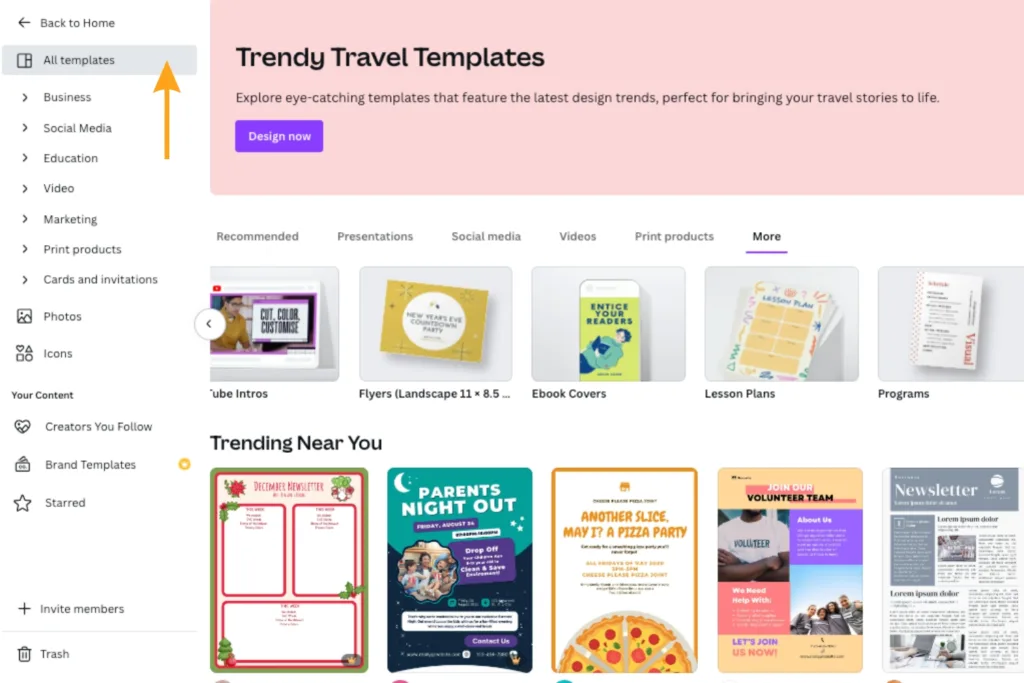
Once you create a Canva account, you’ll see a Home dashboard view. If you want to use Canva’s pre-designed templates, click Templates on the left-side navigation bar underneath Projects. They offer free and paid Canva Pro templates organized into various categories and subcategories.
These template categories include content types like social media, videos, and themed designs like holidays and industries. It even provides platform-specific specs, like Instagram image ad carousels and LinkedIn profile banners for you.
Customize Your Design Template
After selecting your template, next is customizing it—one of the most impactful design steps you take. While Canva’s templates are a solid foundation, you must tailor the visuals to your brand and target audience.
Don’t get overwhelmed with this part. Canva makes it simple to customize your graphics with its design tools on the same left-side navigation bar. You can drag and drop various elements, including photos or videos from their stock visual library, pre-designed headings, shapes, and more.
Customizing your Canva design templates should include:
Matching Your Branding Visual Guidelines
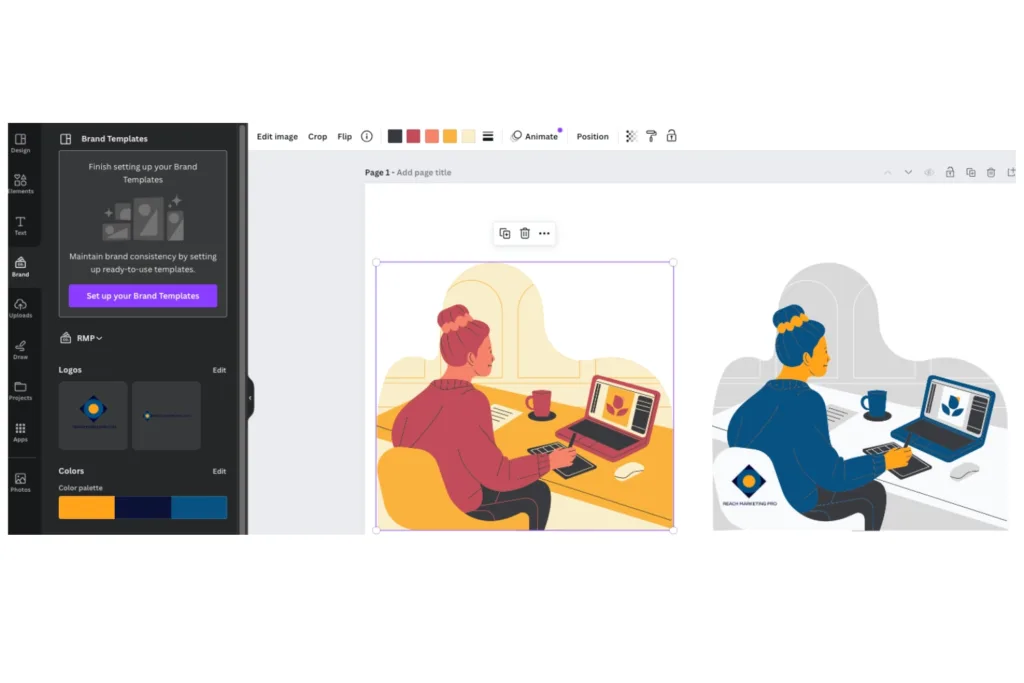
Update the template with your company brand colors, fonts, and logo. The templates or graphics will show a color palette used in the visual at the top of your design draft. You can even set up your branding guidelines under Brand Templates to save it for future designs. Brand Template includes your logos, brand colors, fonts, voice, and more.
Aligning Your Brand’s Messaging
Write with your brand’s tone, audience, and platform it’ll be on in mind. Does your business use humor like memes? Do you want a corporate tone with simple and professional graphics? Will these visuals be placed on your website’s home page or business cards?
Consider your company’s personality and where the graphics will go when creating text. That way, you’ll know how much to write, the font size to use, and how to develop your messaging.
Personalizing Your Visuals
Include original product, event, or staff images when possible. If you want to get creative, you can even draw on your graphics with multiple width points, highlighters, and colors. Other design features include free screen recorders for tutorials, photo filters, and image frames.
Download Your Created Content
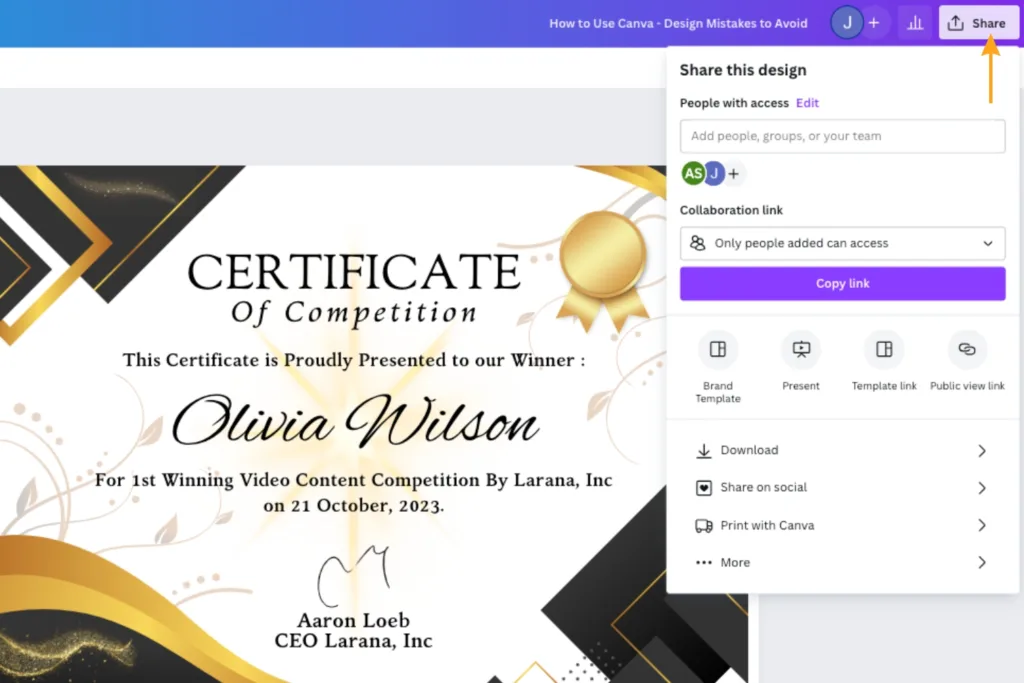
Once your graphics are created and reviewed, the last step is downloading them. In the top right corner, click Share ⬆ and click Download ⬇ in the drop-down menu.
You’ll find seven download file type options:
PNG: Best for complex images and illustrations
JPG: Best for sharing
PDF Standard: Best for sharing documents and emailing
PDF Print: Best for printing documents
SVG: Best for web design and animations
MPG: Only for high-quality videos
GIF: Only for short clips with no sound
Using the correct download file for your graphics ensures they have the proper formatting.
Common Canva Design Mistakes to Avoid
Avoiding design mistakes can seem daunting, especially if you don’t know how to use Canva. Luckily, Canva offers help pages like its Design School, offering free lessons and courses on using its tools for the most effective designs. They also have a Learn blog where you can learn more tips on graphic design, branding, content marketing, and more.
In addition to Canva’s resources, here are some of the most common design mistakes to avoid when using this platform.
Overdesigning Graphics
Don’t overdo the elements in your graphics. It can harm your content performance if it’s over-designed.
Common overdesigning mistakes businesses make when using Canva include:
Too much text
Not enough white space
Overstretching images that become blurry
Font on dynamic patterned backgrounds
Too many font styles
Overdesigning graphics can confuse and overwhelm users because there isn’t a focal point. It can also harm your website’s content rankings due to poor image SEO practices.
With Search Generative Experience becoming more widely used, if Google can’t match your graphics with what users are looking for in Image Search from poor image quality, you can miss ranking and customer opportunities.
Share a collaboration link to test your graphic designs with your colleagues. Click Share ⬆ in the top right corner, next to your image file name. You can set specific user permissions to give people access to your draft if they want to hop in and design or share a Collaboration Link as a preview only.
Under-designing Graphics
Using Canva for graphic design shouldn’t just be copied and pasted if you want to create stunning visuals that support your content marketing strategy. While stock photos and pre-designed graphics work for some companies, you can gain a competitive advantage with brand awareness through personalized visuals.
Common under-designing mistakes businesses make when using Canva include:
No logos
No brand tone or personality
Misaligned branding design guidelines by using different fonts and colors
Not editing the template enough or at all
As one of the most popular content design platforms, people can likely spot a Canva graphic without customization. It’s like ChatGPT. You can spot pre-created content by the way it’s written or designed due to its template.
Remember, Canva is your canvas. You’re the creator!
Not Considering User Experience
If your audience has trouble reading your graphics on mobile or if the visuals are random for the written text it’s paired with, you risk poor user experience (UX) design in your content. UX design impacts all facets of content marketing, including website design, SEO, and conversion rates. You must make it easy for your audience to understand and absorb your graphics—or your competitors will.
Common UX design mistakes businesses make when using Canva include:
Hard-to-read fonts
Lack of contrasting colors to balance the visual
Not resizing graphics for various platforms
No clickable URLs when applicable (products, CTA buttons, etc.)
Mixed brand messaging—unclear what you’re selling, inconsistent imagery, etc.
Irrelevant stock photos or graphics
To prevent UX design mistakes when using Canva for graphic design, ensure you test them first. Send Collaboration Links to colleagues and have them check how the visuals look on desktop and mobile. Using graphics as part of the same series can maintain more brand consistency if you’re creating multiple ones within the same project.
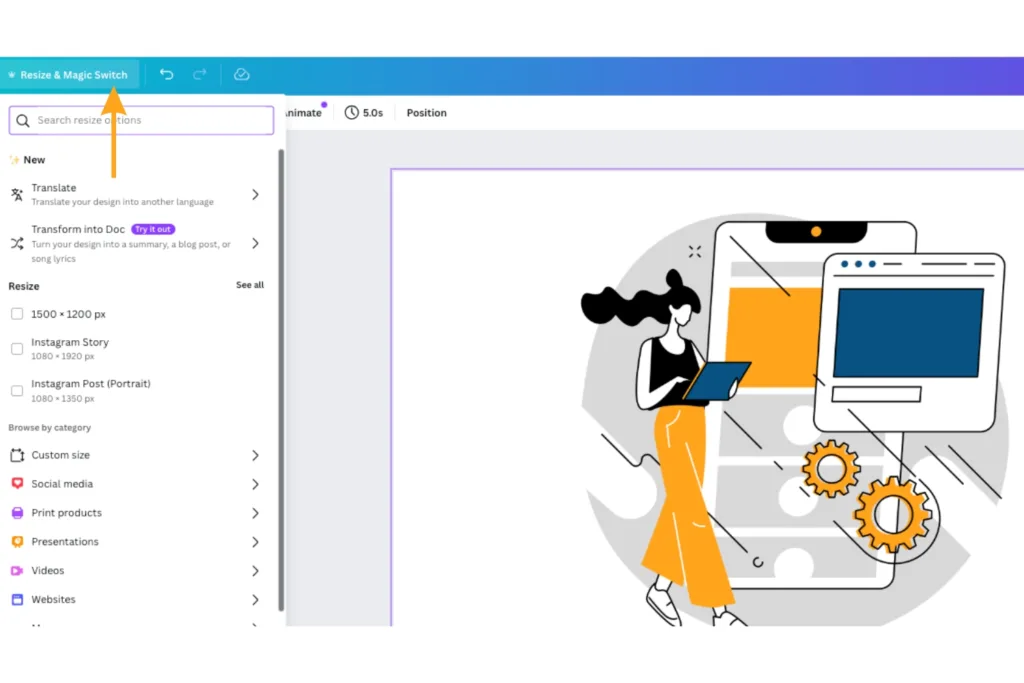
Lastly, always resize your images if you’re using the same graphics for different platforms. With a Canva Pro account, you resize graphics instantly via the Resize & Magic Switch tool in the top left corner of your design draft.
If you don’t have Canva Pro, you can copy and paste your design into a blank project with the right specs, but it requires manual re-positioning of your graphic elements.
Elevate Your Content Marketing Graphics Beyond Templates
While Canva makes it simple to create visuals and customize their templates, working with professional graphic designers can elevate your content marketing strategy. Graphic designers offer more competitive positioning, brand consistency, and customization options with non-template-based applications with more design capabilities.
At Reach Marketing Pro, our graphic design services can personalize your visuals to enhance your content marketing further. We have extensive experience in web design, digital/print publications, packaging, motion graphics, original illustrations, and more.
Contact us to help bring your brand’s vision to life!
As an online store, building and designing your website is an exciting journey that can make or break your brand if it’s not done properly. In a saturated e-commerce market, your brand must stand out while making the shopping experience seamless. Luckily, plenty of user-friendly website design platforms are available to help—even if you’re not web design savvy.
Shopify is one of the best e-commerce website builders because they offer you pre-designed site templates, built-in payment processors, and more. So, how can you ensure you reach customers while developing a Shopify site that’s powerful enough to remain competitive?
Below is a 10-step guide on how to create a Shopify website with design and build tips, along with mistakes to avoid.
How to Create a Shopify Website: A 10-Step Guide to Building & Designing a Powerful E-Commerce Site
E-commerce brands need a compelling Shopify site to support their bottom line. It helps you build brand awareness to reach new audiences, strengthen online visibility to stand out among competitors and increase conversions to sell more products.
Here’s how to create a Shopify website in 10 steps to help you effectively achieve your business goals.
1. Set Up Your Shopify Store
The first step to starting a Shopify store is account creation. You’ll need to enter a domain name for your website, store name, time zone, and currency type. A domain name is your website’s URL and automatically defaults to a “myshopify.com” URL. If you prefer a “.com” URL, you must create a custom domain name by buying one from Shopify or a third-party domain provider.
A benefit of purchasing domain names from Shopify is that they come with a TLS certificate, so you don’t need to buy SSL encryption for your domain to secure your site. Pricing will vary, with annual registration and domain renewal fees separate.
Your store name is what your customers see, which should be catchy, memorable, and unique to your brand.
Some tips for creating a Shopify store name include:
Make it simple to remember, spell, and pronounce.
Add a keyword, if possible.
Keep it short.
Don’t use numbers, hyphens, or long names.
Reflect your brand’s missions, values, or personality.
If you need help creating an online store name, Shopify offers a free business name generator to guide you as creative inspiration.
2. Select a Design Theme
After setting up a Shopify store, the next step is the site’s design theme. Selecting themes is one of the most impactful decisions you’ll make. Your Shopify store design affects how customers understand your brand and shop on your website.
With plenty of free and paid website design templates available in the Shopify Theme Store, it can be challenging to know which is best for your business.
Consider the following when selecting Shopify design themes:
Product Inventory: How many products do you plan on displaying? Some themes offer one-product stores and product catalog designs.
Features: Decide your must-have vs. nice-to-have features, like home page image slideshows, Instagram feed, related products, and quick buy. You can also search by theme feature in the Shopify Theme Store.
Updates: Can you easily rearrange or remove page sections or simply install plug-ins without updating the site’s code?
Budget: Is purchasing a paid theme worth the investment?
Industry: Look at their offered industry-specific themes if it suits your brand, like restaurants, pet supplies, and clothing.
After deciding on your Shopify store design theme, the next step is customizing it.
3. Customize Your Theme
When you design a Shopify website, you must customize its themes to align with your brand and user experience (UX). Your site should be easy for customers to navigate with an immediate understanding of your brand’s unique identity.
If consumers can’t find products quickly with organized product category pages, have fast loading speeds on mobile, or access site breadcrumbs to return to a page, they’ll leave because of poor UX. Recent research reports show that 60% of e-commerce site traffic comes from mobile devices, and only 64% will load a page two to three times before leaving.
When customizing your Shopify design theme, include the following UX design tips:
Use your brand colors, fonts, and tone in your website copy.
Add site breadcrumbs for easy navigation and shopping.
Incorporate mobile-friendly designs, like white space and larger fonts, for easier readability.
Avoid overdesigning, adding too many call-to-action (CTA) buttons, and text-heavy pages that can overwhelm visitors.
Compress quality images and videos to reduce load speed times.
Don’t get too hung up when you design a Shopify website where it prolongs your site launch. Minor edits can always be updated post-launch.
4. Install Your Necessary Plug-Ins
When you build a Shopify store, consider the possible plug-ins you may want to install. Plug-in applications are commonly used to add custom features to enhance your site design and UX.
Common plug-ins used for Shopify sites include:
Live chats
Social proof widgets
Product search filters
Custom contact forms
SEO plug-ins
Shopify offers plugins in the Shopify App Store with simple one-click installation, or you can insert a link to install a third-party plugin. If you’re using a custom plug-in app from a web developer, they must provide you with an installation link specific to your store, as it cannot be used on another store.
5. Write & Upload All Website Content
Your website’s content is as crucial as its design. The written content displayed on your web pages impacts how your brand is perceived and how your site is structured. To write content that ranks on Google, it must be relevant and helpful. Google rewards quality content with best optimization practices.
Avoid lengthy paragraphs, overlinking, and irrelevant content. For example, don’t create a blog post meant to educate users about an industry-related topic and then solely promote your products instead—also known as search intent.
This common content writing mistake not only pushes readers away because that’s not what they’re searching for but harms your rankings, too.
While every Shopify site is different, you’ll need the following foundational content:
Product images, prices, inventory SKUs, etc.
Product category pages
Individual product page titles and descriptions
Product variations: styles, colors, weights, specs, etc.
Main site pages: Home, About Us, Contact Us, Cart, Checkout, etc.
You can also streamline your product page content by importing them in bulk via a CSV file.
Depending on your online store and brand, you may need additional website content, like an FAQ page for technical items and how-to-use directions or an in-person store location finder page.
6. Optimize Your Shopify Site forSEO
Written content not only reflects your brand and UX but also your SEO for users and search engines to find. It impacts how your website ranks in the SERPs to produce more organic traffic.
On-Page SEO: The content on your website pages, including metadata, internal links, image alt descriptions, keywords, and best SEO copywriting practices. This step ensures that Google can understand what your website is about when linking to it in relevant user search queries.
Off-Page SEO: The information “off” your website pages, including backlinks, social media, and online reviews. This step ensures that your website is trustworthy with its content relevancy and Domain Authority.
Technical SEO: The technical information “behind” your website pages, including indexing, crawling, and clean structured code (HTML/CSS/JavaScript). This step ensures that Google can discover and store your site content in their database.
You can waste tremendous effort building a website on Shopify if it isn’t optimized. Without SEO optimization, your website is essentially invisible online, as users and search engines cannot discover it.
7. Set Up Payment Processing
The next step in setting up a Shopify store is your payment processing, and it’s really simple. Shopify offers built-in payment processors with sales tax and multiple types of shipping rates. Their shipping options include flat, price-based, weight-based, and free shipping rates.
Shopify Shipping also helps calculate your shipping rates to simplify order fulfillment based on default shipping zones and profiles.
Next, all you have to do is enter your bank account information in your Shopify Payments account, select the shipping rate you want, and click Activate Shopify Payments in your Payments settings.
8. Review Your Shopify Site Pre-Launch
You’re almost at the finish line! Now that your Shopify build website is almost complete, review it before going live to ensure it’s functioning properly.
Error-free written content, like typos and grammatical errors
Site security and website data backups
Unique page titles and metadata
It’s common to find minor issues post-launch and can easily be updated, so don’t get too hung up on this phase either that can prolong your site going live.
9. Launch Your Shopify Website
Now congratulate yourself on your new website launch! While the celebration is well-deserved, you should have a marketing plan to further promote your site. Consider cross-promotional social media posts, email blast announcements, and countdown campaigns to let your target audience know you’re officially live and they’re free to shop at your store.
This step is especially crucial for small business websites to increase brand awareness for a wider audience reach.
10. Review Your Shopify Site Post-Launch
While a website launch is a significant accomplishment, it doesn’t end there. Always double-check your site after going live to ensure everything is working properly.
User surveys to get website feedback from real visitors
Also plan for ongoing maintenance, such as plug-in updates and outdated information to avoid a complete website design revamp.
Start Your Shopify Journey On the Right Foot with Professional Web Design & Development
Although Shopify makes it simple to design and build a site on its platform, working with web designers is the best investment you can make. As an e-commerce business owner or key stakeholder, you have to manage your business while being an expert in your trade.
Various factors can also go wrong, especially if you don’t know how to create a Shopify website—which can cost more time and resources to fix than hiring web designers from the start. A Shopify site is a significant investment and should be designed and developed by professionals to maximize your results.
At Reach Marketing Pro, our in-house web development and design team has extensive experience creating Shopify sites. We’ll walk you through each step to ensure your website reflects your individual brand, supports your business goals, and is optimized for online visibility.
Our services also include ongoing website maintenance and management, like technical site updates, adding more pages, and ensuring your website consistently performs as it should. We provide full transparency to your website performance with monthly reports to measure and track success.
Ready to start your Shopify journey on the right foot?
Artificial intelligence (AI) is going to replace digital marketing. AI doesn’t create original content. These are common, yet understandable experiences of AI marketing for business owners in today’s online realm. It has disrupted the digital marketplace in almost every facet, including graphic design, advertising, SEO, and VR.
Since it’s still relatively new, there are risks of improper use of artificial intelligence and marketing. Unedited AI-written content has become unintentionally plagiarized and customer service chatbots have human language constraints. Whether you’ve adopted marketing AI or not, it’s here to stay and will only evolve.
So, how does your business successfully adapt to emerging AI technologies?
Learn more about the current trends in AI, our future predictions based on trending insights, and how you can better embrace AI to enhance your digital marketing strategies.
5 Artificial Intelligence Current Trends in Marketing
AI’s impact on marketing is vast with many automated features and applications offering businesses new ways to optimize their online presence. Below are the five most popular AI marketing tools used currently and the benefits they’re providing.
AI Content Writing
You’ve most likely heard of ChatGPT as one of the most used AI platforms for content writing today. ChatGPT was a groundbreaking AI chatbot that revolutionized the way we create content online. Grammarly also had a major industry influence and changed how we proofread content with prompted edit suggestions.
Some of the most popular generated features of AI content writing tools include:
Content topic ideas and outlines
Content analysis and summaries
Content editing
Coding language
Text production
To avoid AI content writing applications from doing more harm than good, you must use it as a foundation—not a complete solution. Copying and pasting generated content without checking if the information is accurate and editing it to create unique content puts your business at risk of distributing misinformation or even plagiarism, as it’s largely unregulated and still new.
We’ve seen the rise of AI content writers specialized in integrating artificial intelligence to optimize their content creation processes. AI marketers enter detailed prompts with preliminary research to generate more accurate and humanized AI-written content faster. Web programmers generate code to write, debug, and analyze coding languages to save time.
Generate ideas from AI content creation applications to get creative inspiration instead and stay up-to-date with changing AI copyright laws. It will help streamline your content creation workflows while preventing legal challenges.
Search Generative Experience (SGE)
Many people have interacted with Search Generative Experience (SGE) largely for its famous AI image generator. Users can enter random image details and SGE acts as a graphic designer bot to create the exact visual you prompted. However, businesses are now using SGE to strengthen their SEO.
Some of SGE’s most popular SEO features include:
AI-powered SERP overviews
Product and shopping ad image searches
Follow-up question-based search queries
Google Business Profile snapshot previews
SGE doesn’t replace standard SEO. It relies on human-written content to generate results. That’s why you must know how to leverage both to deliver the best, most relevant, and most streamlined search results possible to your target audience when looking up information related to your business online.
To accomplish this, you must optimize your website for Google AI search. Create quality E-E-A-T content with strong backlinks, metadata, and user experience (UX) that SGE algorithms reward. SGE can create a generated overview of your site’s information while linking back to it if you create a higher standard of information quality for your users with traditional SEO optimization.
Also, utilize SGE website audits to identify the most important keyword rankings you can’t afford to lose first. It provides an SGE impact analysis to measure your site’s SGE-SEO performance to see how it’ll perform in Google’s AI search engine.
Customer Service Chatbots
Although customer service chatbots have been around for some time, there are new AI marketing features that are increasing their capabilities.
Some of the most popular customer service chatbot features include:
Decision-tree prompts to transfer customers to the correct departments
Deeper understanding of conversational customer language
24/7 customer service support
With advanced automated features, chatbots are solving customer service issues without the need for phone operators, reducing call wait times and bottlenecks contributing to poor customer satisfaction.
Project Management Automation
Popular project management AI tools, like Asana, Jira, and Monday.com, are widely used in businesses for organizing and streamlining their internal workflows.
Some of the most-used project management automated features include:
Task triggers and rules
Recurring tasks
Customized task deadlines
Team project collaboration spaces
Multiple task list views (lists, boards, calendars, etc.)
Having an automated project management platform is a requirement for businesses nowadays. Without an application that centralizes your tasks and team, it’s like operating in the dark.
AI Advertising
Advertising with AI marketing offers more personalized ads and audience targeting to streamline purchase decisions. With advanced predictive analytics and audience segmentation, AI advertising can categorize personas at each stage of the marketing funnel with web behavioral insights.
They can assess which advertising platforms and materials have the best performance for specific groups of people through views and engagement metrics. That way, businesses can better personalize how they create ads for each persona and connect with them where they are on their buyer’s journey for a hyper-personalized shopping experience.
Popular AI advertising features include:
Real-time bidding
A/B testing optimization
Advanced audience segmentation and targeting
Predictive ad performance analysis
When you understand your ideal customer’s online behavior, you can better predict how they’ll respond to your content and provide customized solutions.
5 Predictions On the Future of AI in Marketing
Based on these current AI marketing trends, how will AI affect marketing in the future? While it’s hard to know exactly how far advanced AI will become and how fast it will evolve, we predict the five following future trends will occur:
Stronger Understanding of Branding Guidelines & Human Language
One of the biggest challenges that AI marketing platforms currently face is their understanding of the human language. People nowadays can spot AI-written content as it uses the same robotic tone with long run-on sentences and fluff that doesn’t sound human.
Based on these constraints, we believe that AI digital marketing tools will advance their machine learning processes to reduce the humanization required. We predict that they’ll have a stronger contextual awareness and understand personalized tones to generate more uniquely branded content.
Advanced Customer Behavioral Analysis
While engagement analytics are available in AI marketing platforms, we believe that their consumer behavioral analysis will advance with more comprehensive data insights. They’ll be able to achieve more accurate campaign performance predictions with greater machine learning tools.
We think AI digital marketing tools will have an increased awareness of consumer behavioral trends and ROI projections to help businesses stay ahead of the competition by using consumer data more effectively in their marketing campaigns. AI is designed to continuously learn, so we believe it will help brands make better data-driven marketing decisions in real time.
Enhanced Ad Target Marketing
AI advertising platforms currently have predictive analytics, and we foresee this feature will be enhanced in the future to strengthen audience targeting. They’ll be able to build audience profiles more accurately with their advanced customer behavioral analysis and segmentation.
These tools will be able to analyze comprehensive user data, personalize human language, and offer behavioral prediction analytics based on these valuable insights. It will automate and fine-tune businesses’ buyer persona profiles to better target the right audiences.
However, we think integrating AI advertising with traditional marketing strategies will remain imperative to achieve the most accurate results until new capabilities become available.
AI Integration with AR & VR
The future of AI in marketing will most likely evolve more into AR and VR. We predict VR assistant avatars with detailed rendering will replace chatbots to provide a more “human-like” shopping experience. It’ll be able to try on clothes in different colors and make styling suggestions based on your home’s specs, customer profile, and purchasing history.
While brands like Amazon currently have AR camera views, like seeing how furniture looks in your home before buying, it will become more interactive and advanced.
AI will also utilize enhanced sensory technology for AR to create a real-life immersive experience where simulations can interact with dynamic environments in the real world better.
AI Video Marketing: Pre & Post-Production
Video marketing currently utilizes AI tools for features like viewer behavioral analysis data on live streams and generated video content. While AI video marketing is being implemented, we believe it will enhance pre and post-production processes more efficiently. It will be able to edit raw footage, transcribe audio to create scripts, and render higher-quality animations faster.
However, until new advancements are made, we believe that video marketers will still need to edit AI-powered video content to ensure it’s AI copyright compliant.
Generate Better Results with AI & Human-Driven Marketing
Although AI can do most of the heavy lifting, it doesn’t replace professional digital marketing. That’s why combining human-driven and AI marketing is imperative when marketing your business online while it’s still new.
At Reach Marketing Pro, we have extensive experience with humanizing and tailoring AI-enabled marketing to optimize your strategies for the best results possible. We’ll also keep you informed throughout the process with monthly performance reports to measure and track success.
Ready to stop worrying about AI and embrace AI digital marketing?