Tag: SEO Tools

  • Link Building Strategies in 2023: What Works & What Doesn’t

    Link Building Strategies in 2023: What Works & What Doesn’t

    What is Link Building in SEO?
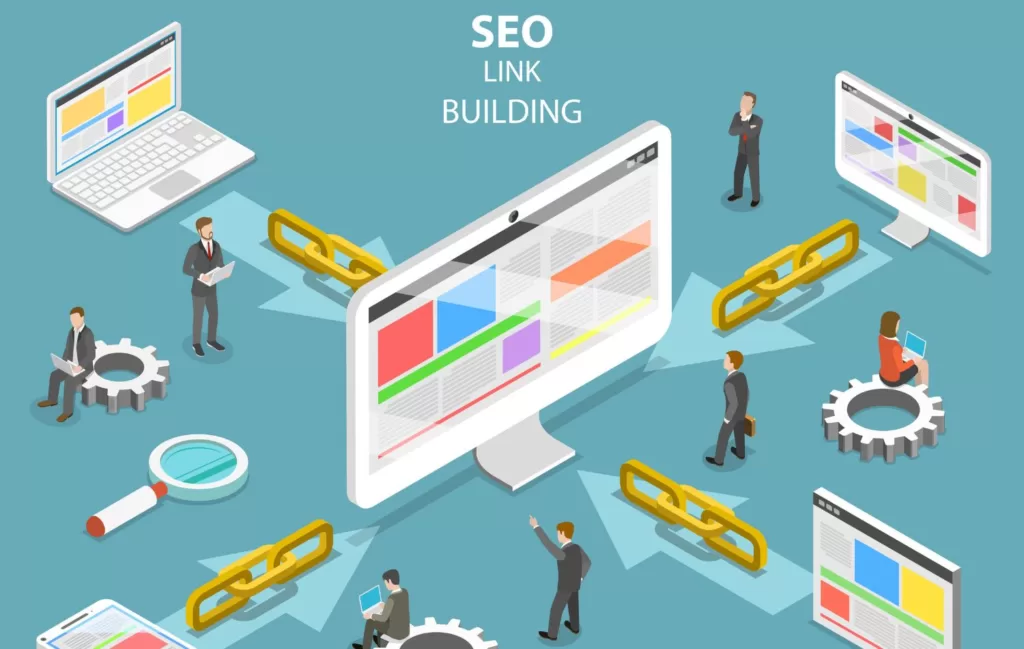
    Illustration with various technology webpages with business figures and "links" around them

    Link-building in SEO is a way to construct one-way hyperlinks to a website to enhance your overall search engine visibility. If you’ve recognized these familiar terms—backlinking and interlinking—then you are familiar with link-building since those are two of its components. These tactics can be utilized across multiple methods that build one-way or a referral hyperlink so that prospective clients can find your website and purchase services much easier.

    Methods of Link Building

    Illustration of two people "link building" in front of a phone screen

    Developing an effective link-building strategy isn’t easy, so finding the best method is key to success. Here are some methods for link-building:

    • Content Marketing is beneficial when you create evergreen content that adds long-term value to your blog.
    • Guest blogging is another option to build shareable links and post relevant infographics without putting in the elbow grease.
    • Utilizing Link-building tools helps you identify and acquire the highest quality backlinks for your chosen topic.
    • Ensure you’re offering useful products and services
    • Email Outreach can be useful if the email is well-written and personable so that it entices the person receiving the email. With this method, be sure to elaborate how you will improve the user experience of visitors to their site.
    • Broken Link-Building is a useful tactic that takes advantage of broken pages across the web by discovering dead pages and asking linkers to swap links to a working page on your site.
    • Public Relations link-building methods include press releases and media pitching to secure editorial links that are directed straight to your website.

    Creating the Best Link Building Strategy
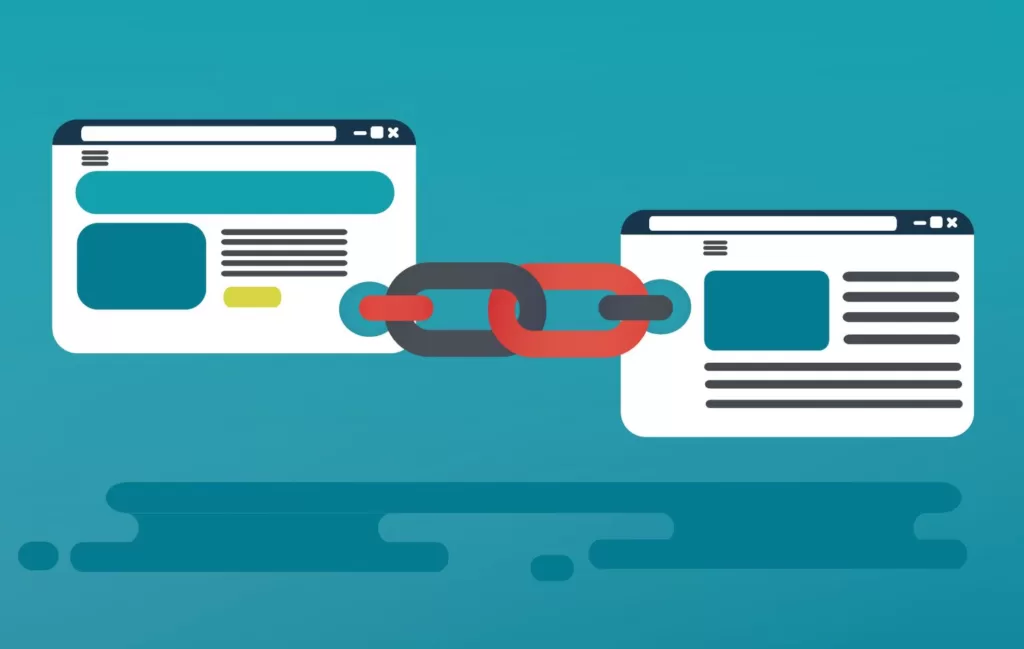
    Image of two webpages connected by "link building"

    There are multiple tactics that bring benefits to your link-building strategy.

    First and foremost, crafting something that is “link-worthy” should be #1 on your SEO agenda.

    Once that’s done, move forward with the following link-building recommendations:

    • Proper outreach to those who see your product/service as useful is who you should target. Don’t send a generic mass email to anyone; instead, stick to who will value your business. For example, utilize those who mentioned your target keywords in their article or who linked similar articles with a similar product/service, since that will result in higher response rates.
    • Serve as a guest blogger by reaching out to businesses and offer free written content to potentially bring them more visitors to their site.
    • Identify broken links and pages on a website so you can create valuable content to that resource. It’s better to connect content to a working site rather than a dead one.
    • Link unlinked mentions by using various tools to identify which links yours would be best paired with.
    • Look for lost links by reaching out to the prior contacted business and see if your link would be better suited somewhere else on their website.
    • Use list posts since bite-sized, easy-digestible content brings more value to the reader than large, hard-to-read paragraphs.
    • Utilize links from mediocre pages IF you believe your content is better than theirs. Make sure to check the links and then add them to yours.
    • Use paid promotions for linkable assets to provide value about your products/services to target audiences.

    Link Building Tactics to Run Away From

    Image of a thumbs down

    While there are some tactics that are go-to’s, there are some to stray away from.

    • Buying links is a tactic that is against Google’s SEO guidelines. It’s advisable to stay away from it, as it may come with repercussions.
    • Paying for each link-building opportunity is very costly and racks up quickly. The average private blog price is $350; you do the math.
    • Not checking and verifying the authority of the site can cause major issues because if you don’t understand your site’s credibility, you won’t know how you compare to the competition.
    • Not considering the link’s position on the page is something to highly consider! Is it embedded in the content? Is it buried in the footer? Make its location a priority.
    • Initiating cold outreach and mass-emailing potential links can have negative effects as a mass email has a more generic copy/paste feel. It’s best to cater the content for each point of contact so they don’t feel ignored.

    Why is Link Building Beneficial?

    Illustration of two laptops with a hand coming out of each screen, connecting to each other via "chains" representing link builing

    First off, link-building leads to higher site metrics and a stronger SEO score—this brings more people to your site and helps your business.

    Since backlinks remain as Google’s first choice ranking signal, it makes sense to see why it’s useful to link with reputable, popular websites. Leverage quality over quantity when it comes to making a positive impact in today’s search engine realm. Also, why not stick with something if it brings beneficial professional relationships with it? Backlinking brings continued opportunities to build and grow your business, create brand familiarity, and generate product awareness on partnering websites.

    There’s no better feeling than bringing back more traffic to your website!

    Is Link Building the Same as Backlinking?

    While both terms are popular tactics for SEO, they have slight differences. Link Building is creating links to your website from other websites. Backlinking is linking content from one website to a certain page on another.

    Don’t Be Afraid to Build a Link with Us!

    Implementing link-building strategies into your SEO is a time-consuming process that requires lots of attention and commitment. Making sure you work with someone who can put the effort and time into it that will generate the best results. Let our team of SEO experts help you get there.

    By staying updated on current digital trends and knowing what will get the customer to your website, our team leverages cutting-edge SEO and link-building tools to launch a successful strategy that aligns with your specific industry and niche product/service.

    Contact us today to get started.
  • Why Word Count & Keyword Density Matters in SEO

    Why Word Count & Keyword Density Matters in SEO

    What is Keyword Density?

    Keyword density is the number of times a keyword may appear on a webpage or within a specific piece of content as a ratio or percentage rate of the total word count. By noticing the number of times the keywords may appear, that calculates the overall keyword frequency on a specific webpage. Normally, a user or search engine would use Keyword Density to determine what a certain webpage may discuss.

    Is Keyword Density Important for Best SEO Practices?

    Illustration of a webpage with a key

    Keywords are a significant piece to an SEO strategy’s puzzle, therefore Keyword Density matters. By launching efficient keyword practices, you’re imminently positioning yourself in the place of people who have specific Keyword intent, meaning they’re more likely to find your content if the keywords they would more than likely search are embedded in your business’s webpage.

    Every day, we search certain keywords online to find specific content. To grow your search engine rankings, become an authority on the subject matter you’re representing. When you’ve found via the right keywords and Keyword Density per each piece of content, there is an increased chance of re-targeting, achieving higher conversion rates, and boosting customer loyalty—a major accomplishment and golden ticket for the everyday SEO Marketer!

    Where Will You See Keyword Density Used?

    Let’s play out a scenario; let’s say you’re reading an article about marketing. As you read through the article, you notice the word “social media” is used frequently, followed by secondary words such as Facebook, Instagram, and LinkedIn. Although the article’s overarching topic is related to marketing, its Keyword Density narrows its focus on social media marketing strategies. Incorporating these keywords into the article boosts its opportunity to rank higher in search engines for searched keywords, including “social media” or “social media marketing.”

    Things to Consider When Evaluating Your Next Piece of Content

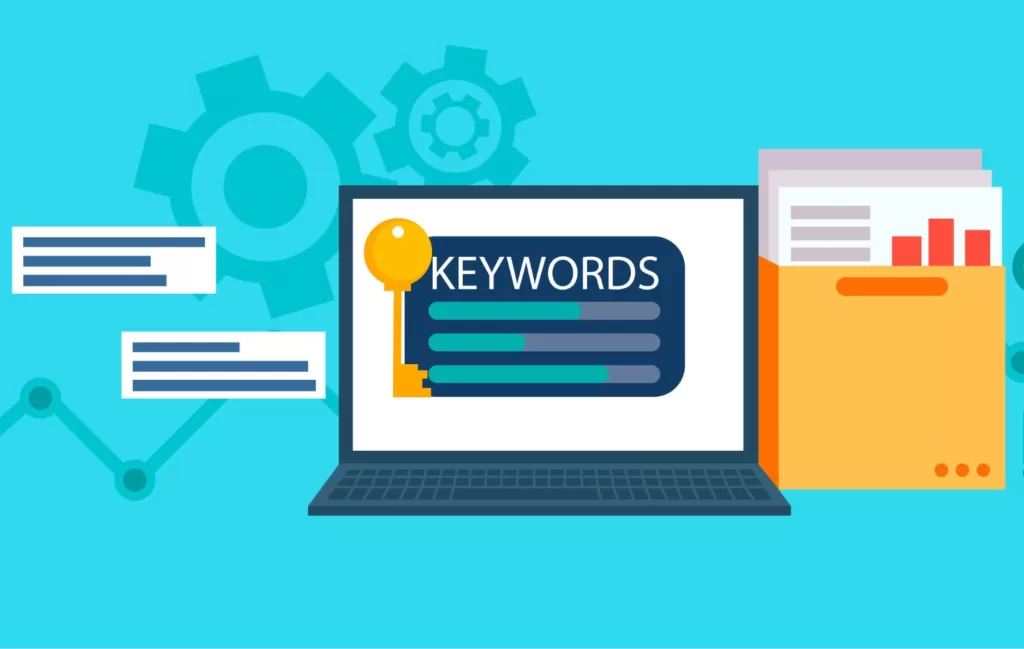
    Illustration of a laptop with the the a key and the term "keywords" on the screen, next to a folder with files inside

    While there are no defined “rules or regulations” for Keyword Density, make sure to implement today’s best SEO practices to ensure you achieve optimal results.

    Focus on Achieving Topic Coverage – While loading content with the same keyword repeatedly is not a feasible long-term SEO strategy, focus on fully covering the topic at hand. Include subtopics to enhance your page’s search ranking and add a new level of flare and creativity.

    Incorporating keyword additions to prominent places (Title Tag, H1, URL, and Meta Description) – While it’s not ideal to “stuff” your article with keywords (known as keyword stuffing) include your main keyword in the Title, Header 1, URL, and Meta Description. That way, it is placed in prominent locations and will enable a higher search ranking for that specific keyword.

    Write naturally –  Readers want to see personality come out in the content they see! Don’t be a robot and write to what Google’s algorithms want to see. Let the words flow the way you want them to, and the results will follow.

    Now, while there isn’t a golden number that’s considered “too high” for Keyword Density in search engine optimization, it’s advisable to revise the content if goes above 2 percent.

    How to Calculate Keyword Density

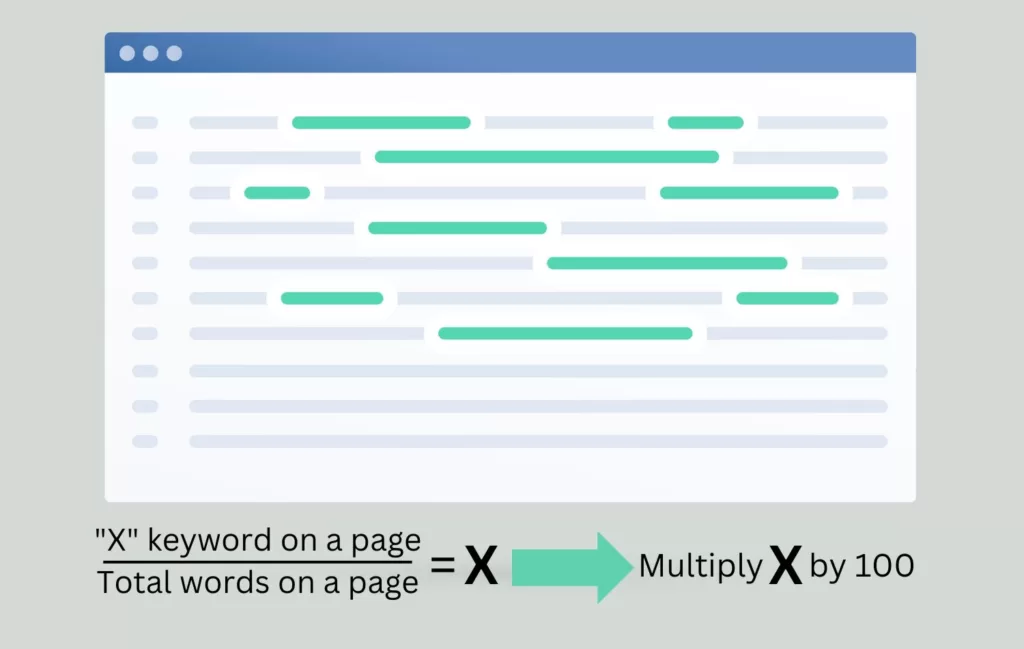
    Image of a webpage with highlighted keywords followed by the calculation to find keyword density

    The formula for calculating Keyword Density is straightforward:

    Divide the number of times a keyword is used on a specific page by the total number of words on the given page. Next, multiply that number by 100.

    The above formula isn’t the only way to calculate Keyword Density. There are multiple types of Keyword Density checkers that help measure (in percentage) the number of times a keyword or phrase appears in comparison to the number of words on a webpage. Optimizing your overall SEO doesn’t have to be a challenge.

    By simply copying and pasting your content into a checker tool, it will calculate the level of density for you!

    Keyword Density and SEO Marketing Professionals at Your Fingertips

    Our team of experts love to dive into the world of SEO. Since Keyword Density is a critical component of SEO marketing, we utilize and leverage proper optimization techniques and strategies to help you appear higher in SERPs, and ideally, leaps and bounds ahead of the competition.

    Reach Marketing Pro has a surplus of Google algorithm trend knowledge to initiate keyword research, content creation, content analysis, and updating content months (even years) after its integration. There are many factors that come into play when ensuring every piece of content is formulated properly for the best results.

    Ready to kickstart your business’s SEO strategy? Contact us to connect with your Keyword Density partner and discuss the next steps.

  • What is the Best Automotive Marketing Strategy?

    What is the Best Automotive Marketing Strategy?

    There Should Be a Focus on Comprehensive Dealership Marketing Strategies

    Illustrated image of a gray car with a "sale" sign on it. Behind the gray car is a glass building labeled "Car Dealership" with multiple vehicles inside

    When trying to find the answer to a never-ending question, begin with a simple Google search. Sometimes, the best answer could be right in front of you at the top of the web page. If you were a customer looking to purchase a new vehicle, you would first go to google to find the nearest dealership. Second, you would look at their online business reviews and overall reputation. If everything seems promising, you will then schedule a time to visit the lot and test drive. On the other hand, another way would be to listen to or see an advertisement on the radio, TV, or in print advertising spots.

    Having a comprehensive automotive marketing strategy is the best way to promote your products and services. Rather than focusing on quick-fix solutions for customers, implementing a slow and steady marketing strategy could show better benefits in the long run.

    It’s important to remember that your focus cannot just be on one strategy, but on every component of your marketing plan. By covering all of your bases, it will allow your team to reach the maximum number of prospective customers. Having a strong auto marketing strategy is not just about having positive online reviews, but optimizing your dealership’s Google search ranking, online presence, brand exposure, and customer loyalty.

    How To Improve Your Automotive Marketing Efforts

    A comprehensive marketing plan is comprised of multiple components that are critical to a dealership’s success. Let’s take a look at each one and how it plays a role in having a successful automotive marketing strategy. The more moving parts your train has, the better it will perform.

    SEO

    Search Engine Optimization (SEO) is a process that generates new traffic to your website from free, organic, editorial, or natural search results in search engines. When your dealership’s website is optimized properly with rank-worthy content, users will be able to easily navigate and see what you have to offer, making it compelling and unique from other dealership websites, which will be the key to winning.

    Local SEO

    Local SEO is a subset of Search Engine Optimization. However, it specifically affects the visibility and ranking of your dealership’s website or web pages in a local geographic area. If your dealership has a physical location or serves as a geographic area, it can benefit from local SEO.

    Mostly blue illustration with two figures looking at a target and chart

    SEM/PPC

    Search Engine Marketing (SEM) is a digital marketing strategy that is used to increase the overall visibility of a website in search engine results pages (SERPs). Leveraging clever paid search campaigns will benefit your dealership’s brand and capitalize on inventory-specific campaigns for new, used, and certified pre-owned vehicles. Pay-per-Click (PPC) is a type of internet marketing strategy that makes advertisers pay a fee each time their ad is clicked on by a prospective customer. Tracking to see how many times an ad is clicked on will show how effective the advertisement is.

    Social Media Marketing

    Social Media Marketing is an essential tool to integrate into your auto marketing strategy because it allows your team to promote its brand, its products, and its services across multiple social channels (Facebook, LinkedIn, Instagram, Twitter, Tik-Tok, etc.). Since each social outlet has its own unique audience, creating dynamic content will help capture more customers and generate leads.

    Reputation Management

    Reputation Management is a marketing and public relations effort that works on how your dealership influences what and how people think of your brand. For example, think of the difference between receiving a 5-star review and a 1-star review. Some customers may choose a different dealership due to seeing a 1-star review online. Maintaining a strong online reputation will help strengthen your customer loyalty and overall brand development.

    Fixed Operations Marketing

    Fixed Ops Marketing has been a long-time struggle for automotive dealerships. Paying close attention to this marketing strategy will allow you to take back control of the business and drive traffic into the service department. Steadier service traffic makes staffing needs easier, and an increase in volume always adds a boost in productivity! So even during slower months, the business will grow.

    Suite of Automotive Products & Services Designed to Boost Your Sales

    Illustration of a car dealership with multi-colored cars in front of the building in the parking lot

    Based on what your automotive marketing strategy is focused on, our team has crafted customized product solutions that are created, updated, and monitored for each of our clients. Whether it is to sell more cars, increase your vehicle reservations, schedule more service bay visits, or increase automotive part sales, we have a solution for you.

    • Absorption Boost This cutting-edge product completely overhauls your dealer’s automotive specials, its service center, and parts center web pages to boost its fixed operations. By combining a stronger visualization with a custom design and QR code scan-to-wallet functionality, absorption boost targets surrounding local target areas and users in smart intervals. With an easy-to-navigate specials page, customers will have better functionality to digitally scan, download, and save your coupons on their phone, making the buying process so much easier.

    • Dealer VIP Advantage Have you ever wanted to watch your vehicles in production sell before they even arrive on your lot? Our digital web experts create custom codes for your VIP landing page that shows all vehicles in production ready for pre-order, making it easy for customers to purchase the vehicle they want at the click of a button. Best of all, our Dealer VIP Advantage solution is OEM and Dealership brand-centric.

    Knowing All the Strategies Can Be Overwhelming

    We’re Here to Make it Easy

    As you can see, our professional team at Reach Marketing Pro has expert knowledge in both traditional and digital marketing strategies. Whether you are looking for a one-off service or a full-fledged ongoing campaign, we are here to help create, initiate, assist, and oversee your Automotive Marketing strategy!

    Visit our products page to learn more.

  • What are the Best SEO Tools and Software?

    What are the Best SEO Tools and Software?

    When you have a goal to increase traffic and user engagement to your website, utilizing an SEO tool will help with your business’s search optimization strategy. Here we will define what SEO is, how it can impact your online traffic, the best SEO tools to use, and how our SEO specialists utilize the best software tools that produce long-lasting results.

    What is Search Engine Optimization or SEO?

    Search Engine Optimization (SEO) is a process that involves incorporating specific keywords and content that helps your website rank higher across various search engines. SEO is used to generate more engagement to a specific website, web page, or piece of content. When a company wants to boost its SEO strategy, they normally hire an SEO Specialist who focuses the majority of their time on analyzing the website’s overall health and identifies areas of improvement that can be optimized to improve your search rankings.

    How SEO Specialists Use SEO Tools

    Illustration with multiple male & female figures who are standing in front of a large webpage with a SEO label

    Investing in an SEO Specialist can provide positive, long-term results for your online traffic. An SEO Specialist navigates your website and makes improvements on the front-end and back-end that can significantly improve the search performance of your website. SEO tools and software assist SEO Specialists during this process by enabling them with the data they need for proper optimization. These SEO software tools are used for keyword searches, organic data, and backlinking, which all benefit your business’s search engine rankings.

    Keyword Searches involve incorporating keywords into the content you put on your website, so they show up as relevant results when similar keywords are searched online. Keyword data refers to the keyword volume of a particular keyword phrase on a monthly basis as well as the SERP position (Page 1, Page 2, Page 3 on Google) of your website page for any given keyword phrase.

    Backlinking includes an internal and external effort for linking websites together through relevant keyword phrases and content topics. For example, if another business or individual links to your site, then you now have a backlink from them, or vice versa, which can improve your SEO and their SEO. It’s a mutually beneficial search relationship.

    Organic Data involves analyzing the website metrics, after combining keyword research and backlinking into your website, and extrapolating useful analytic insights to implement on your site pages. That way you can ensure your content ranks, and continues to rank, at the top of organic, unpaid search engine results pages (SERPs).

    The Best SEO Tools and Software to Use

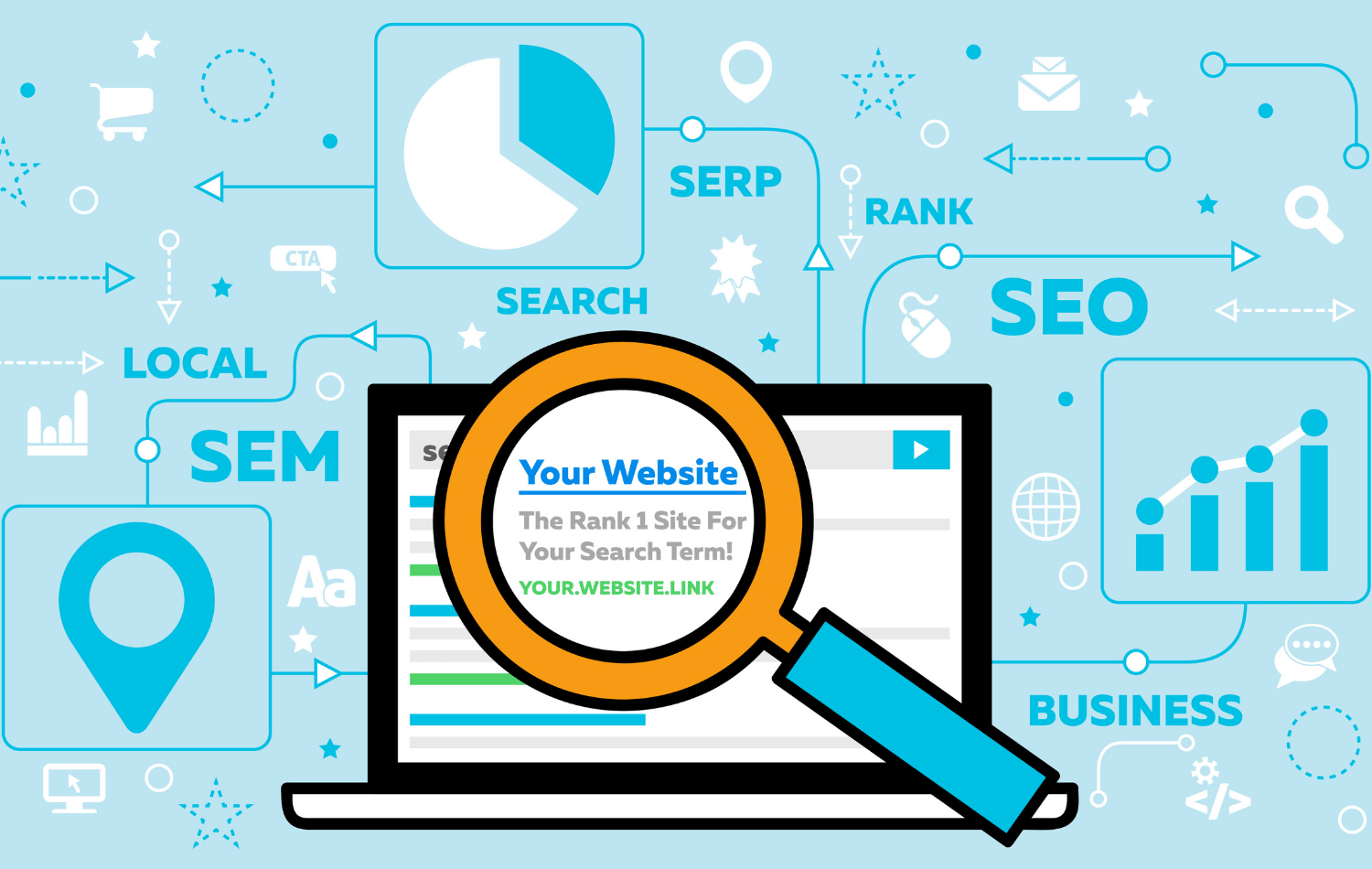
    Illustration with a magnifying glass over text on a laptop. The background is blue and has various SEO terms

    With so many moving parts that are involved with SEO, it can be hard to master at the beginning. However, there is software that’s considered to be the best SEO tools on the market today. Based on our research findings, the best SEO tools are:

    • Ahrefs for SEO Keyword Research has been recognized as being second to Google when it comes to website crawling. When you want to determine your competitor’s backlinks, Ahrefs specializes in link building, keyword research, competitor analysis, rank tracking, and site audits.
    • Google Search Console provides detailed information on how Google crawls, indexes, and serves websites. Best of all, it monitors and optimizes your overall search performance.
    • Semrush is an all-in-one suite that improves your website’s visibility and provides marketing insights. SEMrush delivers optimized specialties in SEO, PPC, SMM, Keyword Research, Competitive Research, PR, Content Marketing, Marketing Insights, and Campaign Management.
    • KWFinder is a keyword research platform that helps you find long-tail keywords with low competition.
    • Moz Pro is used to gather data on your site’s search rankings, page optimization, site crawl, and backlink metrics.
    • SpyFu offers competitive intelligence used by digital marketers to improve their performance in online research.

    Based on what your specific needs are, these are some of the best SEO tools to use in today’s marketplace. No matter the tool you choose, your online presence is in good hands and you will see dramatic results.

    When Using SEO Tools and Software, How Long Will It Take to See Results?

    Short answer: It can be anywhere between 4 to 12 months to see results. Sometimes longer depending on the competition level of the chosen primary keyword phrase. However, the speed at which you can see verifiable results depends on how well combine ranking factors into your executed SEO strategy. For example, if you target low-competition keywords, you may start to see results quicker than if you target high-competition keywords. Think of it this way – SEO is a marathon, not a sprint. If you want to see long-lasting results and not fall backward, slow and steady always wins the race.

    Why Should I Use SEO Tools if It Takes a While to See Results?

    A collage of animated webpages, forms, and graphs

    Think back to each passing New Year. The typical New Year’s resolution is to go on a diet and lose some weight. Most of the time when this happens, this sudden resolution ends after only a few months because people would not see any significant changes as quickly as they would like to see. That is why it is called a lifestyle change, rather than a fad diet or a “quick fix.” SEO is the same way. Results do not change overnight. Instead, it takes consistent optimization for a minimum of 4 months until you begin to see a change in traffic or your google search rankings. If you stay diligent and continue running your marathon, you will reach the finish line and see a significant improvement.

    SEO Professionals That Handle Your SEO All at One Cost

    Reach Marketing Pro is a leading industry expert on what it takes to grow your social engagement. We offer a full-fledged SEO marketing service that kickstarts your organic strategy from the ground up, creating captivating content using graphics, photos, and videos across your website pages and blog posts. Our close-knit team includes Search Engine Optimization Specialists who can boost your SEO rankings by utilizing the most optimal SEO tools and software on the market. By leveraging proper optimization, data-driven keywords, and SEO marketing strategies, we will have your business ranking higher in SERPs – ahead of your competition. We are industry experts who specialize in content creation, backlinking, website crawling, SEO, and keyword analytics that can benefit your business’s website traffic and profitability in the long run.

    Visit our SEO services page to learn more.