Tag: Sales

  • Product Page SEO: How E-Commerce Brands Can Maximize ROI From Search to Sale

    Product Page SEO: How E-Commerce Brands Can Maximize ROI From Search to Sale

    As an e-commerce brand, investing in product page SEO is non-negotiable. Selling products is the core mission of your business. If your product pages aren’t properly optimized for search engines and users alike, they likely won’t perform successfully. 

    SEO for e-commerce product pages is essential to promote online visibly, clicks, and conversions from organic traffic. If shoppers and search engines can’t discover them or push them away from poor SEO, they won’t support your bottom line as they should. 

    Learn e-commerce product page best practices and how you can generate a greater ROI with SEO content optimization. 

    SEO for E-Commerce Product Pages: A Step-by-Step Guide


    Below is a step-by-step guide on product page SEO with common mistakes to avoid.

    Write Unique Product Page Titles & Descriptions

    A graphic people writing content on a page with a pencil

    SEO for product descriptions and titles requires unique copy for better search visibility, especially for e-commerce brands with large catalogs. Duplicate copy in your product pages can cause crawling delays from search bots because they don’t know which version to save in their database for indexing. 

    It also wastes your crawl budget, causing you to wait until you can request again, leaving your product pages undiscovered online. 

    More ways to improve your SEO product descriptions include:

    • Internal links to relevant product pages in the same collection to promote upselling and cross-selling opportunities
    • Backlinks from reputable sites that recommend your product to demonstrate trustworthiness and credibility
    • Not using the same product descriptions as the manufacturer’s website, as they’re not created for SEO or shoppers and keep your brand separate

    In addition to unique titles and descriptions, they should also provide an added value proposition. Instead of only explaining what your product does, showcase what customers will gain from it.

    If you’re selling winter coats describing them as, “engineered to keep you warm” is obvious, as it’s what they should do. Saying something like, “engineered to keep you warm at -10° F” is a stronger selling point.

    Displaying your product’s specific benefits, along with its features, better addresses your buyer persona’s challenges and concerns.

    Optimize Your Copy with the Correct Search Intent

    All shopping starts with a search. While you may be familiar with keyword optimization, businesses often make the mistake of choosing the wrong ones. 

    Your keyword research is more than finding queries with the highest search volume and lowest difficulty from your competitors. It should also include selecting keywords with the right search intent to attract the appropriate audience. 

    For example, if you’re an athletic footwear brand and optimize a product page description with a keyword, like “best running shoes” this wouldn’t provide the best SEO opportunity. This keyword generates blogs in the search engine results page (SERP), not product pages.
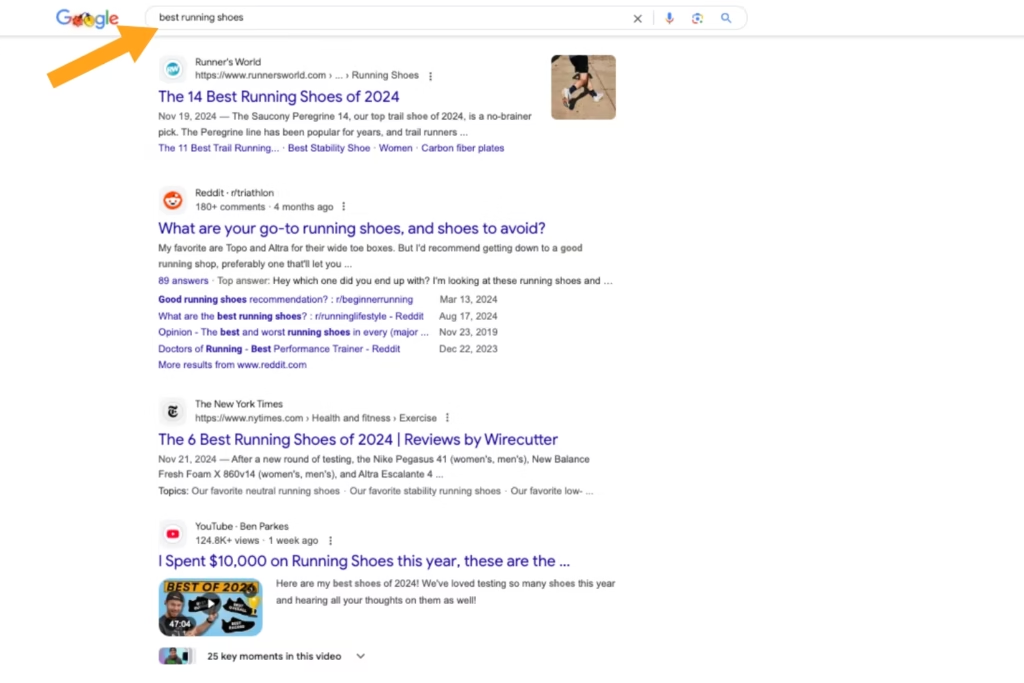
    Screenshot of Google search results for best running shoes with a yellow arrow pointing at the search bar

    While “best running shoes” has a commercial search intent, the SERP shows users comparing options by reading blog recommendations before buying. Optimizing your product pages with this keyword can cause fewer people to click on them or quickly leave because that’s not what they’re looking for with that search query.

    A transactional keyword, like “running shoes” generates product pages in the SERP, showcasing the intent of people ready to buy. Adding this to your product’s description and page URL attracts relevant traffic, promoting a higher chance of converting them.
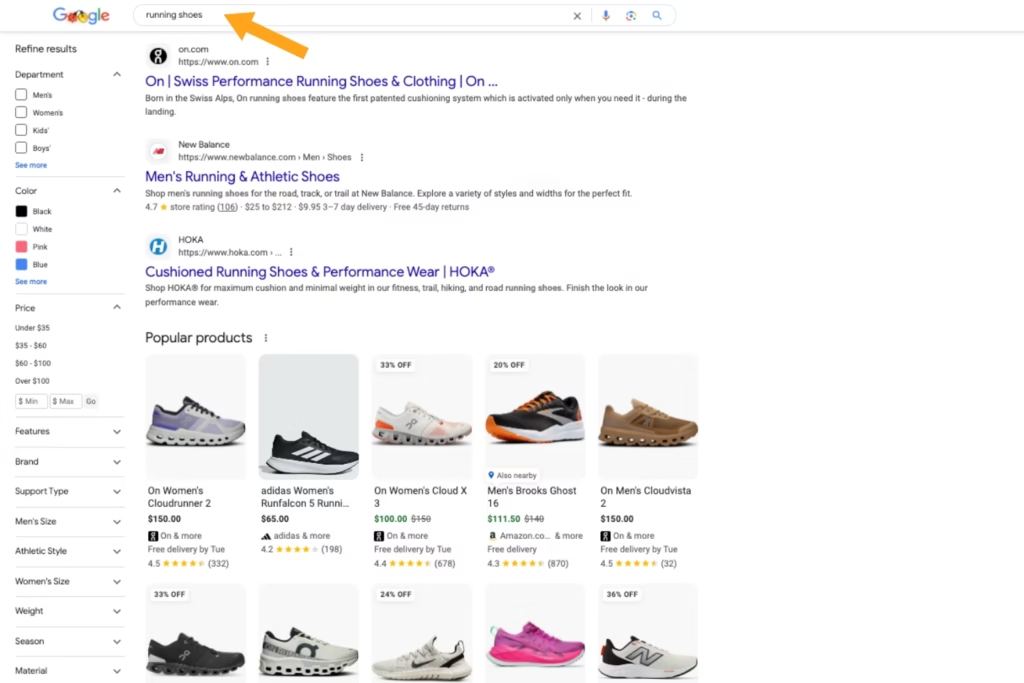
    A screenshot of the Google search results for the keyword running shoes with a yellow arrow pointing at the search bar

    A slight keyword change in your product page SEO can significantly impact its performance. Luckily, SEO platforms like SEMRush tell you the search intent behind every keyword, so you don’t have to guess. 

    However, it’s easy to check yourself. Simply enter the keyword into a search and review the SERP for what they show. If it generates product pages, you have the correct search intent.

    Use Clear, Captivating, & Optimized Product Visuals
    A graphic of three people adding photos to a website page

    While you may have high-quality product page images, are they captivating enough to customers? In addition to displaying your product, fully showcasing how they apply to the real world resonates further with shoppers. Instead of only using product images on a white background, include lifestyle visuals, too. 

    For example, if your brand sells hiking boots, include photos of people in a mountainous landscape wearing them to provide a better visual context. If you sell office chairs, use a short-form video to show their different sitting configurations, demonstrating the product’s diverse usability and comfort further.

    Once the product page visuals are finalized, ensure they’re optimized next. Writing image alt tags with descriptive language ensures it’s ADA-accessible for all online shoppers. Also, aim to use target keywords in your image alt tags naturally to improve your page’s search visibility via metadata.

    Implement Structured Data Markup to Generate Rich Results on Google
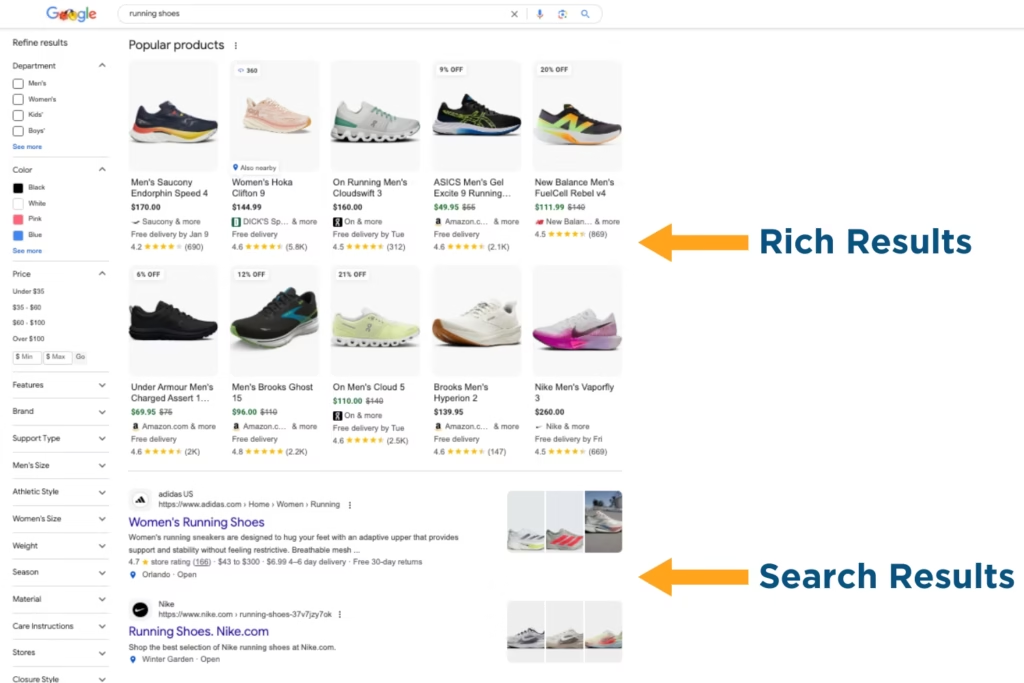
    Screenshot comparing the rich and search results on Google for running shoes

    Structured data markup is one of the most critical components of product page SEO. In a saturated online market, e-commerce brands must stand out in the SERP more than ever. As a form of on-page SEO, structured data markup helps your product pages generate rich results

    Rich snippets visually showcase your product differently than the SERPs and are placed above traditional search results. They’re designed by Google to enhance the shopping experience without having to click on your online store. When users click on rich results 58% of the time versus 41% for non-rich results, it’s worth optimizing your product pages for.

    Examples of structured data types for e-commerce product pages are:

    • Review Snippets: Average rating, number of reviews, reviewer information, etc.
    • Product Schema Markup: Carousel image, pricing, product availability, etc. 
    • Sitelinks Search Box: Sitewide product search in the SERP, without having to click on your website
    • FAQs Schema Markup: List of common product questions, assembly directions, etc. 

    Structured data markup gives customers a streamlined shopping experience while providing Google with the standardized language it requires to generate rich results for your product pages.

    Create Valuable Call-to-Action (CTA) Buttons

    As an online store, you must encourage users to take action via CTAs to increase click-through rate (CTR) and conversions. These CTAs should be more than buttons below your product description stating, “Buy Now.” They should also be convincing of the value your products bring. 

    If you’re a skincare brand selling facewash, instead of creating a “Shop Now” CTA button, write something like “Start Your Self-Care” to showcase to customers that it’s a worthy investment in themselves. 

    Additional ways to create valuable CTAs for e-commerce product pages include:

    • Using Multiple CTAs to Meet Customers Where They Are in Their Buyer’s Journey: add to wishlists, you might also like, one-click checkouts, save payment methods, address autocomplete, email signup discounts, etc. 
    • A/B Testing Button Designs to See What Resonates Best with Your Target Audience: button locations, shapes, colors, fonts, sizes, etc.
    • Placing CTA Buttons Strategically to Streamline Users From Product Page to Purchase: minimal pop-ups, responsive button designs on mobile and desktop, etc. 

    Conduct a Site Audit to Correct Page Performance Issues

    Graphic of three people conducting a website audit on a desktop

    You can do all the optimization in the world and still not have success if your product pages have performance issues. If they have slow loading times or poor mobile design, they can push potential customers away. Also known as user experience, it’s about making your site easier to use for a seamless shopping experience.

    Look for the following issues in your site audit to improve your product page SEO:

    • No breadcrumbs for easy site navigation from product page to checkout
    • Low-quality compressed product visuals on mobile  
    • More than four seconds in page load speed on desktop and mobile
    • No SSL certificate to secure your website and shoppers’ saved sensitive payment information

    User-friendly e-commerce websites help people discover, browse, and purchase from your product pages more. 

    Stop Losing Shoppers from Poor Product Page SEO: Get Found Faster & Sell More Today

    Drive more transitions to your product pages with digital marketing professionals. At Reach Marketing Pro, we’re a full-service agency with extensive experience in site-wide optimization, including Shopify, WordPress, and custom e-commerce websites. 

    We have graphic designers to create customized, compelling product visuals per your unique brand. Our SEO copywriters write effective product page copy that adheres to Google guidelines and customer needs. Additionally, our web designers/developers ensure your site’s shopping experience is seamless and engaging. 

    Together, our in-house team provides you with the full suite your e-commerce website needs for a stronger product page performance.

    Ready to generate more organic traffic and transactions?

    Learn more about our digital marketing services or contact us to reach more customers today!
  • Vehicles for Sale & Vehicle Listing Ads: A Strategy for Automotive Dealerships

    Vehicles for Sale & Vehicle Listing Ads: A Strategy for Automotive Dealerships

    What Are Vehicles for Sale and Vehicle Listing Ads?

    Illustrated image of a dealership displaying vehicle inventory

    Vehicles for Sale Listings are comprised of inventory directories located directly within search results through the dealership’s Google Business Profile, formerly Google My Business. Basically, how it works is prospective or repeat customers search and apply filters to navigate through the dealership’s inventory, outside of their direct website, to learn more information about a specific vehicle. Once they find the vehicle they want, it will potentially direct them straight to the dealership to make a purchase.

    Vehicle Listing Advertisements are set up after you create a vehicle inventory data feed with the Google Merchant Center. With the added information, Google will then match the details to potential shoppers with the relevant vehicle makes and models they’re searching for. From a buyer’s perspective, think of it as Google being your personal shopper. You put in the features you want, and it provides relative vehicles you can see or a dealership that can ship it to you. All the information about your chosen vehicle will be at the touch of your trackpad—location, make, model, price, mileage, and more. All you’ll have to do next is contact the dealership to get the vehicle.

    Are These Features Worthwhile for Dealership Marketing?

    Illustration of the manufacturing process of car making to the point of sale at a dealership

    Since Google launched its new vehicle ads platform, it has helped dealerships reach new buyers much easier and faster via smartphone. This digital transition resulted in fewer buyers wanting to visit automotive dealerships and using online vehicle buying as a valued alternative to visiting dealers and test driving on the lot. It can be time-consuming to set up a Google Merchant Center since the process begins with creating the inventory for each feature, maintaining it, managing incoming available vehicles, and ensuring leads are tracked, etc. But when looking at the long-term effects and weighing the benefits versus the costs, the results are very much worth the effort.

    Take the statistics into account! Google claims that dealerships who’ve used Vehicle Listing Ads with existing search campaigns increased their conversion rates by 25%, with some seeing as much as 55% or more! Now that’s some premium fuel to kickstart your dealer’s engine.

    Can a Private Seller Create Vehicle Listing Ads?

    Illustration of two men shopping for a car on a phone

    Unfortunately, for those who are not a verified dealership, vehicle ads from private sellers, individuals, or automotive brokers are not permitted. Currently, the vehicle ad platform can only be used for dealers who advertise non-commercial passenger vehicles. However, with evolving supply and demand, available offerings can certainly change in the future.

    Other vehicle types that are prohibited, along with non-commercial passenger vehicles, include, but are not limited to:

    Recreational vehicles (such as RV’s, motorhomes, trailers, etc.)

    Farm vehicles and equipment

    Buses of all kinds

    Two-wheelers

    Trains

    Boats

    Airplanes, and

    Outdoor utility vehicles

    Hitch a Ride to Greater Marketing Capabilities & Sales Opportunities with Us!

    Illustration of two men shaking hands after one sells the other a car

    The post-pandemic world has revolutionized the car-buying process, including customer behavior. Stay-at-home orders triggered a massive shift to online shopping and the trend has only increased since. It’s necessary to remain ahead of the evolving demands and expectations by adapting to market needs. With that being said, the need for online shopping has reached a new level. Don’t allow your dealership to have a downward turn; let the newfound need to go “digital” initiate a drive to remain competitive in an ever-changing marketplace! For any dealership, being the top automotive provider is the goal and is critical for long-term business growth.

    Since Google implemented Vehicles for Sale and Vehicle Listing Ads in 2021, our team at Reach Marketing Pro has worked hard to perfect their process. Don’t rely on trying to perfect your own system; instead, let us take the wheel and drive you down victory lane. We’ll do the grunt work and put the pedal to the metal so that your dealership does what does best—sell vehicles!

    It’s time to hit the gas; contact us today to learn more.

  • What is the Best Automotive Marketing Strategy?

    What is the Best Automotive Marketing Strategy?

    There Should Be a Focus on Comprehensive Dealership Marketing Strategies

    Illustrated image of a gray car with a "sale" sign on it. Behind the gray car is a glass building labeled "Car Dealership" with multiple vehicles inside

    When trying to find the answer to a never-ending question, begin with a simple Google search. Sometimes, the best answer could be right in front of you at the top of the web page. If you were a customer looking to purchase a new vehicle, you would first go to google to find the nearest dealership. Second, you would look at their online business reviews and overall reputation. If everything seems promising, you will then schedule a time to visit the lot and test drive. On the other hand, another way would be to listen to or see an advertisement on the radio, TV, or in print advertising spots.

    Having a comprehensive automotive marketing strategy is the best way to promote your products and services. Rather than focusing on quick-fix solutions for customers, implementing a slow and steady marketing strategy could show better benefits in the long run.

    It’s important to remember that your focus cannot just be on one strategy, but on every component of your marketing plan. By covering all of your bases, it will allow your team to reach the maximum number of prospective customers. Having a strong auto marketing strategy is not just about having positive online reviews, but optimizing your dealership’s Google search ranking, online presence, brand exposure, and customer loyalty.

    How To Improve Your Automotive Marketing Efforts

    A comprehensive marketing plan is comprised of multiple components that are critical to a dealership’s success. Let’s take a look at each one and how it plays a role in having a successful automotive marketing strategy. The more moving parts your train has, the better it will perform.

    SEO

    Search Engine Optimization (SEO) is a process that generates new traffic to your website from free, organic, editorial, or natural search results in search engines. When your dealership’s website is optimized properly with rank-worthy content, users will be able to easily navigate and see what you have to offer, making it compelling and unique from other dealership websites, which will be the key to winning.

    Local SEO

    Local SEO is a subset of Search Engine Optimization. However, it specifically affects the visibility and ranking of your dealership’s website or web pages in a local geographic area. If your dealership has a physical location or serves as a geographic area, it can benefit from local SEO.

    Mostly blue illustration with two figures looking at a target and chart

    SEM/PPC

    Search Engine Marketing (SEM) is a digital marketing strategy that is used to increase the overall visibility of a website in search engine results pages (SERPs). Leveraging clever paid search campaigns will benefit your dealership’s brand and capitalize on inventory-specific campaigns for new, used, and certified pre-owned vehicles. Pay-per-Click (PPC) is a type of internet marketing strategy that makes advertisers pay a fee each time their ad is clicked on by a prospective customer. Tracking to see how many times an ad is clicked on will show how effective the advertisement is.

    Social Media Marketing

    Social Media Marketing is an essential tool to integrate into your auto marketing strategy because it allows your team to promote its brand, its products, and its services across multiple social channels (Facebook, LinkedIn, Instagram, Twitter, Tik-Tok, etc.). Since each social outlet has its own unique audience, creating dynamic content will help capture more customers and generate leads.

    Reputation Management

    Reputation Management is a marketing and public relations effort that works on how your dealership influences what and how people think of your brand. For example, think of the difference between receiving a 5-star review and a 1-star review. Some customers may choose a different dealership due to seeing a 1-star review online. Maintaining a strong online reputation will help strengthen your customer loyalty and overall brand development.

    Fixed Operations Marketing

    Fixed Ops Marketing has been a long-time struggle for automotive dealerships. Paying close attention to this marketing strategy will allow you to take back control of the business and drive traffic into the service department. Steadier service traffic makes staffing needs easier, and an increase in volume always adds a boost in productivity! So even during slower months, the business will grow.

    Suite of Automotive Products & Services Designed to Boost Your Sales

    Illustration of a car dealership with multi-colored cars in front of the building in the parking lot

    Based on what your automotive marketing strategy is focused on, our team has crafted customized product solutions that are created, updated, and monitored for each of our clients. Whether it is to sell more cars, increase your vehicle reservations, schedule more service bay visits, or increase automotive part sales, we have a solution for you.

    • Absorption Boost This cutting-edge product completely overhauls your dealer’s automotive specials, its service center, and parts center web pages to boost its fixed operations. By combining a stronger visualization with a custom design and QR code scan-to-wallet functionality, absorption boost targets surrounding local target areas and users in smart intervals. With an easy-to-navigate specials page, customers will have better functionality to digitally scan, download, and save your coupons on their phone, making the buying process so much easier.

    • Dealer VIP Advantage Have you ever wanted to watch your vehicles in production sell before they even arrive on your lot? Our digital web experts create custom codes for your VIP landing page that shows all vehicles in production ready for pre-order, making it easy for customers to purchase the vehicle they want at the click of a button. Best of all, our Dealer VIP Advantage solution is OEM and Dealership brand-centric.

    Knowing All the Strategies Can Be Overwhelming

    We’re Here to Make it Easy

    As you can see, our professional team at Reach Marketing Pro has expert knowledge in both traditional and digital marketing strategies. Whether you are looking for a one-off service or a full-fledged ongoing campaign, we are here to help create, initiate, assist, and oversee your Automotive Marketing strategy!

    Visit our products page to learn more.