Tag: Organic Search

  • How to Build a Website for Your Small Business

    How to Build a Website for Your Small Business

    Don’t get overwhelmed by the details. For small business owners, it’s common to not know how to create a website. You have to focus on managing the company and providing expertise in your trade.

    However, there are steps to prepare for the best web development experience and results possible— and it’s easier than you might think.

    A new web build is an exciting journey and can provide marketing opportunities, especially for small business owners. It’s an extension of your brand, mission, and products/services, which is crucial in an evolving and competitive digital marketplace. Consumers today expect a solid first impression before buying, and your website might be their first experience with your brand.

    Whether you’re utilizing a web designer and want to educate yourself or considering DIY, here’s a complete guide to small business website development in just 11 steps.

    Must-Have Details to Gather Before Your Website Build

    Before building a website, it’s practical to gather business details first to determine the type of site you need. For example, small e-commerce brands can benefit from creating a Shopify website. Shopify’s features include mobile-friendly product page design templates and payment gateways that are designed for e-commerce businesses. Company details, such as how many products or services you offer, also determine the website size you need.

    Here’s a pre-website build checklist to help guide you before development:

    • Web Hosting: Pick a domain name (website name/address) and register it with a web hosting provider.
    • Web Designer: Who is responsible for the web build and design?
    • Website CMS: Which CMS (content management system) platform will you use? Ex: Shopify, WordPress, HubSpot, etc.
    • Company Brand: What are your branding guidelines? Gather your brand colors, fonts, logo files, visual do’s/don’ts, content rules, and reference sites for design inspiration.
    • Website Trends: Research current web design trends to ensure your site meets new consumer demands and search engine algorithm updates.
    • Site Maintenance: How committed are you to maintaining and updating your website as needed? Who is responsible for this?
    • Web Content: Do you have current marketing collateral? Are you committed to creating unique content for your website?
    • Website SEO: Do you know how to properly optimize your website for search engines and keep up with competitor SEO rankings?
    • Website UX (User Experience): Can users quickly navigate your website and not feel overly spammed?

    While this may seem like a long or detailed checklist, it’s worth it. The more you prepare before a website build, the better the process is. Simply gather this information into designated folders and your web developer will have everything they need. It also eliminates the need for further back-and-forth on missed items.

    How to Build a Website for Your Small Business in 11 Steps

    Illustration of people designing a website with color switches, a desktop PC and a pencil

    Now that you know the information needed before a web build, we’ll explain how exactly a website is created. From design inspiration references to domain name registration, here’s how to build a website for your small business in 11 steps.

    1. Identify Your Target Audience to Understand Your Traffic Sources

    Do you know who your ideal customer is? Understanding your target audience is crucial to web builds because it should be designed with them in mind.

    Dive deeper into your buyer personas. Address their common questions and challenges so you can provide related and specific solutions through your website. This way, you can drive potential traffic with more qualified leads since you understand what influences their online behavior.

    Define your business goals for your website. Whether it’s selling products or offering services, identifying your target audience is the foundation of creating a successful website. It determines how you’ll connect and persuade them to engage with your site.

    2. Research Competitor Sites for Design Inspo and Marketing Opportunities

    Certainly, don’t copy what your competitors are doing with their websites. Avoid using the same color scheme, exact layout, and images. However, it’s beneficial to have visual inspirations for how you want your website to look. This way your developer understands the creative design and structural direction you’d like to incorporate.

    Researching your competition is also an effective marketing strategy to uncover missed opportunities in their web design. For example, if you’re a boutique e-commerce brand and discover that your competitors don’t utilize one-click checkouts, this can be a great opportunity to provide a better online shopping experience.

    One-click checkouts can increase transactions by 25.8% since customers aren’t burdened to create an account before buying— resulting in reduced abandoned carts and checkouts. Finding ways to make your website look and perform better is key to outdoing the competition and prioritizing your products or services.

    3. Select a Domain Name that Represents Your Brand

    A domain name is more the name of your website address. It represents your brand and determines how users feel about your business based on a name alone. Domain names also cannot be changed or modified once you register them. For these reasons, it’s critical to select a domain name that accurately represents your company’s identity, mission, and values.

    Consider the following when picking a brandable domain name:

    • Make it simple, short, and impactful: Make a memorable and brandable domain name under 15 characters.
    • Aim for a “.com” TLD when possible: Top-level domains (TLDs), like “.shop” for e-commerce brands or “.org” for non-profits, can be suitable options if “.com” is taken.
    • Avoid long or hard-to-pronounce words: Prevent users from misspelling your website or making it harder to find.
    • Don’t include slang, numbers, or hyphens: Focus on a seamless user experience so consumers can access your site easily.

    If you need inspiration, there are domain name generators, like Shopify and Wix, where all you need to do is enter a keyword, and creative options are prompted. However, you must ensure that a domain name hasn’t been taken by checking if it’s registered online.

    4. Register Your Domain Name with a Web Hosting Provider for Copyrights

    Now that you have a domain name in mind, the next step is registering it so you own the copyrights and trademarks. But before you do, confirm it’s available by checking its registration. A common source to verify if a domain is already registered is through domain name search tools like GoDaddy or ICANN.

    There are options if you want a domain name that’s registered:

    • Buy it from the owner: If the brand is inactive, has a dated website, and has no social media presence, there’s a chance the owner might accept an offer.
    • Use different TLDs: If “.com” is taken, try registering with “.shop,” “.co,” and other authoritative TLDs.
    • Consider name variations: Brainstorm other creative versions of the domain name you want. Make them specific to your niche to avoid duplication.

    Once you verify a domain name isn’t registered, it’s available for purchase. Popular website hosting platforms, such as BlueHost and Hostinger, offer tools that automatically register domain names for you.

    Domain HostingContent Hosting
    Website addressWebsite CMS (content management system)
    Domain names cannot be changedEdit content without markup or programming
    Hostinger, SiteGround, BlueHostWordPress, Drupal, PrestaShop

    Some hosting platforms, like GoDaddy and Squarespace, also provide CMS systems. It may be a beneficial option to consolidate your website marketing services, especially if you don’t know how to build a website. Ensure you compare all options that are best for your needs and budget.

    5. Choose Your Content Hosting Platform for Simple Content Management

    In addition to a domain hosting provider, you’ll also need a content hosting provider—also known as a CMS (content management system). The difference between domain vs. content hosting is their functionalities and customization.

    A domain hosting provider hosts your website on a server to function properly. While you can change hosting providers, domain names cannot be changed or modified once registered. 

    A content hosting provider stores your website’s content and shares its files, and hyperlinks pages. Its purpose is to give website owners easy access to edit their content without the need for marking up or programming languages.

    Each content hosting site has various capabilities, plugin updates on their platform, monthly/yearly fees, and more. So, when picking a content hosting site, consider the must-have functionalities that are key to your business, like simple SEO plug-in integration or user-friendly blog management.

    6. Create a Skeleton of Your Site for Streamlined Web Development
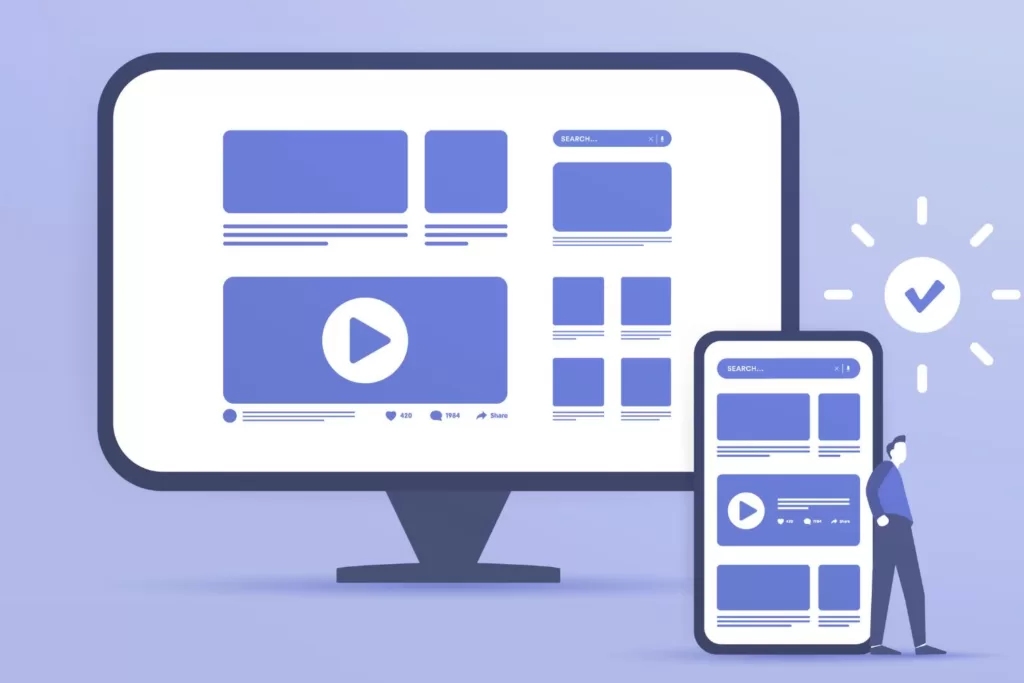
    Illustration of a phone and computer screen with different screens on it. Showing UX for different devices.

    A skeleton is a visual roadmap of what your website design will look like. The purpose of site skeletons is to streamline the development process so business owners can see how exactly their website will be laid out. It helps with revisions or new design changes before placing it on the content hosting platform.

    Here’s what you should consider when reviewing your site skeleton:

    • Do you have an eye-catching homepage that quickly explains what you do as a company?
    • Is your branding clear?
    • Are the products/services you provide easy to find, read, and clear?
    • How much content do you have that will be displayed throughout the site?
    • Do you have testimonials, FAQs, press releases, or blogs you want to feature?
    • How will a customer/client contact you?

    While website updates are doable after launch, having a preview design through skeletons can reduce the need for more revisions before content uploading.

    7. Optimize Your Website for Search Engines and Online Visibility

    After finalizing your small business web design, the next step is to ensure search engines can effectively find and store it through off-page, on-page, and technical SEO. If search engines like Google can’t discover (crawl) and store (index) your website in their database, it’s virtually invisible to users online.

    Some ways to optimize your web pages and drive traffic to your site include:

    • Use a mobile-first approach to your design and site responsiveness
    • Index all web pages in Google Search Console for indexing and crawling (off-page SEO)
    • Invest in technical SEO with fast loading times and site breadcrumbs for easy navigation
    • Implement on-page SEO by writing optimized page titles with target keywords

    In addition to visibility and traffic, website optimization is crucial to keep up with your competition. By maintaining best SEO practices, you can promote competitiveness by ranking for similar keywords while building your online presence.

    Business websites that rank at the top of their niche’s SERPs (search engine results page) generate a 39.8% CTR (click-through rate), while second ranks receive 18.7% and third at 10.2%. Optimizing your website isn’t only for search visibility and keyword rankings. It’s also an effective SEO strategy to increase engagement and leads.

    8. Create and Add Content to Your Website That Aligns with Your Brand

    Every website needs content. Whether you’re repurposing old marketing collateral or writing unique content, each web page needs written text and visuals. This includes home pages, product/service descriptions, graphics, page headers, and blogs. After creating and reviewing your content to ensure it aligns with your brand and business, place it throughout your website. Remember to optimize your content to ensure search engines and users can discover it.

    9. Review Your Website on Mobile and Desktop for a Better User Experience (UX)

    Illustration of a person sitting at a desk looking at a website with a car on it

    Check your website multiple times across several devices, including mobile and desktop. Review the site layout on your computer, phone, and tablet to ensure easy navigation and strong user experience (UX).

    UX is the user’s overall experience when interacting with a website or application. It plays a critical role in maintaining customer satisfaction and may push potential new ones away. If not, it’s considered in your site design.

    For example, conversion rates drop an average of 4.42% for each additional second of page load time. If your site has slow web response rates, low-quality images, or irrelevant content, these are signs of poor UX design. Websites with strong UX design can increase conversion rates up to 400% because they’re designed to be simple to navigate and easily accessible.

    Some ways to improve UX design for small business web development include:

    • Create Flowcharts: Use these visuals in your site’s skeleton to decide how users will interact with your site for the optimal experience.
    • Conduct Interface Tests: Gather data on the experience quality of your site and compare the effectiveness compared to other user interfaces.
    • Create User Surveys: After launch, chat with potential and existing users of your system to gain feedback for UX improvements.

    Before launch, get a close friend, colleague, or relative to view the staging link on their devices and provide feedback. Getting a fresh perspective can uncover UX design issues you may thought were working but are invisible to the user.

    10. Launch Your Website to Make it Live!

    Once everything is reviewed, added, and to your liking, click that “Publish” button! Congratulate yourself or your team for this major business accomplishment. After launch, it’s essential to monitor your new website to ensure it’s running smoothly.

    Here’s a post-website launch checklist to help guide you:

    • Submit your site to Google Search Console for indexing and crawling
    • Monitor your site in Google Search Console for any design errors, like duplicate pages or broken links
    • Setup Google Analytics with your site to monitor its performance and gain valuable data
    • Spread the word on social media as part of your off-page SEO strategy

    Regular updates are an ongoing process after you build a website for your business. From content marketing to structural improvements for UX, a site launch isn’t the end of the process but the beginning of a new chapter.

    11. Plan for Regular Website Maintenance After Launch

    All websites will have regular maintenance, including plug-ins, platform updates, backups, product/service changes, etc. However, if a consumer finds a business with a website that seems outdated, has broken links, or slow loading, they’ll most likely move on to another competitor. Keeping your website regularly maintained is easier than a complete revamp.

    Let Website & SEO Experts Handle Your Website Build for You

    With these steps, you can streamline your small business web design. But as a business owner, we understand if you don’t know how to build a website— and you shouldn’t have to.

    Professional web developers have expertise in custom mobile-responsive design and plugin integration that you can’t do on your own or as easily. They can create unique site features to make your brand stand out and ensure its structure meets search performance requirements.

    At Reach Marketing Pro, we’re a full-service digital marketing agency and can guide you every step of the way. From website design concepts, content creation, monthly site updates, and SEO optimization, we help ensure our clients are successful in providing the best user experience for potential and returning customers.

    Skip the hassle of creating a website and let our SEO and web development team do it for you. Our developers provide superior design, webmaster services, and site management to handle all of your website’s needs. This way you can focus on what you do best, your trade.

    Contact us to kick off your new website journey today!

  • How to Block a Website on Different Devices and Browsers

    How to Block a Website on Different Devices and Browsers

    Why Would You Need to Block a Website?

    There are many reasons why you would want or need to block a website. For example;

    Parental Controls: If you have children, some websites contain explicit content that you want to keep them from.

    Increase Productivity: Permanently or temporarily block certain websites to improve your productivity time for studying or working.

    Suspicious Sites: Save yourself from attempts at infecting your computer with a virus or stealing your personal data.

    Which Site-Blocking Method is Right For You?

    Each method of site blocking will vary based on its restriction, the users, and the device you’re using. For example, if you want to block websites temporarily or permanently on an individual device, it’s recommended to install a more configurable program or easy-to-use browser extension.

    If you want to block manually through the host’s file, firewall, or router, it’s a good option if you don’t want to deal with software. However, this method is only suitable if you want to disable access to certain sites permanently.

    If you’re blocking certain sites for multiple users on a single network, you should use either web filtering software, which is normally used by businesses or schools, or block through the router.

    How to Block Websites on Your Browser

    Illustration of the Chrome, Safari, Firefox, and Internet Explorer Web Browser Logos

    Chrome

    1. Log in to your Google Admin Account and go to the Chrome browser homepage.
    2. Click Devices Chrome Settings Users & Browsers.
    3. Choose which users you want to block from visiting certain websites.
    4. Find the URL Blocking section.
    5. Enter the web address you want to block in the Blocked URLs tab.
    6. Save the changes.

    Firefox

    1. In the Options page, select the Privacy & Security tab.
    2.  Scroll down to the Permissions section and click the Block Websites option.
    3. In the Block Websites page, enter the URL of the website that you want to block, and then click the Add button.

    Safari

    1. Go into the Content and Privacy section of Screen Time.
    2. Click Customize to block specific websites. 
    3. Click the “+ under the restricted section to block specific sites.
    4. Add the URL of the site you want to block and click OK.
    5. Select OK again to finalize your decision to block a site.

    Internet Explorer

    1. Open the browser and go to Tools (alt+x) > Internet Options.
    2. Click the Security tab.
    3. Click the red Restricted Sites icon.
    4. Click the Sites button below the icon.
    5. Now in the pop-up, manually type the websites you want to block one by one.
    6. Click Add after typing the name of each site.
    7. When done, click Close and click OK in all other windows.

    Blocking Websites on Your Mobile Device

    When using an Android and or iOS device, you will need to download specific apps to block unwanted websites. Thankfully, most apps can work across multiple browsers! Here are a few examples of apps and their features:

    BlockSite

    StayFocusd

    Parental Controls

    FamiSafe

    AdBlock

    Manually Block Websites on Your Desktop or Laptop

    Illustration of parents and their child in front of a blocked computer screen

    Looking to block a website manually? Here are step-by-step processes for how to block a website on Windows 10, Mac, or with your router.

    Windows 10

    1. Go to the Chrome Web Store
    2. Search for the BlockSite extension, and choose the first one that reads: BlockSite: Block Websites and Stay Focused.
    3. Click Add to Chrome.
    4. Click Add Extension on the prompt window.
    5. Go to the website you would like to block on Chrome and right-click anywhere on the page. Tap on BlockSit” then Block this Site.

    Mac

    1. Click on the Apple icon locked in the top-left corner of the screen and select System Preferences.
    2. Choose Screen Time.
    3. Click Content and Privacy in the left sidebar.
    4. Click Turn On, located in the top-right corner of the window, unless already enabled.
    5. Choose Limit Adult Websites and click Customize.
    6. In the Restricted section, click the plus symbol.
    7. Add the desired URL and click OK.

    Router

    1. Open your web browser and type in the IP address of your router.
    2. Log in to your router’s settings.
    3. Find the website blocking tool in your router’s settings.
    4. Enter the websites that you want to block.
    5. Save your changes and restart your router.

    Parental Controls on Windows 10

    1. Visit family.microsoft.com and log into your Family Safety account.
    2. Choose your family member then scroll down to Content Filters.
    3. Toggle on Filter Inappropriate Websites.
    4. To block specific sites, add their URLs under Blocked Sites.
    5. You can block access to specific sites by turning on the Only use-allowed websites toggle. 
    6. Add URLs of approved websites under Allowed sites.

    Parental Controls on a Mac:

    1. Click the Apple icon and select System Preferences.
    2. Click the Parental Controls icon.
    3. Click the lock symbol and enter your password.
    4. Select the account you want to filter with parental controls.
    5. Click Enable Parental Controls.

    Additional Methods to Block a Website

    Illustration of an increasing graph and gears representing improved productivity

    In addition to the above, there are additional ways to block unwanted websites. Here are some ways to do that.

    Using Browser Extensions: Using specific extensions on your browser helps block certain websites you don’t want other users to visit. For example, BlockSite is a Chrome Extension that helps block web pages and limit adult websites individually or by categories.

    Using Productivity Software: Using these samples will help reclaim your productivity and steer away from potentially dangerous websites; Freedom, Forest, PawBlock, RescueTime, Pause, Focus, etc.

    Leverage Web Filtering Software: These help block unfiltered websites from being accessible on your computer. Examples include WatchGuard.

    Let Our Team Help You Gain Productivity Time

    When working with Reach Marketing Pro, you’ll know your privacy and security always come first. We have the skills you need to strategize, analyze, and curate creative designs for your business, giving you back time to focus on what’s most important!

    Reach out to us today to receive a FREE marketing consultation.

  • How Search Marketers are Using AI to Create Demand

    How Search Marketers are Using AI to Create Demand

    How Do AI-Powered Search Engines Operate?

    Illustration of a robot holding a magnifying glass over a business laptop

    For anyone looking to dive into digital marketing, search engine algorithms aren’t a new concept to learn. An AI search engine collects insights from multiple sources such as search queries, browsing behaviors, social media interactions, and purchase histories. They utilize sophisticated algorithms to analyze any collected data, identify patterns, and generate actionable insights. However, AI marketing has changed more than one may think! Since it’s recognized for making things easier, it helps alleviate the typical effort of interpreting customer preferences from large data sets and provides information that’s reliable. By utilizing it correctly, AI search engine marketing can develop and implement targeted marketing campaigns, optimize customer journeys, and deliver personalized experiences.

    Search Marketer’s Use of AI

    What marketers need to focus on when using AI-powered tools is providing high-quality, user-centric content that appeals to the interests of their target customer base. Additionally, optimizing a company’s user experience can enhance the overall experience for consumer audiences. AI search considers a user’s previous search history, location, and additional factors to provide personalized results, producing a more efficient zero-click search experience.

    Capitalizing on AI-powered search will create content that clearly answers questions, provides efficient solutions to complex problems, and delivers a positive user experience.

    How AI can Help Search Marketers

    Illustration of a man working on his computer getting the help of AI

    AI is different for each business and that should remain top of mind when creating an efficient, customized strategy. Here’s how AI-powered tools can help create a more efficient digital strategy and how they can aid Search Marketers in improving their campaigns:

    Creative Testing: This strategy helps creative teams revise concepts, drop ones that don’t resonate well with target audiences, and identify which ones work the best. This testing can be used to conduct market research before a new product launch.

    Campaign Optimization: This strategy helps boost a company’s visibility and conversation rates, which drives more potential customers in their direction.

    Measurement: Analyzing measurements serve as quantifiable insights to search marketers. When using them correctly, measurements can project the success of an advertising campaign and track toward KPIs.

    Improve Productivity: Productivity is important in AI marketing because it serves as a key contributor to driving unparalleled growth and profitability.

    Reiterating what was mentioned above, AI-powered tools are indeed tools and should be placed in a proper strategy instead of simply taking information and mixing them together.

    AI Search Engines, Search Marketers, and You

    Image of a group of people working and using AI for business results/analysis

    AI marketing takes digital strategy to the next level. Using a personalized marketing strategy with search marketers can help them leverage their expertise in AI-powered search engines may help their marketing initiative. Let’s break it down further.

    Tailored Marketing Strategies: These help a business identify its unique selling proposition, target its right audience, and create compelling narratives that resonate with its ideal customer.

    Having a Competitive Edge: Having a competitive advantage helps a business effectively distinguish itself from its competitors by offering something unique of superior value to its customers.

    Measurements: There are multiple ways a business can measure its performance, including tracking processes, sharing intelligence, making informed decisions, identifying goals, developing reliable metrics, and collecting valuable data that accelerates growth and development.

    Enhanced Customer Engagement: Implementing a customer engagement strategy will not only help improve the overall customer experience, but boost the value of a business’s existing relationships, increase the likelihood of referrals, and foster sustainable growth.

    Our Experts Use the Right Tools & Expertise!

    Although AI marketing carries a unique mind of its own, utilizing SEO and SEM specialists help leverage their knowledge and expertise to keep up with evolving technology to implement a personalized marketing strategy. At Reach Marketing Pro, we serve as your digital strategy partner to optimize business performance and uptick growth to ensure your company has a competitive edge in your industry.

    Are you ready to take the first step and evolve your marketing strategy using AI-powered tools?

    Contact us here to get your personalized AI marketing strategy started!

  • Website Domain vs. Content Hosting Explained

    Website Domain vs. Content Hosting Explained

    Domain vs Hosting:  What’s the Difference?

    To make it simple, the key difference between domain and hosting is that a domain is the website’s address, which allows visitors to easily find your website online. Hosting is where the website files and designs are stored. For example, GoDaddy is a hosting site, while www.reachmarketingpro.com is a domain.

    There’s also a term called content hosting, which is a service where your website’s content is managed with a CMS, or content management system. These systems enable website owners or marketing teams to edit the website’s content, share its files, and hyperlink pages without marking up or adding programming languages.

    Both are Needed for a Successful Website

    Illustration of a website screen with different content displayed

    Unfortunately, to have a website you can’t have one or the other. While you have the domain, your website must be hosted on a server to function properly. The goal is to have visitors see your site and hopefully make a purchase. You can purchase a domain name and not have a website. However, a website can’t be hosted without a domain name. So if you’re starting the journey to getting a website, start with choosing and purchasing a domain name.

    How to Choose the Right Domain Name & Content Hosting Platform

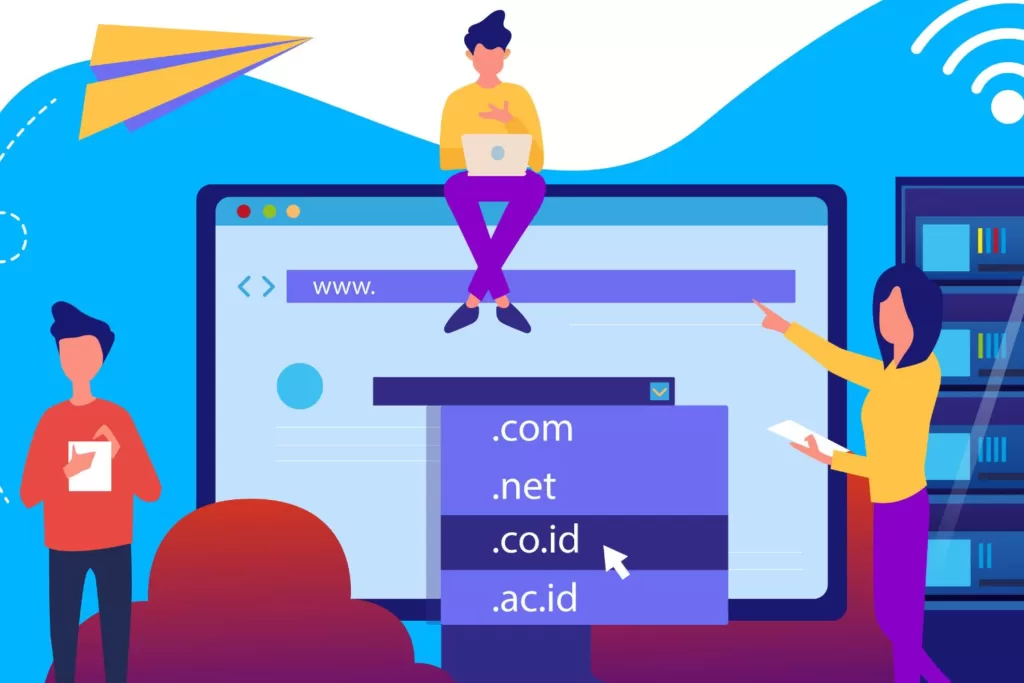
    Illustration of people around a computer choosing a domain name

    Looking to choose the right domain name? Here are some tips on how to find the perfect domain name and content hosting platform.

    For finding and purchasing a domain:

    • Naming tips: find a “future-proof” name that is short but memorable.
    • Prevent trademark infringement by researching domain names before making the purchase.
    • Look into potential costs, as each domain comes with a different price tag.
    • Lead negotiations after conducting your own research and landing the best price for the domain.

    For finding a web content hosting platform:

    • Based on the type of website you are looking to host, there are specific platforms that are best suited.
    • Look into the best search engine optimization (SEO) tips that will enhance your website’s visibility and google search rankings. This will also play a role in the marketing.
    • Each hosting platform comes with its own set of security protocols. Look into each platform and how they oversee the maintenance and upkeep of the website so you know how your website will be managed.
    • Each hosting platform comes with different maintenance packages based on specific customizations. Although cost plays a factor, research plays a role to see which package and hosting platform fits your needs best.

    Things to Consider Before You Select Your Web Hosting

    Illustration of a man sitting at a desk creating a website

    Here are some things to consider before selecting the platform to host your website. First off, there are multiple types of web hosting platforms, including WordPress, Drupal, Squarespace, and PrestaShop. If you already have an established domain and web-hosted website, it can be successfully transferred to another company if needed.

    However, there’s something you should know. An already registered domain name can’t be modified or changed, so it’s important to know a new one has to be purchased and implemented to the existing website, or a new one will need to be created and linked to the old one, essentially, redirecting from the previously created domain name to the new name so you don’t lose website traffic.

    Resources for You Consider

    There are valuable resources to utilize when purchasing a domain and choosing a content hosting platform. Here are some of our recommended domain and content management resources:

    For purchasing a domain: Hostinger GoDaddy, and Squarespace.

    For content hosting: WordPress, Drupal, Squarespace, and PrestaShop.

    Let Our Team Do the Work for You!

    Finding and creating domain names can be a tricky process when you endure it alone. Rather than trying to figure it out, rely on an expert who can guide you through the domain purchasing process, website development, and content creation for your new (or redesigned) website!

    At Reach Marketing Pro, we help you every step of the way, no matter if your business is new or well-established. Allow us to create a branded, optimized, and functional website for your business! If you have a question, ask us here!

  • Should You Have AI Write Content for You? The Pros & Cons Explained

    Should You Have AI Write Content for You? The Pros & Cons Explained

    What is Content-Writing AI?

    Artificial intelligence (AI) incorporates human intelligence to create content through computer software. These cutting-edge programs are modeled after original human thought processes to create unique content based on what you are looking for. When using AI, you surrender the opportunity of human error, such as typos and grammar mistakes. Since it is time-consuming to produce valuable and insightful blogs, articles, and essays, artificial intelligence technology steps in to play hardball. Curious about what professionals today use AI for? Normally, you will find landing pages, marketing copy, product descriptions, SEO-driven blog topics, evergreen content, and social media copy for starters.

    The Benefits of Using Content-Writing AI

    Illustration of a man standing in front of a desktop with a content-writing assistant

    Utilizing AI writing tools come with unique benefits. For instance, one major benefit that comes with AI content writing is the ability to save so much time. For example, rather than spending countless hours brainstorming, constructing outlines, and proofreading, AI writing tools serve as the second pair of eyes to ensure the content is correct while increasing your productivity to focus on other tasks. Additionally, artificial intelligence helps drive website traffic by crafting SEO-optimized, readable content.

    If you struggle to come up with new writing topics, AI tools step up to the plate and hit a home run with unique content suggestions, which help boost your creativity and improve your writing abilities. The number of opportunities is endless with AI writing tools!

    Disadvantages of Using Content-Writing AI

    Illustration of different content-writing topics and a magnifying glass

    With the benefits that AI writing tools provide, there is always a downside. For instance, cost. Based on if you are looking for short-form content or more full-scale projects such as a robust, research-driven article, premium software would be required. In that case, you should prepare to invest hundreds of dollars, if not more, monthly.

    Secondly, it’s best to understand that you can’t immediately depend on the AI to take over things without ample time to prepare. With every AI writing software comes a learning curve.

    Most importantly, using artificial intelligence removes each writer’s unique personality. Unfortunately, since AI writing tools are based on “human intelligence”, they will always have a more “robotic” personality in the content, which lacks emotional appeal. Additionally, with the more robotic personality, you may seem to notice an unnatural flow of content that has multiple paragraphs that is repetitive, but slightly reworded. That may lead to worrisome thoughts of possible plagiarism.

    Lastly, E-A-T concerns are a red flag when using AI writing tools. Without a personal touch or emotional appeal, Google’s algorithm may reduce your content’s visibility as far as it appears in Expertise, Authoritativeness, and Trustworthiness.

    How to Use Best Practices When Writing-Content with AI

    Illustration of robot's face in the center, surrounded by content-writing related icons

    Looking to utilize artificial intelligence in your content strategy? Here are some key tips and tools to keep in mind.

    • Your chosen AI writing tool should never be your sole outsourcing solution for your brand’s content. Instead, it should act more as a writing assistant to come up with new topics to overcome writer’s block.
    • Research what other businesses are writing about to remain current with what’s being discussed.
    • Prioritize incorporating E-A-T best practices in the writing process.
    • Prevent having a “robotic” personality by adding your unique personal touch so your individual voice is heard.

    Contact Us for Your Content Writing Needs!

    Looking ahead, artificial intelligence and evolving marketing trends will undoubtedly help automate processes. However, if you look to add a personal touch that exemplifies your brand to target customers, it’s best to ensure that you are using the best practices when publishing the best—written content on your website. When you implement best practices, you will achieve the best results!

    Are you ready to jumpstart your content? We are here to help you reach the next level. Reach out to us today to craft your customized content plan that aligned with your needs and customers.

  • Press Releases: How They Can Help Your Business

    Press Releases: How They Can Help Your Business

    What is a Press Release?

    By the standard definition, a Press Release is a short, captivating news story that is sent to targeted members of the media. For example, certain topics in a Press Release may include announcements of new products, an upcoming event, a new business initiative, an award announcement, the hiring of a new employee, or important research.

    More specifically, a business would use a Press Release to promote a corporate event, launch a new product, or onboard a new employee.

    For an individual, a Press Release could be an event announcement, award, narrative control, or research-oriented.

    The Process of Initiating a Press Release

    Illustration of a purple background with people around a screen initiating a press release

    In the PR world, creating a Press Release is fast and thorough. Here is an outline of the process of a Press Release for a brand’s media strategy.

    Step 1: A marketing team chooses to write a press release to promote an upcoming product launch, and determine relevant media outlets to publish to.

    Step 2: Once the press release is submitted to various media outlets, journalists from these media outlets determine if they want to contribute to the story.

    Step 3: Interested, the journalist contacts the company for an interview to learn more about the upcoming product launch.

    Step 4: After the interview, the journalist writes a story and publishes it on the media’s website.

    Step 5: The newly published article on the media’s website will raise awareness, drive engagement, and boost foot traffic to the company’s website at no additional cost to them.

    The results of a Press Release are powerful when done correctly. Don’t waste a moment creating an integral voice for your company.

    How Does a Press Release Help Me or My Business?

    Like above, a Press Release can significantly accelerate a business’s growth and perception, if it gets into the hands of the right media agency. Remember, a Press Release can do the following:

    • Foster strong, long-lasting relationships and engagement with the media.
    • Formulate and improve credibility when a business controls its narrative.
    • Aids in crisis management, mitigating future risk.
    • Builds and strengthens a business’s SEO traffic to its website, corresponding social media channels, blogs, and more.
    • Grows a solid follow base with customers, journalists, other businesses, and prospects.

    Press Release: Another Marketing Strategy for Your Growing Business

    Illustration of people around a news announcement with a microphone, speakerphone, and message icons

    Did you know that utilizing a press release can drive organic traffic at no cost? Really, zero dollars. Press Releases are powerful in the sense that, when done right, can increase organic traffic across a business’s website, blog, social media, storefront, and other platforms it advertises on. Rather than emptying pockets, inputting the sweat equity into writing and publishing the Press Release will generate the ROI and put your brand on top for customers when searching for a particular product or service. Learn more about how SEO plays a key role in creating a Press Release through its copy and marketing strategy.

    Contact the Media Specialists at Reach Marketing Pro

    Do you have an eye on a prize but not how to win big? Let our team help you craft a compelling, buzz-worthy Press Release that will have the media begging for an exclusive interview. Our traditional and digital specialized team has cumulated more than 30 years of experience in writing and optimizing curated content for many businesses’ personalized marketing strategies. The media doesn’t wait, so you shouldn’t either! Get the news out today with a best-in-class Press Release by clicking here.

  • SEO Guide for Videos – How to Optimize For the Most Popular Video Platforms

    SEO Guide for Videos – How to Optimize For the Most Popular Video Platforms

    What is Video SEO?

    Roll the camera! Video SEO has continuously evolved, especially over the last few years. Keeping that in mind, implementing a video marketing strategy is one that has grown in popularity amongst all businesses. Now, with the technology that’s available, it’s easier than ever to get a video online without requiring a degree in film or videography.

    Video SEO compromises of optimizing video content to be indexed and ranked on search engine results pages based on relevant keyword searches. On a positive note, there are multiple ways to incorporate an optimization strategy that drives results. One example would be renaming your video file using a target keyword, inserting keywords naturally in the video title, optimizing the description, and tagging it with popular keywords relating to the video’s topic.

    Why Optimizing Your Videos for Search is Beneficial

    Illustration of a computer screen, with a magnifying glass, phone analytics, announcement icon

    Let’s dive into the data; On average, adults spend over 103 minutes daily watching digital videos in 2020. With the increased use of watching engaging content on different devices (mobile, tablet, etc.), making sure the right approach is taken will generate optimal results.

    VSEO comes with its own unique set of benefits, one being that they make target audiences and search engine crawlers consume more every day. Other benefits include:

    • Growing and improving reach for a brand.
    • Enhancing connections across target audiences.
    • Boosting customer engagement and driving return on investment (ROI).
    • Igniting lead generation, resulting in more visibility.
    • Gaining a stronger sense of consumer behavior.

    Steps to Optimize Your Videos for SEO

    Illustration of people using a ladder, looking at graphs, and posting videos on the internet

    When optimizing your video for Google’s search results, it’s best to keep these best practices in mind:

    • Ask yourself, “What is this video’s objective? What story is it telling?” Review your answer. Based on what your response is, determine how you will create the video around it.
    • Prioritize putting a call-to-action (CTA) into every video to drive traffic and get viewers engaged.
    • Utilize and leverage lead capture methods to collect customer data.
    • Add relevant search-engine-optimized information into each video, based on the topic and target audience.
    • Data, data, data! Track and measure the video’s performance.
    • Research and select the best video hosting platform, one that has SEO optimization.
    • Include typescripts and timestamps in each video.
    • Reuse and recycle the same video everywhere!
    Blue Illustration of a hand pressing "play" for a video on a phone screen

    Please note: every video platform has specific steps on how to optimize video content.

    YouTube: Rename your video file using target keywords, insert them naturally into the video, optimize the video description, tag it with popular keywords, and categorize your video.

    Vimeo: Leverage what viewers are searching for, add chapters to your video, and include a good description.

    Facebook: Keep the video short and put the most relevant information upfront.

    Wistia: Prioritize updating the title and description for the video after uploading, write a relevant title for the media, and stray away from making it too wordy.

    Any others: Upload a custom thumbnail image for the video’s result link.

    Contact Our SEO Experts Today!

    Search engine optimization is what we live and breathe. Our team of SEO experts follow the latest trends and best practices to ensure your videos achieve scalable results across every recommended platform. If you’re unsure of how and where to host and optimize your video, along with any SEO needs to improve its organic traffic, website functionality, and more, we’re here to help!

    Let’s start optimizing your video SEO – contact us today to learn more.

  • Top Web Design Trends for 2023 and Beyond

    Top Web Design Trends for 2023 and Beyond

    What is Web Design?

    Website design has been growing since the mid-1990s as an interactive marketplace for customers. Looking into 2023, web design trends continue to evolve and be embraced by mainstream culture, collective behavior, and marketing tactics. Designing a website begins with visualizing your brand’s identity and how you would want to present it to a target audience through an interactive, user-friendly experience. A website’s layout is comprised of certain color schemes, layouts, font styles, and specific design elements that are specific to your brand. Web design trends come and go, but continue to evolve alongside new technologies, so it’s important to remain up to date on what is coming into the marketplace.

    Web Design Trends for 2023

    Illustration of a bight lavender background with various Y2K related images, icons and web designs

    Here are some go-to website design trends you should bookmark:

    1. Nostalgia Aesthetic: Bringing back the old with the new continues to grow in popularity, as the reintroduction of the early 2000s Y2K style normally repeats itself every 40 years or so.
    2. Unique Cursors: Rather than having the same old cursor you see every day, a current web design trend is to create a custom cursor that fits within your website’s unique design. It adds a touch of personality!
    3. Custom Typefaces: Like unique cursors, adding custom typefaces such as fonts and handcrafted lettering adds a unique flare that aligns with only your brand, so when customers see it they’ll recognize your business.
    4. Shareable Frameworks: Including shareable frameworks enhances the web navigation experience for all site users as it raises the visibility of creators’ work by sharing resources and techniques. This trend remains an essential component in the program development of a website.
    5. Illustrations and Dimensions: Illustrations are on the upward track! Not only does it make a website’s look and feel appeal more striking, but it also adds a customized flare that competitors will want to follow.
    6. Gamification Interactions: Sometimes it’s hard to leave a website when you’re having fun. Adding in a feature that allows users to engage in an enjoyable experience will want users to return for more, and potentially even make a purchase!
    7. Loading Animations: No one likes to watch the dreaded black screen as it loads content. Make the wait less daunting with an interactive animation to help the time go by in an entertaining way.
    8. Collaborative Support: A post-pandemic world enabled the ability for creators and businesses alike to collaborate in a virtual capacity, both in remote and hybrid workspaces.
    9. Creating a Lightweight, Efficient Website: Don’t overwhelm the user when creating your web design. A 2023 web design trend is to create valuable, relatable content and designs that make sense, without overloading it.
    10. Customizable Viewing: Adding a personalized touch to your web design that allows visitors to accommodate their needs will not only establish trust with the user but also enables them to choose your site from others.
    11. User Engagement: 2023 is THE year for user engagement! It’s time to put on your creative hat and design immersive user experiences with responsiveness, animation, and fun that will leave visitors craving more.

    Want to see some great examples for yourself? Check out these featured website design templates offered at DesignRush.

    How UX Plays a Role

    Illustration of two phones with an illustrated doctor and patient on the screen, displaying different actions related to UX

    Creating an accessible user experience (UX) should always be a top priority when designing a website and incorporating design trends for 2023. UX includes a website’s usability, design, navigation, and impression, so it’s very important to remain abreast of website design trends to captivate and retain a customer base. You have to be strategic and tactical with UX to make it reflect a positive impact. For example, although this is a fun idea at the moment, incorporating a game on a website that isn’t relevant but interactive can negatively affect the website’s functionality.

    No one wants a laggy website.

    Web Designs That Won’t Go Out of Style

    A Purple Illustration of a phone with a web design layout example

    We all want our website to be the best of the bunch. Thankfully, here are some website design best practices that will never go out of style.

    1. Producing best-in-class content: Producing interactive content for your website is 2x as likely to engage a visitor versus static content. With this in mind, think outside the box to see what your customers would want to see. Think about what would keep them wanting more.
    2. Implementing a Mobile First Approach: When playing with digital maximalism, enable your website to be easily accessible, responsive, and mobile-friendly.
    3. Making a Fast, Efficient Website: This is self-explanatory. Visitors are more responsive and more likely to purchase your product or service if the site responds well and loads content efficiently.
    4. Creating a Non-Assertive Layout and Color Schemes: Sometimes it’s fun to have big, bold, and bright designs on a website. However, it will not be a trend forever. It’s best to use non-assertive layouts to reduce the risk of your site having too much graphic-heavy content that doesn’t work together. Prioritize what will be beneficial for long-term sustainability and how it collaborates with your brand identity.

    Our Web Design Experts Can Improve Your Site for 2023 and Beyond!

    Our creative, robust team of website design experts are always keeping up with current web design trends to remain ahead of the competition. We believe in providing you with a superior, optimized website design that reaches new heights while staying relevant to web design trends. From the ground up, and with your brand in mind, we will work with you to design a customized website that increases author authority, improves the user experience (UX), incorporates best-in-class graphics, and enhances functionality on every page.

    Ready to take your web design to the next level?

    Contact us today to improve your current website design!

  • The Biggest SEO Trends to Watch in 2023

    The Biggest SEO Trends to Watch in 2023

    The Best SEO Trends to Align Yourself with for 2023

    Based on our research, here are our Top 12 SEO trends to watch and use in 2023:

    1. EEAT (Google’s quality rater guidelines):  This SEO tactic stands for Experience, Expertise, Authoritativeness, and Trustworthiness. This SEO trend indicates how page quality affects its rankings in Google search results.
    2. Audience Targeting: This SEO trend refers to enhancing relevance to the content you present for unique visitors.
    3. Increase Author Authority: You can achieve this by cultivating relationships, incorporating guest posting, making blog content readable and relevant, and leveraging keyword research.
    4. Producing High-Quality Content: This isn’t a new SEO trend, however, it is one that needs to be prioritized more than ever in 2023.
    5. AI Utilization: Utilizing artificial intelligence can play a key role in your SEO strategy, for example, ChatGPT (as mentioned in our previous blog here ) is recognized as the future of SEO for content creation.
    6. SEO Automation: In addition to AI Utilization, SEO Automation should be used through collaboration methods as it helps increase visibility across SEO platforms and tools.
    7. Changes to CTRs and SERP Positions: CTR measures how many people visit a website, while SERP refers to the number of impressions on a results page. Although different, they are very closely related.
    8. Improved Product Page: Having and maintaining an updated product page will ensure your SEO content remains relevant and improves UX and eCommerce brands.
    9. Competitor Analysis: Both on-page and off-page SEO experiences will play a role in how your SEO compares to other brands.
    10. Less Crawl Frequency: Google’s decision to reduce crawl frequency is inspired by reducing the number of resources that have environmental impacts- creating improved sustainability.
    11. Images and Alt Text: Schema markup, known as structured data, is the language search engines utilize to read and understand the content on your pages. Image SEO refers to the optimization of images to get more traffic. Google Image searches account for 22.6% of all searches. Leveraging this SEO trend can drive significant traffic to your site.
    12. High-Performing Website: Enhancing the user experience is significant for SEO (learn more) as producing high-quality content that is tailored for UX will make a huge impact.

    Other Things to Consider for the Future of SEO

    Illustration of a computer with analytics on the screen and a magnifying glass over it

    Along with the Top 12 SEO trends you should take advantage of in 2023, there are other factors that will influence the inner workings and long-term results of your business.

    It’s forecasted that:

    1. You can expect to see fewer organic clickthrough rates as Google utilizes it as a ranking factor. SERP results with a higher CTR are likely to improve, while SERP results with a lower CTR tend to decline.
    2.  Incorporate Blogger outreach and personal branding into your SEO: We all want to be seen as trustworthy experts in our chosen field. Creating a unique brand identity will influence your target audience, establish trust, and help you stand out from competitors.
    3. Implementing Mobile Functionality in SEO is critical as it enhances the overall experience for visitors, in addition to that mobile search simply generates more traffic.
    4. Driving Customer Retention significantly impacts overall SEO as retention represents customers who consistently pay your business for a product or service. The more customers you retain, the more the business will grow.
    5. Remaining Adaptable is key, especially in the ever-changing field of Digitial Marketing. If you remain abreast of evolving trends and circumstances, you will always remain on top.

    Our SEO Experts Stay One Step Ahead

    Illustration of a google search results page with a wand highlighting a first page, first result search

    Well, there you have it. Take advantage of these new SEO trends in 2023 so you can reach the next level in your marketing strategy. Better yet, partner with our SEO experts who can get you there. Our team at Reach Marketing Pro are SEO strategists who utilize digital marketing resources to accelerate and optimize business growth. Instead of trying to do it yourself through countless hours of learning, modifying, and enhancing your existing SEO, let our team help you reach new levels.

    Contact us for our SEO experts to enhance your site today.

  • Sponsored Community Tree Lighting Event

    Sponsored Community Tree Lighting Event

    How Our Team Participated

    From one local business to another, our team at Reach Marketing Pro was happy to lend our support to the neighboring town of Larkspur, CO, and its charities for the annual Larkspur Community Tree Lighting event in December 2022. Our team helped organize the entire event, which included running announcements during the festivities and helping to decorate the trees.

    Fun fact, a total of 58 trees were decorated and on display from December 3rd through January 20th!

    Holiday Cheer Was Felt By All

    Picture that has multiple Christmas trees lit up with colorful lights

    Our team, along with the local community had plenty of fun during this yearly event! Over 600 people attended the festivities, which included a stroll through the park, visiting Santa, and making s’mores with Santa’s elves! Attendees sent holiday greetings to active military and they were kept warm with coffee, hot cocoa, and wassail.

    With the proceeds benefitting the local charity, The Bobcat Kids at the Giving Tree, we felt honored to take part in the event.

    We Love to Support Local- As Much As Our Clients Do!

    Reach Marketing Pro knows the importance of supporting local businesses and charities. If you would like us to help sponsor your event or if you’d like to support local small businesses like us, feel free to reach out here to see how we can help each other!