Tag: Content AI

  • AI Website Buidlers: When & When Not to Use Them for Your Business

    AI Website Buidlers: When & When Not to Use Them for Your Business

    Artificial intelligence (AI) has become more widely used among businesses for web design and development. AI website builders bring numerous benefits, like streamlined troubleshooting of bugs by scanning your existing code and SEO recommendations by analyzing your current content. It skips the time-consuming manual processes with automated, cost-effective features.

    The rise of AI marketing trends still poses several risks without proper use for site builds. From accidental plagiarism to private data leaks, website building with AI still requires cautionary use as improvements remain ongoing. 

    Learn when it’s best to use AI site builders and when to hire professional web developers for your company’s needs. 

    AI Website Builders: When to Use AI or Professional Web Developers
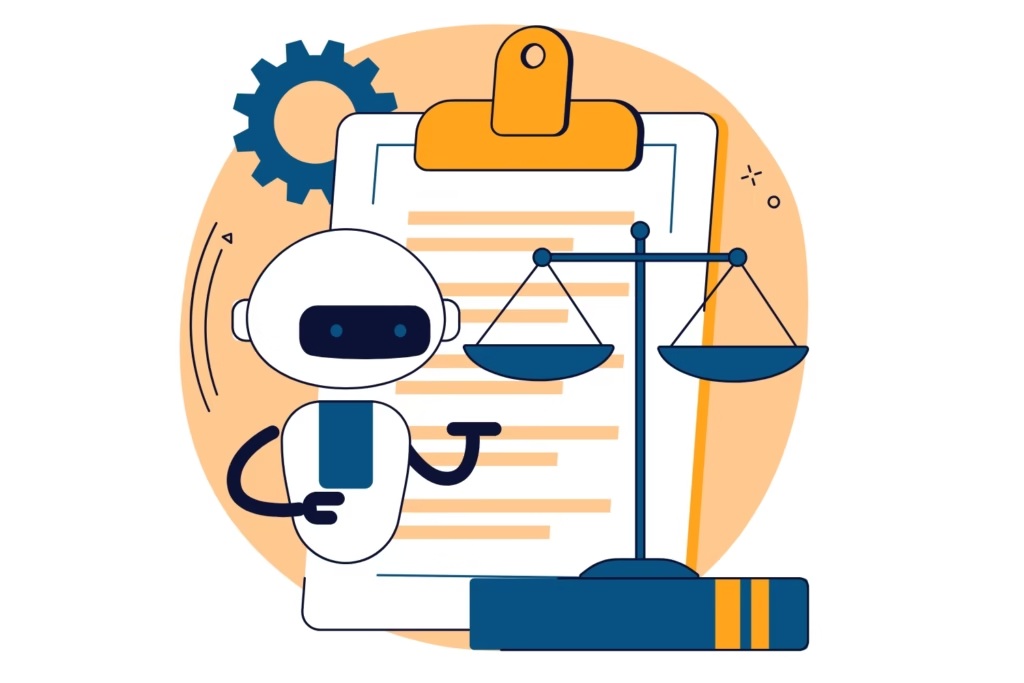
    A graphic of an AI robot in front of a clipboard developing a project with a balance scale


    Below is a guide on AI website builder best practices, including when and when not to use them.

    When It’s Best to Leverage AI for Website Creation

    Here’s when you should use AI-powered website builders for your business. 

    Tight Site Launch Timelines

    It’s not uncommon to have delays in your web build projects. If tight deadlines are coming soon, AI site builders can streamline your launch. 

    They can accelerate the web build process through each stage, including:

    • Site design concepts with generated visuals 
    • Branding brainstorming sessions with prompt summaries
    • Web design and development generated coding languages 
    • Interface analysis testing for performance issues

    Streamlined SEO Optimization of Existing Content

    One of the simplest ways to leverage the benefits of AI website builders is their SEO content analysis capabilities. They can quickly scan your existing web copy with SEO-generated suggestions, like keyword density and easy readability. 

    This feature is especially useful for site redesigns to strengthen its SEO performance before you migrate it to another platform.

    Enhanced User Experience (UX)

    Your website’s user experience (UX) can make or break its performance. If your site makes it harder for people to navigate with slow page load speed or vague content that doesn’t address their specific needs, they’ll quickly leave for a competitor who meets them more effectively.

    That’s where AI website design and development comes in. 

    You can craft visitor profiles with website interface testing in AI prompts to generate personalized recommendations and strengthen UX. AI site builders may suggest mobile design-focused changes to make browsing on all devices easier or chatbots to provide 24/7 customer service for international users with different time zones than yours.

    Another example is copy edits related to your audience’s emotions with action-focused verbs, like “Start Your Free Trial” instead of “Sign Up” to promote more engagement and conversions.

    When It’s Best Not to Use AI for Website Creation

    A graphic of a person sitting at a desk with a laptop developing a project with AI mobile assistance

    Here’s when you shouldn’t use AI-powered website builders for your business. 

    Unique Content Creation

    Although AI made significant advancements in its machine learning capabilities, it’s still relatively new and requires careful use. If you plan to use an AI site builder to create unique content for your web pages, we don’t recommend using this tool as you may face accidental plagiarism. 

    Whether it’s for website copy or blogs, AI writing tools pull their generated text from various online sources. They analyze existing content across internet algorithms and combine it with your entered prompts to generate paraphrased text. If you copy this content word for word, it can become a form of plagiarism. 

    Additionally, AI text generators still need improvements to sound more human. They often use the same sounding robotic-like tones and content structure patterns that look like AI wrote them. Examples of these include wordy, run-on sentences and formal tones without emotion. 

    That’s not to say you shouldn’t use AI web builders for content. 

    It’s best to leverage them as a writing assistant for:

    • Content inspiration for specific writing tones, like editorial blogs, persuasive product pages, conversational home pages, formal case studies, etc.
    • Web copy outlines to help format what your pages should look like faster
    • Website branding to guide on what makes your business unique with visual suggestions
    • Existing content analysis and recommendations for SEO, buyer persona needs, grammar, etc.
    • Target audience discovery sessions based on their demographics, interests, website visitor data, etc.
    • Summaries of existing long-form content to streamline its main points

    Sensitive Website Visitor Data

    As mentioned above, you can enter your website’s visitor data into AI site builders to generate personalized UX recommendations. 

    However, you pose AI data privacy risks, including:

    • Sensitive Data Collection: Healthcare information, social media feeds, etc.
    • Non-Consensual Data Collection: Photos/videos of people, facial recognition without permission, etc.
    • Private Data Leakage: Unintentional data leaks or outside breaches due to insufficient cybersecurity

    Because AI web builders are third-party platforms that use real-world algorithms to tailor generated text and enhance their machine learning capabilities, data privacy compliance issues can arise. It’s best to enter generalized visitor demographics into your AI web build prompts, like age, location, interests, and pain points. 

    That way, you can take advantage of AI while keeping your website visitor information anonymous, safe, and consensual since it isn’t private data. 

    Minimal to No Experience in Using AI to Build a Website

    If you haven’t used AI for building websites before or have minimal experience, we recommend starting on a smaller scale first. AI tools require a learning curve to leverage their benefits fully without risk. 

    For web builds, you can start with detailed web page prompts for copywriters to reference or generated visual design concepts for graphic designers to gain inspiration. On the back end, you can use AI site builders to scan your existing code for web developers to troubleshoot bugs and performance issues faster. 

    AI Website Builder FAQs:

    A graphic of two people developing a project with an AI robot assisting

    Can AI Build a Website?

    Yes, you can use AI to build a website. Their capabilities include web copy, site code, content organization, and more.

    What’s the Best Free AI Website Builder?

    Some of the best free AI website builders include:

    • HubSpot: Designs single-page websites based on the answers to the questions it asks in your prompts
    • WIX Artificial Design Intelligence (ADI): Generates site builds for small to medium businesses within minutes including, scalable features like live chats, member registrations, etc. 
    • GetResponse: Creates small business websites with complex marketing features based on customer data/behavior, conversion-focused designs, and customizations for existing site templates.

    What’s the Best AI Builder Available?

    Some of the best AI builders for paid accounts include:

    • CodeWP: Generates WordPress site builds, including conversational coding, 24/7 AI assistance, security scanning, and troubleshooting issues 
    • Hostinger: Includes a free custom domain name, email accounts, SEO, e-commerce features, and marketing integrations from a single AI web builder
    • Shopify Magic: Builds Shopify sites with generated AI product image editing, SEO-friendly e-commerce copy, personalized live chat responses to boost conversions, etc. 

    Leverage Web Developers with AI Experience to Maximize Your Site Build Success

    Deliver faster results and greater ROI of your web builds by blending the best of both worlds. Leveraging professional web development with AI-powered tools can maximize your site’s success.

    At Reach Marketing Pro, we’re a full-service digital agency with in-house web designers/developers with AI-enhanced experience in various site platforms, including WordPress, Webflow, Shopify, and more. We combine traditional web development with modern AI integration to bring your site’s goals to life more efficiently. 

    Ready to make your new website thrive?

    Learn more about our web design/development services, or contact us to kick off your site build today! 

  • Automate & Elevate Your Content: 6 Best AI Writing Tools for Businesses

    Automate & Elevate Your Content: 6 Best AI Writing Tools for Businesses

    Artificial intelligence (AI) text generators initially received a bad reputation for lack of unique content. However, machine learning and training in properly using these apps have advanced AI content writing to help businesses streamline their marketing efforts ethically. 

    So, how can you automate and elevate your content with AI? Learn our six recommendations on the best AI writing tools and how to leverage them correctly to create personalized content. 

    What is the Best AI for Writing? 

    A graphic of two people working with an AI robot on a cloud system


    AI has disrupted the digital marketplace in all facets, from SEO to advertising, and it’s here to stay. Current AI marketing trends show it’ll continue to advance, so your business should understand how to find the best text generators. That way, you use them correctly to prevent accidental plagiarism and promote a greater ROI on your content marketing

    How to Find the Best AI Writing Tools

    When searching for the best AI tools for writing, there are key attributes to look for, including:

    • Plagiarism Detection: They should offer a feature to run their generated content through a plagiarism scanner to ensure it’s original.
    • User-Friendliness: They should be easy to use for all skill levels, such as text prompt templates and recommendations to enhance your AI content. 
    • Content Personalization: They should have specific industry categories or target audience prompts for you to create personalized short and long-form content.
    • Fact-Checks: They should have a feature that scans their generated content through a fact checker to verify its accuracy. 
    • Content-Specific Platforms: AI tools differ in content focuses, like novel writing and SEO blogs, so the platform you pick should be specific to what your business requires.

    While it may seem daunting to try AI if it’s new to your business, leveraging it offers several advantages for your content marketing. They help reduce writer’s block by generating topics and text as inspiration to kickstart the creation process. AI writing tools also provide simplified summaries of long-form content to analyze them faster. 

    These are just a few of the benefits of using AI content. 

    However, they all share a primary purpose—boosting productivity by reducing manual writing tasks so your company can become more efficient. 

    How to Use AI Content Generators Correctly

    As with any marketing software, there are pros and cons of AI content writing if you don’t know how to use it. While some applications offer plagiarism detection, you should never use their generated text word for word. AI content tools should act as a foundation and inspiration, not a replacement for your writing. 

    Additionally, if you’re using AI text generators for SEO blogs, this doesn’t replace your keyword research. They don’t gather keywords when you enter prompts, so you must still use SEO software to optimize your AI-generated content.

    Best-use practices for AI writing tools include:

    • Detailed Prompts: Enter as many instruction details as possible into your prompts to generate a higher quality content output, including tone, target audience, and the company it’s for. 
    • Referential Research: In addition to detailed prompts, include your own research and add necessary citations for the AI tool to reference and enhance its content accuracy. 
    • Personal Fact-Checks: While AI writing tools offer fact-checking, also check this yourself to verify its accuracy by reviewing it or using third-party tools, like Google Fact Check Explorer
    • Content Editing: Always edit AI-generated content to tailor it to your client’s branding and prevent harming your credibility with plagiarism.

    Remember, AI is still relatively new. But it offers countless opportunities to save you time by using it properly. 

    Streamline Your Content Workflows: The 6 Best AI Writing Tools Businesses Should Leverage


    Now that you know the benefits of using AI-generated content, how to use it, and what to look for in different applications, below are the six best AI writing tools to consider and why they make the list. 

    1. ContentShake AI

    A screenshot of SEMRush's ContentShake AI interface
    Credit: SEMRush

    If your business creates SEO content, such as blogs and web page copy, look for AI generators focusing on producing optimized content. As one of the leading SEO platforms, SEMRush has its own AI text generator, ContentShake AI. What separates it from other AI writing apps is that it combines SEMRush’s SEO data to create high-ranking AI-generated content 12 times faster

    ContentShake AI uses real-life competitor insights to create SEO-optimized content for organic traffic and engagement. It even scores how well it’s optimized per Google’s algorithms and SEO content guidelines. 

    While SEMRush claims you don’t need to do extra keyword research, we always recommend doing so to verify its accuracy and maximize your content’s SEO performance. 

    2. ChatGPT

    A screenshot of OpenAI's ChatGPT interface
    Credit: OpenAI

    You’ve likely heard of ChatGPT, as one of the original AI text generators. Developed by OpenAI, it’s an AI chatbot that generates content via conversational prompts and machine learning models. 

    While ChatGPT doesn’t have a specific content focus, you can use it for diverse writing tasks, including:

    • Emails, articles, web pages, outlines, essays, resumes, cover letters, poems, etc. 
    • Application and website coding in multiple programming languages
    • Summaries of long-form content, including research journals, books, etc. 
    • Complex problem-solving, like debugging your existing website code, content edit suggestions, etc.

    What makes ChatGPT one of the best AI writing tools is it remembers your conversations. As you continuously use it for clients, it stores information from your previous prompts and references it to better produce ongoing personalized content.

    3. Jasper AI

    A screenshot of the Jasper AI interface
    Credit: Jasper AI

    If you’re looking for business-focused AI content generators, consider JasperAI. Like ChatGPT, it’s also a large language model that uses AI to create content. However, JasperAI is the better option for marketing-oriented AI content. It’s specifically programmed for marketing content writing, like emails, blogs, and social media posts.

    4. Google Gemini

    A screenshot of Google's Gemini AI interface
    Credit: Google Gemini

    Google has its own AI content generator, Gemini. It has two focuses: web developers and businesses. If your company wants to streamline web builds and designs, it uses state-of-the-art generative AI models for coding in various programming languages. From flexible frameworks to customizable code and problem-solving, it provides countless solutions for your developers.

    Regarding business use, Gemini acts as your AI writing assistant across your Google Workspace. It integrates with Gmail, Docs, Sheets, and more to centralize and automate your writing tasks. 

    Gemini crafts content drafts, including blog posts, proposals, advertising copy, and more. It can even generate customized images with a single prompt to enhance your visual branding

    5. Claude AI

    A screenshot of the Claude AI interface
    Credit: Claude AI

    Similar to ChatGPT, ClaudeAI is an AI-powered chatbot designed to generate various types of text based on conversational prompts and large language models. From coding to long-form content summaries and proofreading, you can leverage ClaudeAI for almost any writing project. 

    However, ClaudeAI produces more human-like writing that sounds less generic than ChatGPT. While ChatGPT excels at complex problem-solving, ClaudeAI is best suited for more personalized content. 


    6. CoPilot

    A screenshot of Microsoft 365's CoPilot AI interface
    Credit: Microsoft 365

    Like Google, Microsoft has its own AI content writing assistant, CoPilot. It similarly integrates across Microsoft 365 apps, including Word, Excel, Teams, and PowerPoint. CoPilot combines large language models and your company’s organizational data to streamline production workflows. 

    Some notable content writing features include:

    • Creating and refining existing content by referencing up to three Word documents
    • Transforming and condensing PowerPoint presentations from existing documents with speaker notes
    • Summarizing complex data in Excel to help you analyze it faster with filters
    • Recapping Teams conversations and key discussion points based on chat history

    CoPilot is one of the best AI content writing tools because you don’t need to enter prompts to generate text. It directly pulls information from your Microsoft apps, including files, emails, chats, and meeting notes—making it user-friendly for everyone. It also has different CoPilot versions for small to medium-sized businesses and specific industries, like public sectors and education.

    Words Matter–Get Quality Content Writing That Works with Reach Marketing Pro

    While AI text generators streamline your content marketing workflows with automation and advanced learning models, you can maximize their performance with professionals. AI writing tools still require a learning curve to leverage their fullest potential and precise editing to ensure it’s accurate and original. 

    Let us help you generate a greater ROI for your content marketing. At Reach Marketing Pro, we’re a full-service digital agency with extensive experience creating content across diverse industries. From SEO-optimized blogs to compelling website messaging and effective ad copy, we create high-quality content that supports your bottom line.

    Learn more about our content writing services, or contact us to boost your business’s marketing productivity today! 

  • How to Block a Website on Different Devices and Browsers

    How to Block a Website on Different Devices and Browsers

    Why Would You Need to Block a Website?

    There are many reasons why you would want or need to block a website. For example;

    Parental Controls: If you have children, some websites contain explicit content that you want to keep them from.

    Increase Productivity: Permanently or temporarily block certain websites to improve your productivity time for studying or working.

    Suspicious Sites: Save yourself from attempts at infecting your computer with a virus or stealing your personal data.

    Which Site-Blocking Method is Right For You?

    Each method of site blocking will vary based on its restriction, the users, and the device you’re using. For example, if you want to block websites temporarily or permanently on an individual device, it’s recommended to install a more configurable program or easy-to-use browser extension.

    If you want to block manually through the host’s file, firewall, or router, it’s a good option if you don’t want to deal with software. However, this method is only suitable if you want to disable access to certain sites permanently.

    If you’re blocking certain sites for multiple users on a single network, you should use either web filtering software, which is normally used by businesses or schools, or block through the router.

    How to Block Websites on Your Browser

    Illustration of the Chrome, Safari, Firefox, and Internet Explorer Web Browser Logos

    Chrome

    1. Log in to your Google Admin Account and go to the Chrome browser homepage.
    2. Click Devices Chrome Settings Users & Browsers.
    3. Choose which users you want to block from visiting certain websites.
    4. Find the URL Blocking section.
    5. Enter the web address you want to block in the Blocked URLs tab.
    6. Save the changes.

    Firefox

    1. In the Options page, select the Privacy & Security tab.
    2.  Scroll down to the Permissions section and click the Block Websites option.
    3. In the Block Websites page, enter the URL of the website that you want to block, and then click the Add button.

    Safari

    1. Go into the Content and Privacy section of Screen Time.
    2. Click Customize to block specific websites. 
    3. Click the “+ under the restricted section to block specific sites.
    4. Add the URL of the site you want to block and click OK.
    5. Select OK again to finalize your decision to block a site.

    Internet Explorer

    1. Open the browser and go to Tools (alt+x) > Internet Options.
    2. Click the Security tab.
    3. Click the red Restricted Sites icon.
    4. Click the Sites button below the icon.
    5. Now in the pop-up, manually type the websites you want to block one by one.
    6. Click Add after typing the name of each site.
    7. When done, click Close and click OK in all other windows.

    Blocking Websites on Your Mobile Device

    When using an Android and or iOS device, you will need to download specific apps to block unwanted websites. Thankfully, most apps can work across multiple browsers! Here are a few examples of apps and their features:

    BlockSite

    StayFocusd

    Parental Controls

    FamiSafe

    AdBlock

    Manually Block Websites on Your Desktop or Laptop

    Illustration of parents and their child in front of a blocked computer screen

    Looking to block a website manually? Here are step-by-step processes for how to block a website on Windows 10, Mac, or with your router.

    Windows 10

    1. Go to the Chrome Web Store
    2. Search for the BlockSite extension, and choose the first one that reads: BlockSite: Block Websites and Stay Focused.
    3. Click Add to Chrome.
    4. Click Add Extension on the prompt window.
    5. Go to the website you would like to block on Chrome and right-click anywhere on the page. Tap on BlockSit” then Block this Site.

    Mac

    1. Click on the Apple icon locked in the top-left corner of the screen and select System Preferences.
    2. Choose Screen Time.
    3. Click Content and Privacy in the left sidebar.
    4. Click Turn On, located in the top-right corner of the window, unless already enabled.
    5. Choose Limit Adult Websites and click Customize.
    6. In the Restricted section, click the plus symbol.
    7. Add the desired URL and click OK.

    Router

    1. Open your web browser and type in the IP address of your router.
    2. Log in to your router’s settings.
    3. Find the website blocking tool in your router’s settings.
    4. Enter the websites that you want to block.
    5. Save your changes and restart your router.

    Parental Controls on Windows 10

    1. Visit family.microsoft.com and log into your Family Safety account.
    2. Choose your family member then scroll down to Content Filters.
    3. Toggle on Filter Inappropriate Websites.
    4. To block specific sites, add their URLs under Blocked Sites.
    5. You can block access to specific sites by turning on the Only use-allowed websites toggle. 
    6. Add URLs of approved websites under Allowed sites.

    Parental Controls on a Mac:

    1. Click the Apple icon and select System Preferences.
    2. Click the Parental Controls icon.
    3. Click the lock symbol and enter your password.
    4. Select the account you want to filter with parental controls.
    5. Click Enable Parental Controls.

    Additional Methods to Block a Website

    Illustration of an increasing graph and gears representing improved productivity

    In addition to the above, there are additional ways to block unwanted websites. Here are some ways to do that.

    Using Browser Extensions: Using specific extensions on your browser helps block certain websites you don’t want other users to visit. For example, BlockSite is a Chrome Extension that helps block web pages and limit adult websites individually or by categories.

    Using Productivity Software: Using these samples will help reclaim your productivity and steer away from potentially dangerous websites; Freedom, Forest, PawBlock, RescueTime, Pause, Focus, etc.

    Leverage Web Filtering Software: These help block unfiltered websites from being accessible on your computer. Examples include WatchGuard.

    Let Our Team Help You Gain Productivity Time

    When working with Reach Marketing Pro, you’ll know your privacy and security always come first. We have the skills you need to strategize, analyze, and curate creative designs for your business, giving you back time to focus on what’s most important!

    Reach out to us today to receive a FREE marketing consultation.

  • How Search Marketers are Using AI to Create Demand

    How Search Marketers are Using AI to Create Demand

    How Do AI-Powered Search Engines Operate?

    Illustration of a robot holding a magnifying glass over a business laptop

    For anyone looking to dive into digital marketing, search engine algorithms aren’t a new concept to learn. An AI search engine collects insights from multiple sources such as search queries, browsing behaviors, social media interactions, and purchase histories. They utilize sophisticated algorithms to analyze any collected data, identify patterns, and generate actionable insights. However, AI marketing has changed more than one may think! Since it’s recognized for making things easier, it helps alleviate the typical effort of interpreting customer preferences from large data sets and provides information that’s reliable. By utilizing it correctly, AI search engine marketing can develop and implement targeted marketing campaigns, optimize customer journeys, and deliver personalized experiences.

    Search Marketer’s Use of AI

    What marketers need to focus on when using AI-powered tools is providing high-quality, user-centric content that appeals to the interests of their target customer base. Additionally, optimizing a company’s user experience can enhance the overall experience for consumer audiences. AI search considers a user’s previous search history, location, and additional factors to provide personalized results, producing a more efficient zero-click search experience.

    Capitalizing on AI-powered search will create content that clearly answers questions, provides efficient solutions to complex problems, and delivers a positive user experience.

    How AI can Help Search Marketers

    Illustration of a man working on his computer getting the help of AI

    AI is different for each business and that should remain top of mind when creating an efficient, customized strategy. Here’s how AI-powered tools can help create a more efficient digital strategy and how they can aid Search Marketers in improving their campaigns:

    Creative Testing: This strategy helps creative teams revise concepts, drop ones that don’t resonate well with target audiences, and identify which ones work the best. This testing can be used to conduct market research before a new product launch.

    Campaign Optimization: This strategy helps boost a company’s visibility and conversation rates, which drives more potential customers in their direction.

    Measurement: Analyzing measurements serve as quantifiable insights to search marketers. When using them correctly, measurements can project the success of an advertising campaign and track toward KPIs.

    Improve Productivity: Productivity is important in AI marketing because it serves as a key contributor to driving unparalleled growth and profitability.

    Reiterating what was mentioned above, AI-powered tools are indeed tools and should be placed in a proper strategy instead of simply taking information and mixing them together.

    AI Search Engines, Search Marketers, and You

    Image of a group of people working and using AI for business results/analysis

    AI marketing takes digital strategy to the next level. Using a personalized marketing strategy with search marketers can help them leverage their expertise in AI-powered search engines may help their marketing initiative. Let’s break it down further.

    Tailored Marketing Strategies: These help a business identify its unique selling proposition, target its right audience, and create compelling narratives that resonate with its ideal customer.

    Having a Competitive Edge: Having a competitive advantage helps a business effectively distinguish itself from its competitors by offering something unique of superior value to its customers.

    Measurements: There are multiple ways a business can measure its performance, including tracking processes, sharing intelligence, making informed decisions, identifying goals, developing reliable metrics, and collecting valuable data that accelerates growth and development.

    Enhanced Customer Engagement: Implementing a customer engagement strategy will not only help improve the overall customer experience, but boost the value of a business’s existing relationships, increase the likelihood of referrals, and foster sustainable growth.

    Our Experts Use the Right Tools & Expertise!

    Although AI marketing carries a unique mind of its own, utilizing SEO and SEM specialists help leverage their knowledge and expertise to keep up with evolving technology to implement a personalized marketing strategy. At Reach Marketing Pro, we serve as your digital strategy partner to optimize business performance and uptick growth to ensure your company has a competitive edge in your industry.

    Are you ready to take the first step and evolve your marketing strategy using AI-powered tools?

    Contact us here to get your personalized AI marketing strategy started!

  • Should You Have AI Write Content for You? The Pros & Cons Explained

    Should You Have AI Write Content for You? The Pros & Cons Explained

    What is Content-Writing AI?

    Artificial intelligence (AI) incorporates human intelligence to create content through computer software. These cutting-edge programs are modeled after original human thought processes to create unique content based on what you are looking for. When using AI, you surrender the opportunity of human error, such as typos and grammar mistakes. Since it is time-consuming to produce valuable and insightful blogs, articles, and essays, artificial intelligence technology steps in to play hardball. Curious about what professionals today use AI for? Normally, you will find landing pages, marketing copy, product descriptions, SEO-driven blog topics, evergreen content, and social media copy for starters.

    The Benefits of Using Content-Writing AI

    Illustration of a man standing in front of a desktop with a content-writing assistant

    Utilizing AI writing tools come with unique benefits. For instance, one major benefit that comes with AI content writing is the ability to save so much time. For example, rather than spending countless hours brainstorming, constructing outlines, and proofreading, AI writing tools serve as the second pair of eyes to ensure the content is correct while increasing your productivity to focus on other tasks. Additionally, artificial intelligence helps drive website traffic by crafting SEO-optimized, readable content.

    If you struggle to come up with new writing topics, AI tools step up to the plate and hit a home run with unique content suggestions, which help boost your creativity and improve your writing abilities. The number of opportunities is endless with AI writing tools!

    Disadvantages of Using Content-Writing AI

    Illustration of different content-writing topics and a magnifying glass

    With the benefits that AI writing tools provide, there is always a downside. For instance, cost. Based on if you are looking for short-form content or more full-scale projects such as a robust, research-driven article, premium software would be required. In that case, you should prepare to invest hundreds of dollars, if not more, monthly.

    Secondly, it’s best to understand that you can’t immediately depend on the AI to take over things without ample time to prepare. With every AI writing software comes a learning curve.

    Most importantly, using artificial intelligence removes each writer’s unique personality. Unfortunately, since AI writing tools are based on “human intelligence”, they will always have a more “robotic” personality in the content, which lacks emotional appeal. Additionally, with the more robotic personality, you may seem to notice an unnatural flow of content that has multiple paragraphs that is repetitive, but slightly reworded. That may lead to worrisome thoughts of possible plagiarism.

    Lastly, E-A-T concerns are a red flag when using AI writing tools. Without a personal touch or emotional appeal, Google’s algorithm may reduce your content’s visibility as far as it appears in Expertise, Authoritativeness, and Trustworthiness.

    How to Use Best Practices When Writing-Content with AI

    Illustration of robot's face in the center, surrounded by content-writing related icons

    Looking to utilize artificial intelligence in your content strategy? Here are some key tips and tools to keep in mind.

    • Your chosen AI writing tool should never be your sole outsourcing solution for your brand’s content. Instead, it should act more as a writing assistant to come up with new topics to overcome writer’s block.
    • Research what other businesses are writing about to remain current with what’s being discussed.
    • Prioritize incorporating E-A-T best practices in the writing process.
    • Prevent having a “robotic” personality by adding your unique personal touch so your individual voice is heard.

    Contact Us for Your Content Writing Needs!

    Looking ahead, artificial intelligence and evolving marketing trends will undoubtedly help automate processes. However, if you look to add a personal touch that exemplifies your brand to target customers, it’s best to ensure that you are using the best practices when publishing the best—written content on your website. When you implement best practices, you will achieve the best results!

    Are you ready to jumpstart your content? We are here to help you reach the next level. Reach out to us today to craft your customized content plan that aligned with your needs and customers.